


-
Solo Business Courses
-
 Others
-
Overseas Tutorials
-
Photography & Editing
-
Community & Private Domain
-
Self-Media Writing & Copywriting
-
Side Income Projects
-
E-commerce
-
Short Video & Live Streaming
-
Artificial Intelligence (AI)
-
Software & Tools
-
Operating Systems
-
Plugins & Scripts
-
MacOS Software
-
Android Software
-
Windows Software
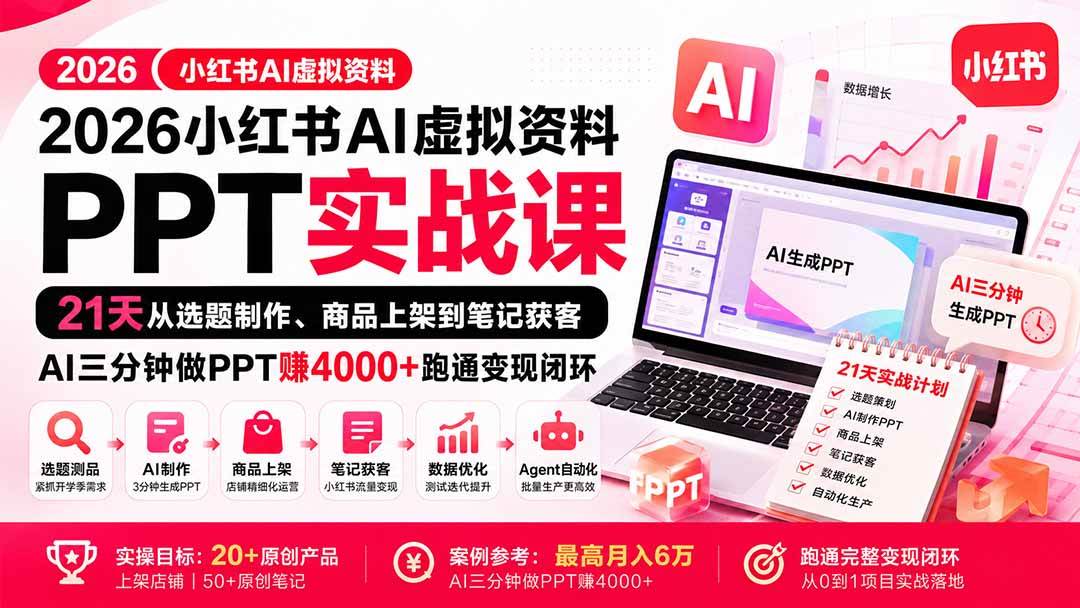
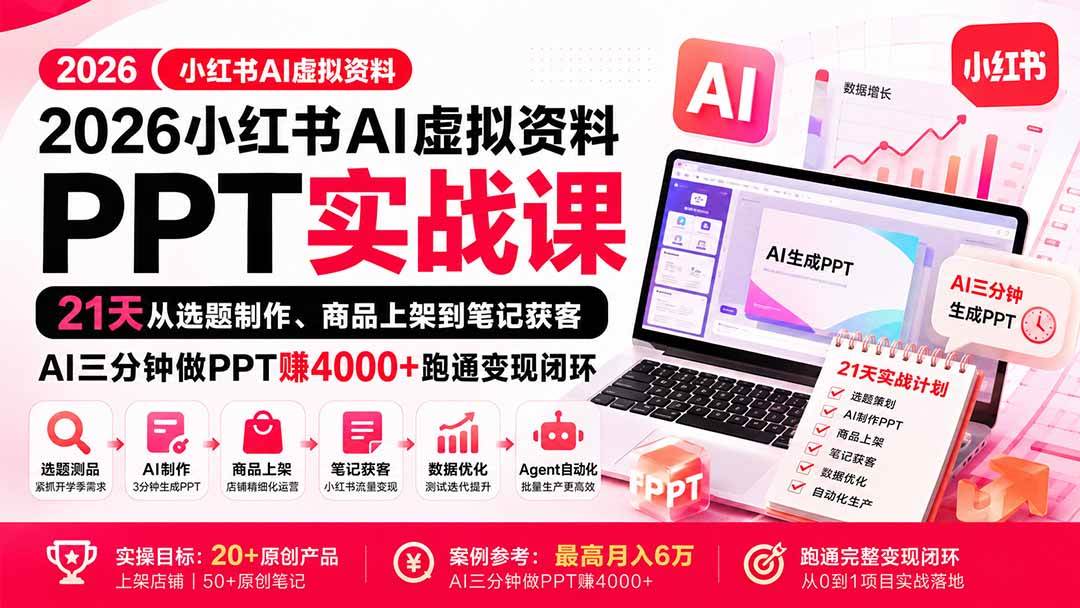
2026 Xiaohongshu AI Virtual-Material PPT Course: 21 Days to Customer Acquisition, AI Makes a PPT in 3 Min for 4000+
-
Game Gold-Farming Money-Making Plan: Earn 1k+ Daily, a Stable 3-Year Project Anyone Can Do in Spare Time [Revealed]
Study material — included with membership Get Membership -
Hot-game fully-automated earning: 500+ a day, no experience, simple operation - the steadiest long-term game-earning side hustle (revealed)
Study material — included with membership Get Membership -
FlyingMouse earns merit this time! Don't panic at Windows format problems — the open-source FlyingMouse format conversion tool helps, a popular GitHub gem
Study material — included with membership Get Membership -
Douyin Product-Selling Coaching Bootcamp: No On-Camera Appearance Needed, Newbies Can Produce Selling Short Videos by Following the Steps
Study material — included with membership Get Membership -
First-release game gold-farming money plan: 1K+ a day, ordinary people in spare time
Study material — included with membership Get Membership






-
FlyingMouse earns merit this time! Don't panic at Windows format problems — the open-source FlyingMouse format conversion tool helps, a popular GitHub gem
Study material — included with membership Get Membership -
LuDaShi v6.1024.4105.1121 Slim Single File
Study material — included with membership Get Membership -
2D Cartoon Animation Software Moho Pro v14.3
Study material — included with membership Get Membership -
Video Editor Aiseesoft Filmai v1.0.18
Study material — included with membership Get Membership -
To-Do Microsoft To Do v2.147 Free
Study material — included with membership Get Membership -
PR/AE/DaVinci/FCPX video Plugin Nobe OmniScope Win1.11.15 / Mac1.10.138
Study material — included with membership Get Membership







Project Overview
Xiaohongshu educational-material PPT is a niche within Xiaohongshu virtual materials, and one where ordinary people can quickly validate a product direction against the real market.
The use case is clear: around a teaching scenario, you make an educational PPT, list it to test, then keep optimizing based on real market feedback.
We chose educational PPTs for two reasons: short-term, the back-to-school season has a clear demand window; long-term, subject-specific niches also have room to keep operating.
Time window: mid-August to mid-September each year, when demand spikes for the first lesson of term, parent meetings, themed class meetings and new-student orientation.
Historical results for reference: peak monthly income 60k RMB; AI makes a PPT in 3 minutes and earns 4000+.
I. Pre-voyage prep
Boarding lesson: understand the whole project. 1. Why we launched the AI-original virtual-product (Xiaohongshu) voyage. 2. Voyage cycle & learning goals — 2.1 deliverables in 21 days; 2.2 PPT deliverable requirements. 3. Overall workflow — 3.1 full flow from topic to delivery; 3.2 what this voyage focuses on; 3.3 what it does not. 4. Voyage homework — HW1 set up tools, accounts & store; HW2 close the first product loop; HW3 keep making PPTs while posting notes for market validation; HW4 finish niche choice & efficiency optimization. 5. Content producer.
II. Required hands-on
A. Basic setup — 01 tools & accounts: set up account & store, delivery tools, get AI & API running, use Canva, Codex, Hermes and other advanced tools as needed.
B. AI-original PPT creation — 01 back-to-school niche choice: first lesson of term, themed class meeting, new-student/transition, parent meeting, military training / Teacher's Day and other nodes; plus the subject long-tail after back-to-school. 02 full production walkthrough: 1 prepare source material; 2 use AI to generate the PPT outline (2.1 what a PPT outline is; 2.2 steps to build it); 3 main PPT visuals — 3.1 Huaban, 3.2 Xiaohongshu, finding visual reference & style; 4 generate & build PPT pages; 5 human-check the lesson content; 6 generate lesson plan & verbatim script; 7 organize, convert & check PPT files; 8 output & deliver the finished product; 9 summary. Core flow: topic to material prep to outline to visual design to PPT build to file conversion to final check.
C. Product packaging & official listing — 01 product type & packaging: 1 type & listing logic (1.1 back-to-school themed; 1.2 everyday subject courseware — 1.2.1 single lesson, 1.2.2 unit, 1.2.3 full-volume); 2 product testing (2.1 back-to-school themes: fast multi-theme test; 2.2 subjects: single lesson first, then expand); 3 finish packaging (3.1 title; 3.2 main image; 3.3 display/detail images; SKU settings; product description); 4 summary. Packaging centers on title + main image + display images + SKU + description.
D. Xiaohongshu note image+text — 01 tutorial: 1 image assets (computer-screen scene, TV-screen scene, projector-screen scene; build a background library; mini-voyage tool for display images); 2 note text (2.1 traffic-note types — search flow, recommendation flow; find search keywords; teachers' real-need keywords; generate notes from the PPT outline; AI-batch note content; note title & body); 3 post & keep testing; 4 summary. The loop: find keywords to make images to generate copy to post note to read data to back to topic & product test to keep optimizing.
E. Optimize product from market feedback, cut trial-and-error cost — 01 observe & optimize: 1 read product problems from data (impression, click, inquiry, sale, refund); 2 optimize by feedback type; 3 pre-sale tests & cutting trial cost (has clicks & sales; has clicks no sales; almost no clicks); 4 expand on test results (single lesson to unit collection to full volume; single theme to multi-grade/multi-scene); 5 summary. Core logic: test demand to make product to list & sell to data feedback to keep expanding.
F. Niche selection & long-term direction — 01 long-term: how to keep running the education-material track after back-to-school (subject-aligned courseware, knowledge-point material, unit material, mid/final review, topic review, higher-ed faculty material, industry-experience material). 02 selection & new niches: 1 underlying logic (1.1 prefer content you can keep producing; 1.2 prefer directions with room to expand); 2 niches (K-12 subject material, higher-ed faculty material, industry-experience material — events: planning, execution, retrospective templates; corporate roles: training, workflow, role manuals; teachers: teaching material, class management, research method; design: PPT templates, design specs, workflow; operations: ops plan, content plan, data-analysis templates; sales: follow-up, scripts, training). 03 common pitfalls: don't repost content directly; don't do low-price products long-term; don't chase complex automation too early; don't stop operating after posting a while; don't obsess over refunds; don't focus only on making and ignore market feedback; don't chase perfection from day one.
III. Elective advanced
G. Agent-ifying the production flow — 01 agent-ify to lift output & efficiency: 1 why agent-ify; 2 Codex in the PPT pipeline; 3 Hermes & agent workflow; 4 multi-agent use in this project; 5 real multi-agent collaboration case — 5.1 overall structure; 5.2 six employee roles (commander/PM, research & course planning, visual courseware & WPS, distribution creative & image/text/video, local integrity review, cloud-drive & platform delivery); 6 Canva-editable PPT handling; 7 keep optimizing the agent workflow. Goal: gradually split the formerly manual topic analysis, material sorting, content planning, outline design, visual making, file handling, QC and product packaging into separate AI roles for multi-agent collaboration. The course finally upgrades from making the product yourself to building an AI production team, achieving batch & automated PPT production. Main line: account/tools setup to back-to-school selection to AI-original PPT build to packaging & listing to Xiaohongshu image-text customer acquisition to data-feedback optimization to long-term niche to agent batch automation.
Supporting Study Materials
This course comes with a materials pack. Members receive the access link by email after requesting the course.
Related Courses

A New Ad-Watching Platform: 1.4 Yuan Per Ad, Bonus on Withdrawal, Easily 20+ RMB a Day Per Phone—Great for the Long Term [Revealed]

Precise Customer-Acquisition Master Course: Super-Individual Case Breakdown, Low-Cost Mining of High-Quality Clients
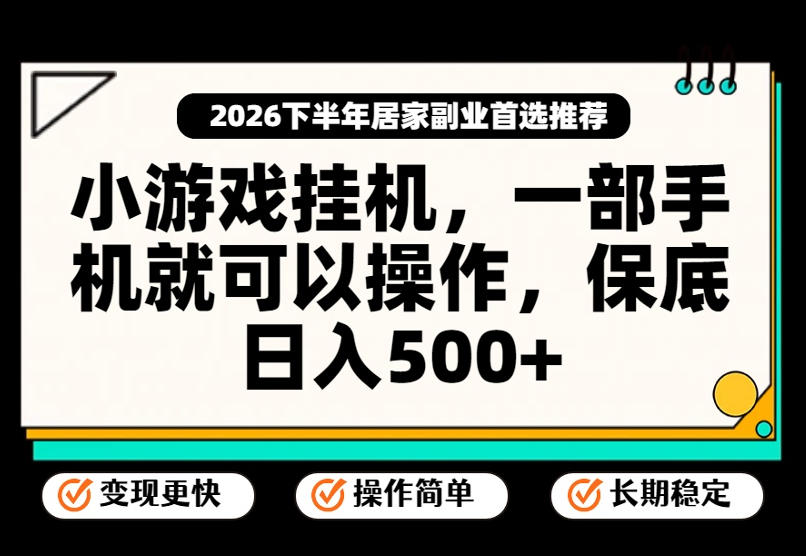
Mini-game AFK Bot Project: Operate With Just One Phone — No Luck, Only Solid Execution, Easily Earn 500+ A Day! [Revealed]

Soda Music + Tencent Musician AFK Play: A Lazy-Person Project, Batchable, No Manual Monitoring Needed, Beginners Can Easily Start [Revealed]

Stop Blindly Grinding Projects! The Real Logic of Making Money Online: Be a Shovel-Seller, Refuse to Be a Chive, Turn the Tide and Earn 50-80K+ A Month

The ceiling of 2026 internet projects: how ordinary people can earn 100K a month through paid knowledge products and leap a tier

Zero-cost film-and-TV reselling project: ordinary people can do it in spare time and easily earn 10K a month (revealed)
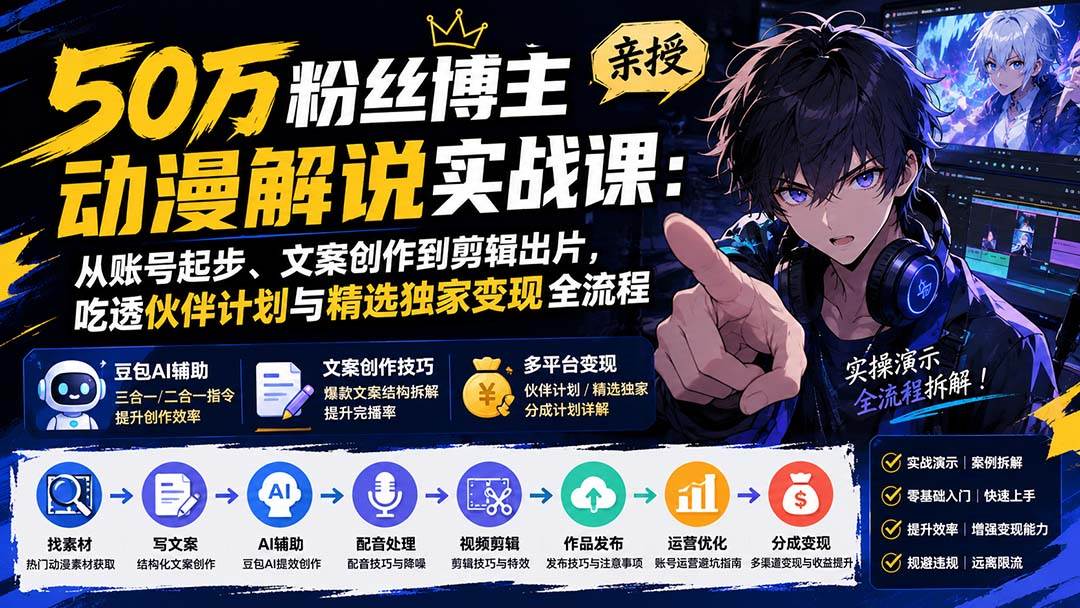

Xunlei Cloud Drive Promotion Monetization Camp: Analyze Conversion Cases, Double Your Earnings, Master Group Promotion and Traffic-Driving Re-posting
Monetize Virtual Resources with a Web-Entrepreneurship Mini-Program: Hit a Million a Year, One Phone Is All You Need, Zero-Cost Side Hustle

