-
Solo Business Courses
-
 Others
-
Overseas Tutorials
-
Photography & Editing
-
Community & Private Domain
-
Self-Media Writing & Copywriting
-
Side Income Projects
-
E-commerce
-
Short Video & Live Streaming
-
Artificial Intelligence (AI)
-
Software & Tools
-
Operating Systems
-
Plugins & Scripts
-
MacOS Software
-
Android Software
-
Windows Software





Tutorial on the AI Novel Short-Story Money Project - Updated: Insiders Earn 10k-30k/Month, Teaching Short-Story Creation and Submission Monetization from Scratch, the Full Playbook
-
Game Gold-Farming Money-Making Plan: Earn 1k+ Daily, a Stable 3-Year Project Anyone Can Do in Spare Time [Revealed]
Study material — included with membership Get Membership -
Hot-game fully-automated earning: 500+ a day, no experience, simple operation - the steadiest long-term game-earning side hustle (revealed)
Study material — included with membership Get Membership -
FlyingMouse earns merit this time! Don't panic at Windows format problems — the open-source FlyingMouse format conversion tool helps, a popular GitHub gem
Study material — included with membership Get Membership -
Douyin Product-Selling Coaching Bootcamp: No On-Camera Appearance Needed, Newbies Can Produce Selling Short Videos by Following the Steps
Study material — included with membership Get Membership -
First-release game gold-farming money plan: 1K+ a day, ordinary people in spare time
Study material — included with membership Get Membership






-
FlyingMouse earns merit this time! Don't panic at Windows format problems — the open-source FlyingMouse format conversion tool helps, a popular GitHub gem
Study material — included with membership Get Membership -
LuDaShi v6.1024.4105.1121 Slim Single File
Study material — included with membership Get Membership -
2D Cartoon Animation Software Moho Pro v14.3
Study material — included with membership Get Membership -
Video Editor Aiseesoft Filmai v1.0.18
Study material — included with membership Get Membership -
To-Do Microsoft To Do v2.147 Free
Study material — included with membership Get Membership -
PR/AE/DaVinci/FCPX video Plugin Nobe OmniScope Win1.11.15 / Mac1.10.138
Study material — included with membership Get Membership




On the 21st of last month I announced the recruitment preview for the short-story project. Right after the post went out, many friends privately asked me how the short story works. After testing over the past few months I got solid results, and I deeply optimized some prompts so they now produce high-quality content. On the novel project, I'll teach everyone through a set of prompts how to easily pick topics, imitate viral stories, build rough and detailed outlines, and effectively break down competitors' viral stories. First, let me show some real income cases.

The income above mainly comes from Fanqie Novels. Of course you don't just let AI generate and submit blindly without review; at minimum you must manually remove the AI flavor. The focus is teaching you what kind of content the platform likes, and how to revise the framework of high-like short stories - all doable with one complete prompt set. We mainly do AI short stories, 6000-8000 words each, suited to batch publishing.
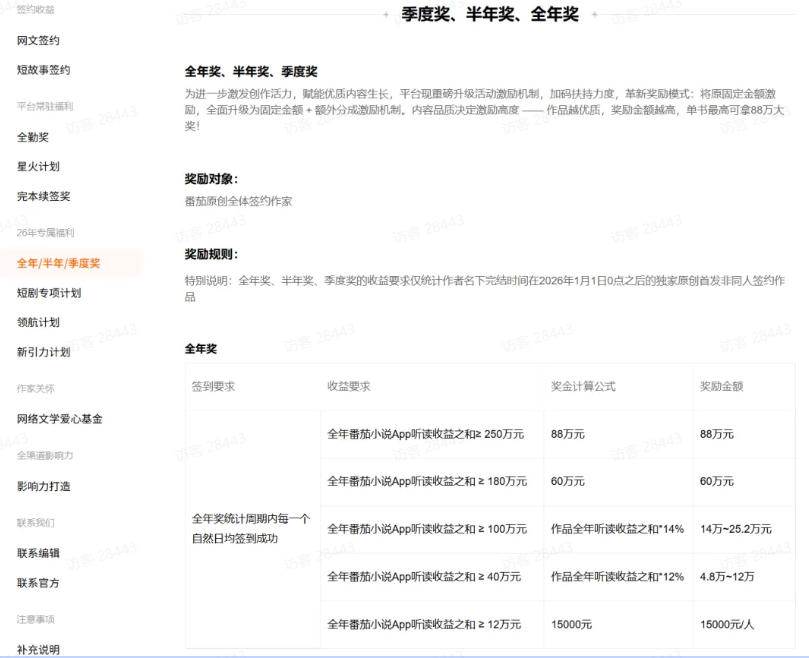
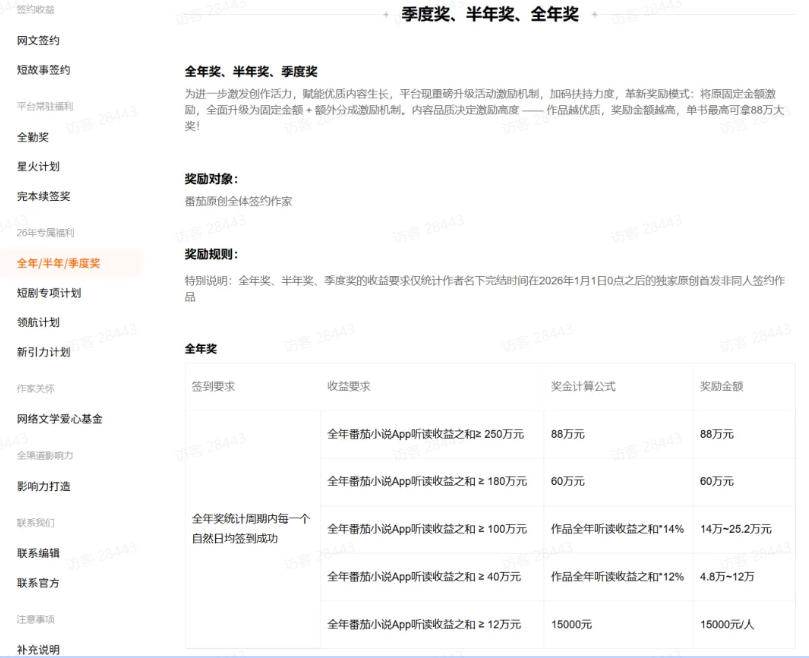
There are many kinds of fees and bonuses; I'll just show one screenshot. Also, once a story is written, submitting to Fanqie earns you a revenue share, and there's a chance some film/TV company adapts it into a short drama, bringing a handsome sum - copyright fees are counted in tens of thousands of yuan, because Hongguo, Fanqie, Toutiao, Doubao and Jimeng are all under ByteDance. So this project is truly 'one draft, multiple monetizations'. The story can earn novel revenue share; adapted into a script it can be sold; the script turned into an AI comic drama or realistic-drama and listed on Hongguo short drama can make another big pile.

Take this story of mine: rewritten by AI into a script, it sold for 40,000 RMB, paid out in three stages.
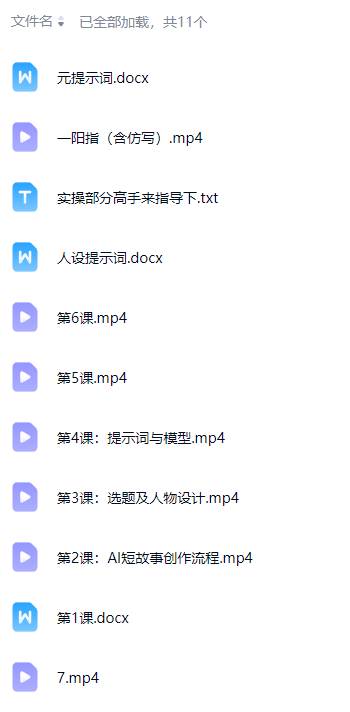
What can you learn from the novel course?
(Here I list the things you can actually learn)
1. Fanqie account-weight traffic algorithm (solve which time slot to submit to go viral)
2. AI short-story topic selection and filtering criteria (how to pick material readers like)
3. Short-story protagonist and antagonist design (how to design characters and stories that are engaging)
4. Using the full prompt set (topic selection, character design, rough outline, detailed outline, body output)
5. Hands-on tips for proper revision (remove AI flavor, rewrite into platform-liked content in 10 minutes)
6. Short-story intro lead and title design (how to make readers stay and want to read your story)
7. Plays for worldly-affairs / ancient-romance tracks (how beginners pick the right track and start fast)
OK, that's the full introduction to the AI novel project.
Who it is for
- Zero-basis ordinary people who want low-cost side income
- Beginners who can't write but want to create novels with AI
- Creators who want to join Fanqie and earn writing fees
- People who want to batch-produce content and monetize across channels
- Entrepreneurs seeking a long-term, stable content-based money project
What you gain
- Master the Fanqie algorithm and precisely time viral posts
- Master viral topic selection and build complete story/character outlines
- Fluently use the full prompt set to batch-generate quality short stories
- Learn to quickly remove AI flavor and pass review for submission
- Unlock 'one draft, multiple monetizations' to stack income across channels
Course outline
1. Fanqie account-weight traffic algorithm
2. AI short-story topic selection and filtering criteria
3. Short-story protagonist and antagonist design
4. Using the full prompt set
5. Hands-on revision tips
6. Short-story lead and title design
7. Worldly-affairs / ancient-romance track plays
8. Title generation method (write stunning openings and fitting titles per novel requirements)
9. Lead generation method (write a stunning novel opening)
Worldly wish-fulfillment writing: tips
Imitation tutorial: how beginners properly imitate stories
Editor review standards
Latest prompts
Lead-optimization prompt.docx
Short-story three-act outline prompt.docx
Short-story review prompt.docx
Short-story analysis and imitation prompt.docx
Short-story refinement prompt (general V1.0).docx
Full-text analysis prompt.doc
Writing-style extraction prompt.docx
Self-check prompt_Zhihu style.docx

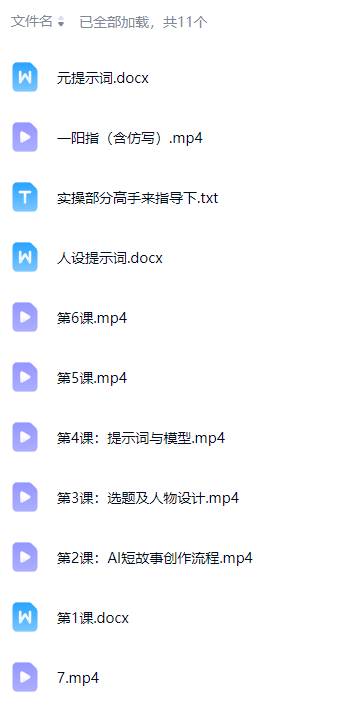
Supporting Study Materials
This course comes with a materials pack. Members receive the access link by email after requesting the course.
Related Courses

Family Comedy Short-Drama Creation Course: Benchmark Hot Accounts, AI-Assisted, Fast Start for Total Beginners, Grow Followers and Drive Product Sales

Amazon AI Automation Practical Course: AI Operating Mindset, Setting Up the Codex Environment, Risk-Control Checks and Automated Listing Copy

AI E-Commerce Data Tool Development Course: Learn Codex+BI From Zero, Build a Multi-Store Integrated Visualization Dashboard


Advanced AI Prompt Application: 15 Lessons | Universal Instruction Thinking + Multiple Output Modes + Full Industry Commercial Cases

AI Video Creation Crash Course: From Great-Case Breakdown to Five Core Modules, Fast-Track AI Video Skills for Total Beginners

AI Commercial Practice System Course: In-Depth SD Mastery + Advanced Flux Hands-On + Comfyui Workflow Building, Full Commercial Design Project Training

[National-Day Pick] AI Automation Game, 1k+ RMB a Day, Simple to Operate, Stable for Three Years! [Revealed]