-
Solo Business Courses
-
 Others
-
Overseas Tutorials
-
Photography & Editing
-
Community & Private Domain
-
Self-Media Writing & Copywriting
-
Side Income Projects
-
E-commerce
-
Short Video & Live Streaming
-
Artificial Intelligence (AI)
-
Software & Tools
-
Operating Systems
-
Plugins & Scripts
-
MacOS Software
-
Android Software
-
Windows Software
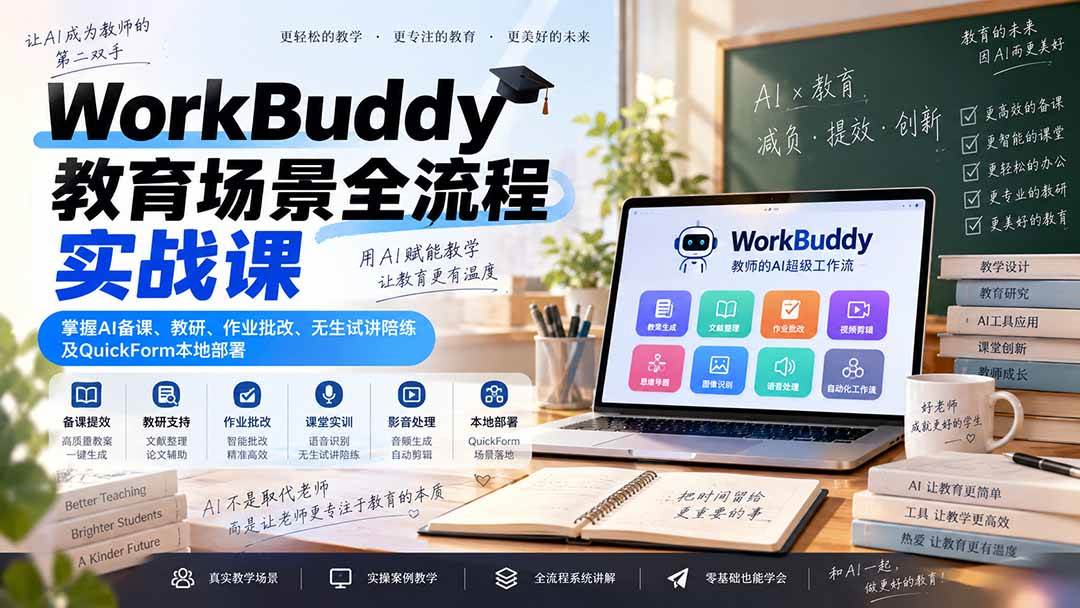
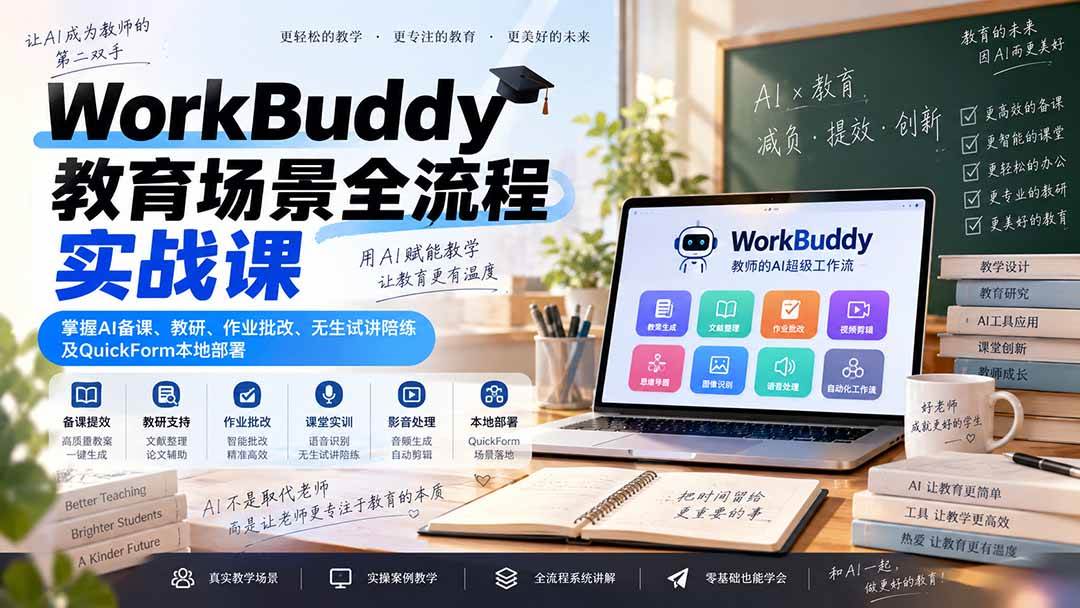
WorkBuddy Education Full-Process Practical Course: Master AI Lesson Prep, Teaching Research, Homework Grading, No-Student Trial Teaching Coaching, and QuickForm Local Deployment
-
Game Gold-Farming Money-Making Plan: Earn 1k+ Daily, a Stable 3-Year Project Anyone Can Do in Spare Time [Revealed]
Study material — included with membership Get Membership -
Hot-game fully-automated earning: 500+ a day, no experience, simple operation - the steadiest long-term game-earning side hustle (revealed)
Study material — included with membership Get Membership -
FlyingMouse earns merit this time! Don't panic at Windows format problems — the open-source FlyingMouse format conversion tool helps, a popular GitHub gem
Study material — included with membership Get Membership -
Douyin Product-Selling Coaching Bootcamp: No On-Camera Appearance Needed, Newbies Can Produce Selling Short Videos by Following the Steps
Study material — included with membership Get Membership -
First-release game gold-farming money plan: 1K+ a day, ordinary people in spare time
Study material — included with membership Get Membership






-
FlyingMouse earns merit this time! Don't panic at Windows format problems — the open-source FlyingMouse format conversion tool helps, a popular GitHub gem
Study material — included with membership Get Membership -
LuDaShi v6.1024.4105.1121 Slim Single File
Study material — included with membership Get Membership -
2D Cartoon Animation Software Moho Pro v14.3
Study material — included with membership Get Membership -
Video Editor Aiseesoft Filmai v1.0.18
Study material — included with membership Get Membership -
To-Do Microsoft To Do v2.147 Free
Study material — included with membership Get Membership -
PR/AE/DaVinci/FCPX video Plugin Nobe OmniScope Win1.11.15 / Mac1.10.138
Study material — included with membership Get Membership





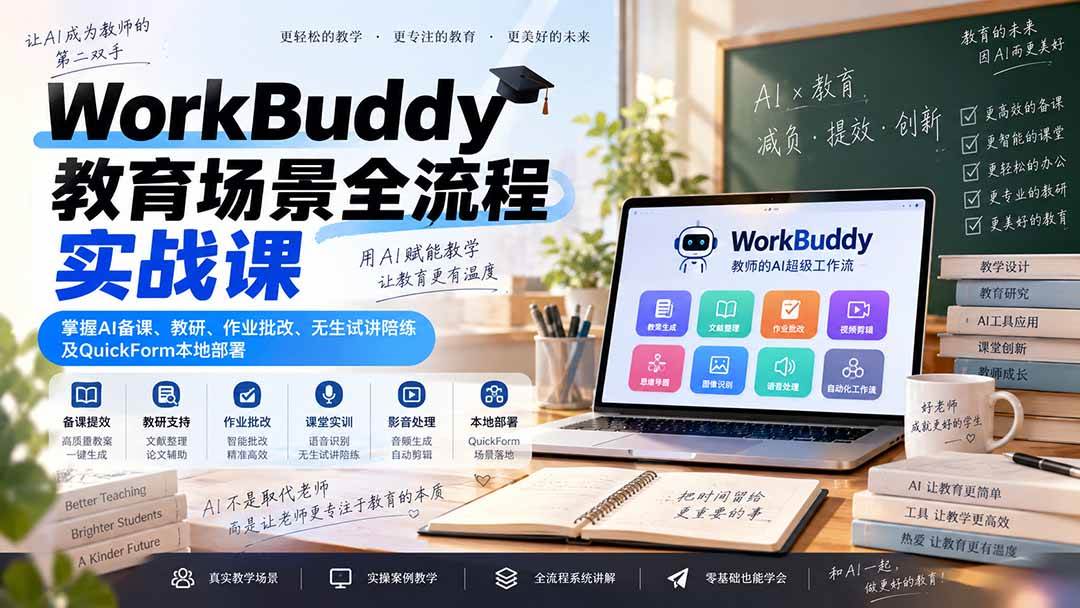
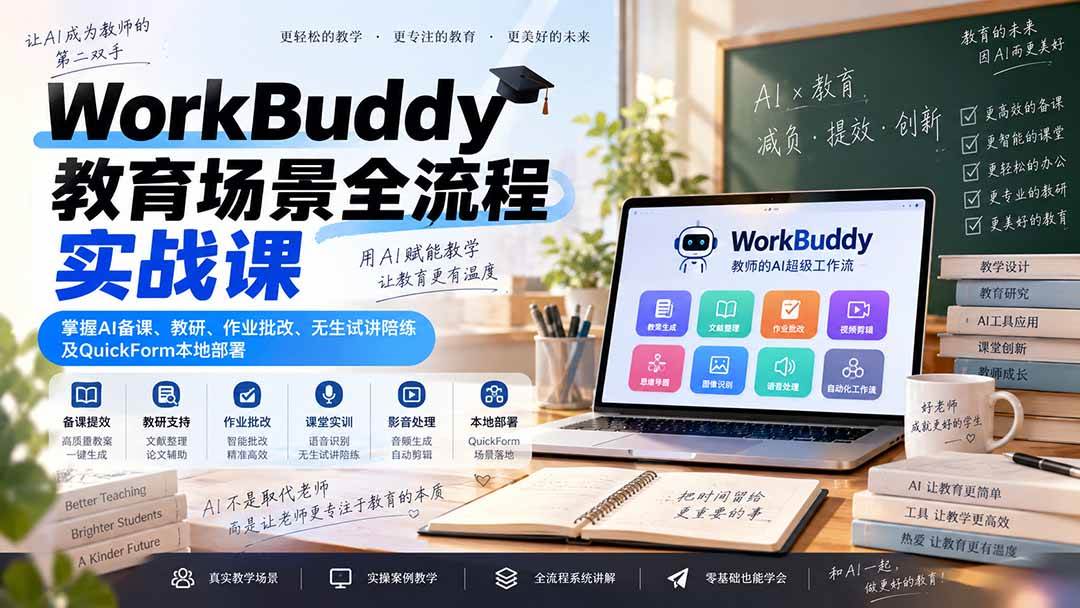
1. Course Introduction
An AI teaching and office-efficiency course built specifically for primary/secondary school and university teachers and education practitioners. It builds a complete learning system around platform basics, connectors, automation, custom Skill development, API calls, cloud storage, audio/video processing, image recognition, and local deployment. Starting from WorkBuddy's spaces, tasks, storage, operation modes, models and connectors, it gets you going fast through cases like paper visual summaries, automated tasks and CLI integration; then advances to Skill deployment and self-development, building teacher-specific tools such as literature download and organization, complex lesson-plan template filling, and knowledge cards, and using APIs for instructional design and paper assistance, AI image generation, mind maps, and smart homework grading. The course also covers TOS cloud storage, voice-timbre generation, classroom-recording processing, AI no-student trial-teaching coaching, speech recognition, AI auto-editing, image recognition, as well as QuickForm invocation and local deployment, helping teachers truly integrate AI into lesson prep, teaching research, grading, office work and classroom practice, building a reusable personal AI workflow and reducing repetitive mechanical work.
2. Who This Is For
- Frontline teachers burdened by heavy daily lesson-prep work
- Education workers who want to use AI to raise efficiency
- Teaching researchers who often make lesson plans and courseware
- Teachers who want to learn Skill and API applications
- Zero-foundation learners who want to build an AI teaching workflow
3. What You Will Gain
- Master WorkBuddy core features and operations
- Independently build teacher-specific AI Skills
- Master API and agent invocation methods
- Achieve efficiency gains in audio/video, grading and teaching research
- Build a personal AI teaching automation workflow
4. Course Catalog:
01. Course Preface
02. Session 1.1 - Getting to know WorkBuddy areas, storage, tasks and spaces
03. Session 1.2 - Getting to know WorkBuddy tasks, spaces, modes and models
04. Session 1.3 - Getting to know WorkBuddy connectors
05. Session 1.4 - Practice Case 1: removing the Feixiang teacher's placeholder
06. Session 1.5 - Practice Case 2: turning a paper into a visual summary
07. Session 1.6 - Advanced Case 1: the assistant's efficient work
08. Session 1.7 - Advanced Case 2: how to set up and use the automation feature
09. Session 1.8 - Advanced Case 3: connecting WorkBuddy to CLI
10. Session 2.1 - Pre-class Q&A
11. Session 2.2 - Built-in skills: deployment and 3D models
12. Session 2.3 - The image-hosting skill in the skill store
13. Session 2.4 - Making a skill: literature download and organization skill
14. Session 2.5 - Making a skill: filling complex templates for instructional design
15. Session 2.6 - Making a skill: knowledge cards skill
16. Session 3.1 - Pre-class Q&A and preparation
17. Session 3.2 - Beginner API: adding an API to an HTML page
18. Session 3.3 - Beginner API: the pen skill writing cases, instructional design, papers
19. Session 3.4 - Beginner API: the super image-generation skill
20. Session 3.5 - Advanced API: invoking a Coze agent to build a mind-map skill
21. Session 3.6 - Advanced API: invoking Coze programming to build a homework-grading skill
22. Session 4.1 - Creating a TOS bucket
23. Session 4.2 - Using the TOS bucket
24. Session 5.1 - Offline lecture experience sharing
25. Session 5.2 - Building an audio-generation skill
26. Session 5.3 - Practice 1: generating audio from a voice timbre
27. Session 5.4 - Practice 2: Voice Lab + data recovery
28. Session 5.5 - Building an audio-processing skill
29. Session 5.6 - Practice 1: classroom recording, no-student trial-teaching coaching skill
30. Session 5.7 - Practice 2: speech recognition lab
31. Session 5.8 - Practice 3: AI auto-editing video
32. Session 5.9 - Building an image-recognition skill
33. Session 5.10 - Image recognition lab
34. Session 6.1 - Pre-class experience sharing
35. Session 6.2 - Building a QuickForm-invocation skill
36. Session 6.3 - QuickForm CLI application practice
37. Session 6.4 - Preparing for QuickForm local deployment
38. Session 6.5 - Local deployment practice: Little Campus Observer
39. Session 6.6 - Key classroom summary
Supporting Study Materials
This course comes with a materials pack. Members receive the access link by email after requesting the course.
Related Courses

Family Comedy Short-Drama Creation Course: Benchmark Hot Accounts, AI-Assisted, Fast Start for Total Beginners, Grow Followers and Drive Product Sales

Amazon AI Automation Practical Course: AI Operating Mindset, Setting Up the Codex Environment, Risk-Control Checks and Automated Listing Copy
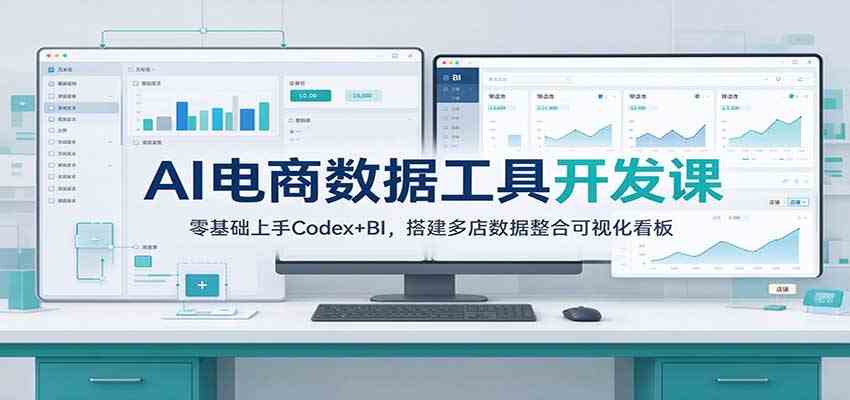
AI E-Commerce Data Tool Development Course: Learn Codex+BI From Zero, Build a Multi-Store Integrated Visualization Dashboard
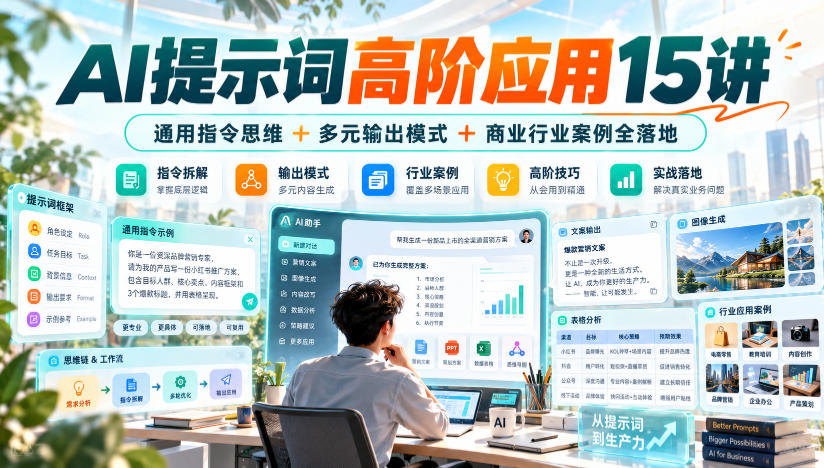
Advanced AI Prompt Application: 15 Lessons | Universal Instruction Thinking + Multiple Output Modes + Full Industry Commercial Cases
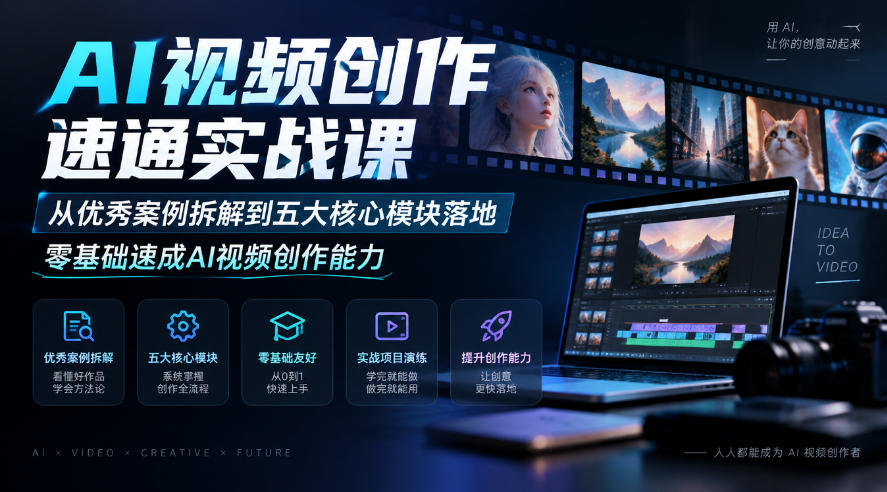
AI Video Creation Crash Course: From Great-Case Breakdown to Five Core Modules, Fast-Track AI Video Skills for Total Beginners

AI Commercial Practice System Course: In-Depth SD Mastery + Advanced Flux Hands-On + Comfyui Workflow Building, Full Commercial Design Project Training

[National-Day Pick] AI Automation Game, 1k+ RMB a Day, Simple to Operate, Stable for Three Years! [Revealed]