-
Solo Business Courses
-
 Others
-
Overseas Tutorials
-
Photography & Editing
-
Community & Private Domain
-
Self-Media Writing & Copywriting
-
Side Income Projects
-
E-commerce
-
Short Video & Live Streaming
-
Artificial Intelligence (AI)
-
Software & Tools
-
Operating Systems
-
Plugins & Scripts
-
MacOS Software
-
Android Software
-
Windows Software


2026 Taobao No-Inventory Source and Dropshipping Practical Course: Full Process from Sourcing at Factories, Product Selection and Testing to Listing, Title Optimization, Traffic Operations and Order Shipping
-
Game Gold-Farming Money-Making Plan: Earn 1k+ Daily, a Stable 3-Year Project Anyone Can Do in Spare Time [Revealed]
Study material — included with membership Get Membership -
Hot-game fully-automated earning: 500+ a day, no experience, simple operation - the steadiest long-term game-earning side hustle (revealed)
Study material — included with membership Get Membership -
FlyingMouse earns merit this time! Don't panic at Windows format problems — the open-source FlyingMouse format conversion tool helps, a popular GitHub gem
Study material — included with membership Get Membership -
Douyin Product-Selling Coaching Bootcamp: No On-Camera Appearance Needed, Newbies Can Produce Selling Short Videos by Following the Steps
Study material — included with membership Get Membership -
First-release game gold-farming money plan: 1K+ a day, ordinary people in spare time
Study material — included with membership Get Membership






-
FlyingMouse earns merit this time! Don't panic at Windows format problems — the open-source FlyingMouse format conversion tool helps, a popular GitHub gem
Study material — included with membership Get Membership -
LuDaShi v6.1024.4105.1121 Slim Single File
Study material — included with membership Get Membership -
2D Cartoon Animation Software Moho Pro v14.3
Study material — included with membership Get Membership -
Video Editor Aiseesoft Filmai v1.0.18
Study material — included with membership Get Membership -
To-Do Microsoft To Do v2.147 Free
Study material — included with membership Get Membership -
PR/AE/DaVinci/FCPX video Plugin Nobe OmniScope Win1.11.15 / Mac1.10.138
Study material — included with membership Get Membership

Part 1: Course overview
The 2026 Taobao No-Inventory and Dropshipping Practical Course is a systematic hands-on course built for e-commerce beginners. It unfolds in full along the chain: e-commerce awareness, store setup preparation, supply chain matching, product selection and testing, product listing, traffic acquisition, order fulfillment, profit calculation, and store optimization. The course starts from the underlying logic of e-commerce, platform selection, startup budget and personal operating model, then explains in detail the basic setup of a new Taobao store, product spec SKUs, title optimization, AI main image creation, short video material production and new product pricing. The product selection section breaks down practical methods including market research, finding suppliers, negotiating with factories, refined dropshipping, small-batch stocking, organic traffic product testing and paid traffic product testing. The operations section goes deep into new store traffic acquisition, product link optimization, data analysis, cost and profit calculation, and operating time management. It also covers everyday business scenarios such as courier price negotiation, order reconciliation, shipping timeliness, handling abnormal items, customer service communication, negative review handling, refund disputes and platform rules, and uses 10 common beginner mistakes to help students avoid problems such as blind stockpiling, trend-chasing selection, wrong pricing and ignoring data, building a complete e-commerce practice system from opening a store from zero to running it continuously.
Part 2: Who this course is for
Part 3: What you will gain after learning
Part 4: Course outline Lesson 1 What is the essence of e-commerce? The logic is simple Lesson 2 Where does e-commerce traffic come from? Basic principles Lesson 1 Reconciliation: did we lose money or make money? Lesson 1 Practical tips for everyday customer service communication Lesson 1 Must-know for beginners: e-commerce order rules and the platform shipping red lines Lesson 1 Product selection: start by sorting out resources around you Lesson 2 Common scams of refund-only demands, swapping goods and malicious claims Lesson 2 How to find real factories or supply chains? Lesson 2 How to enter e-commerce: your approach must be right Lesson 2 How do beginners get traffic in the early stage? Lesson 2 How do beginners negotiate courier prices? Lesson 2 How should you reconcile accounts with factories for dropshipping? Lesson 2 Choose your entry platform based on the product Lesson 2 3 questions you must think through before doing e-commerce Lesson 3 Standardized packing specifications: detailed methods to prevent damage and negative reviews Lesson 3 Precise division of logistics responsibility, never blindly take the blame for others Lesson 3 What settings does a new shop actually need? Lesson 3 What equipment does a beginner need for e-commerce? Lesson 3 Can one person actually run e-commerce? Lesson 3 How do you negotiate prices with factories and set up cooperation? Lesson 3 Organic traffic product testing method 1: main image testing Lesson 3 No results after 3 months, should you keep going? Lesson 4 What is IP isolation? Is it necessary? Lesson 4 Pre-emptive intervention on negative reviews: practical ways to resolve average and negative reviews efficiently Lesson 4 Handling abnormal items after shipping Lesson 4 How do you list your products correctly? Lesson 4 What makes a supply chain reliable? Lesson 4 Advice for ordinary people starting out in e-commerce Lesson 4 Beginner pitfall 1: never touch the mass listing model Lesson 4 Organic traffic product testing method 2: fission testing Lesson 5 Don't start from the products you are personally interested in Lesson 5 Controlling daily shipping timeliness and compliant responses to buyers pressing orders Lesson 5 Beginner pitfall 2: stocking up in bulk Lesson 5 How do you make a main image that gets traffic? Lesson 5 Organic traffic product testing method 3: short video testing Lesson 5 How much budget do you need to start in e-commerce? Lesson 6 Easily complete image creation with AI Lesson 6 What is refined dropshipping? Lesson 6 What products should beginners never touch? Lesson 6 Paid traffic product testing method 1: keeping only the best Lesson 6 Beginner pitfall 3: blindly chasing trending styles Lesson 7 Methods for starting e-commerce with a small amount of stock Lesson 7 Which titles get more traffic? Lesson 7 Paid traffic product testing method 2: full-scale launch Lesson 7 Beginner pitfall 4: ignoring costs and setting prices randomly Lesson 7 The core logic of beginner product selection Lesson 8 The spec SKU settings of the product link are the key Lesson 8 Should new shops build base sales? Lesson 8 Beginner pitfall 5: listing products and then ignoring them Lesson 8 The practice model for beginner product selection Lesson 8 How to reasonably allocate time and energy in e-commerce? Lesson 9 Making e-commerce short videos Lesson 9 Never miss the new shop traffic support phase Lesson 9 How to do good market research during the product selection stage? Lesson 10 How to price new products without losing money? Lesson 10 Beginner pitfall 7: learning only techniques without training the basics Lesson 10 The real e-commerce player: advancing through iteration Lesson 11 Only those who can do the accounts are qualified e-commerce players Lesson 12 Beginner pitfall 9: going by feel without looking at data Lesson 13 Beginner pitfall 10: the red lines must never be touched
Supporting Study Materials
This course comes with a materials pack. Members receive the access link by email after requesting the course.
Related Courses
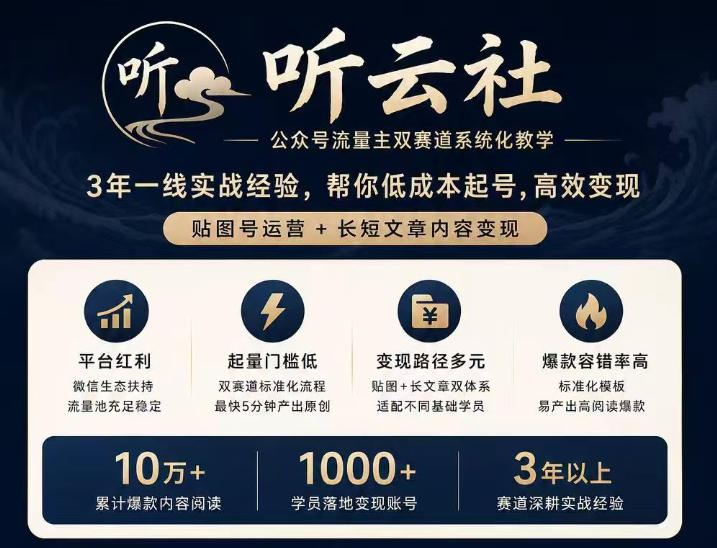
Tingyunshe official-account traffic-master dual-track systematic teaching: 3 years of frontline practice, low-cost account start and efficient monetization
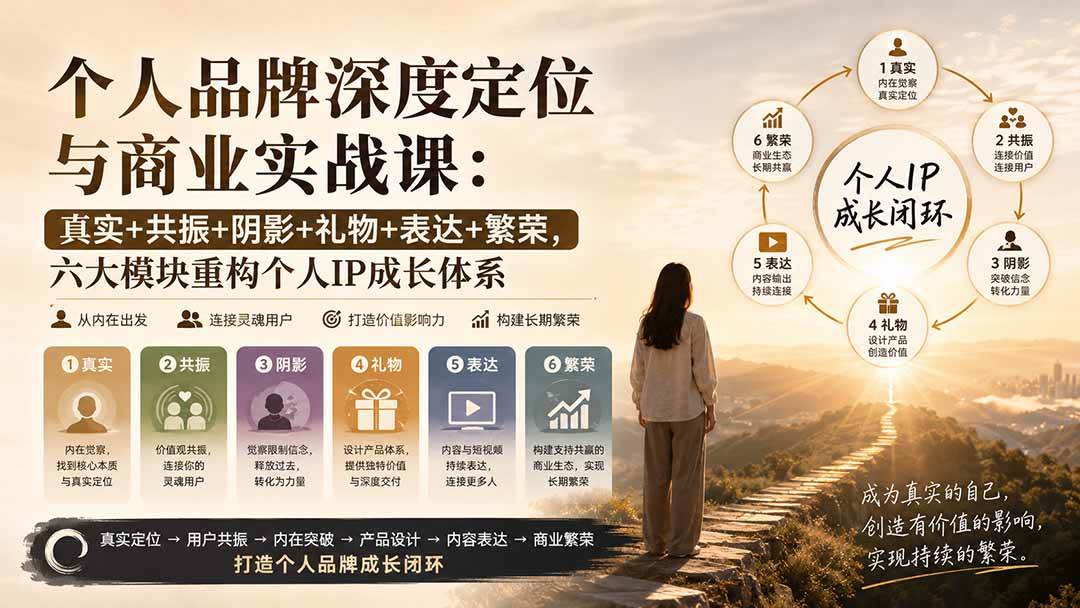

TikTok Southeast Asia cross-border store practice course: market research, onboarding, product selection, listing, shipping and payment collection

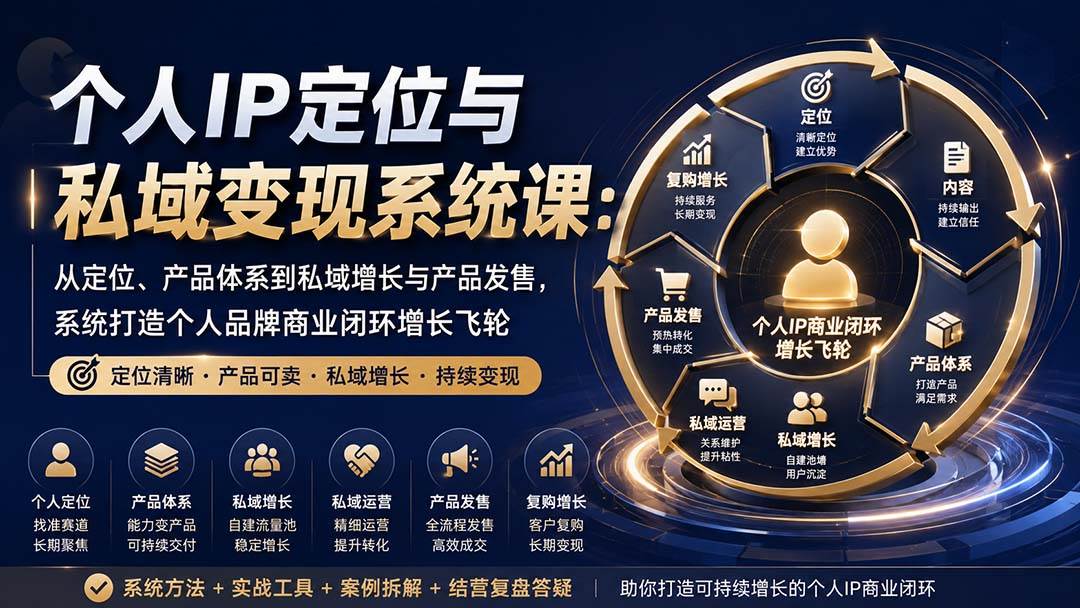
Personal IP + private-domain monetization club: a personal-IP practice course to build the commercial loop of your own IP

Taobao Wanxiangtai Wujie systematic practice course: backend feature breakdown, delivery logic analysis, lowering cost and raising ROI
Tao operations 21-day crash camp: zero-basis easy Taobao operations, no empty gestures, fast replicable landing (updated Aug 2026)

Taobao Flash-Purchase, 20 yuan per order: no strong account base, no complex operation skills - beginners can enter directly
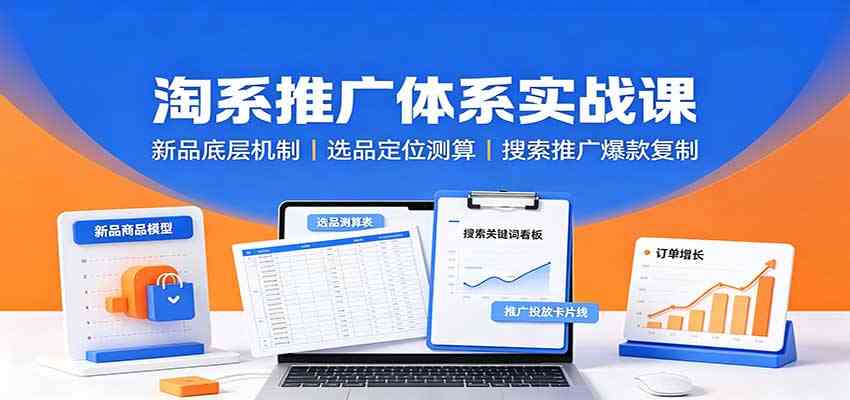
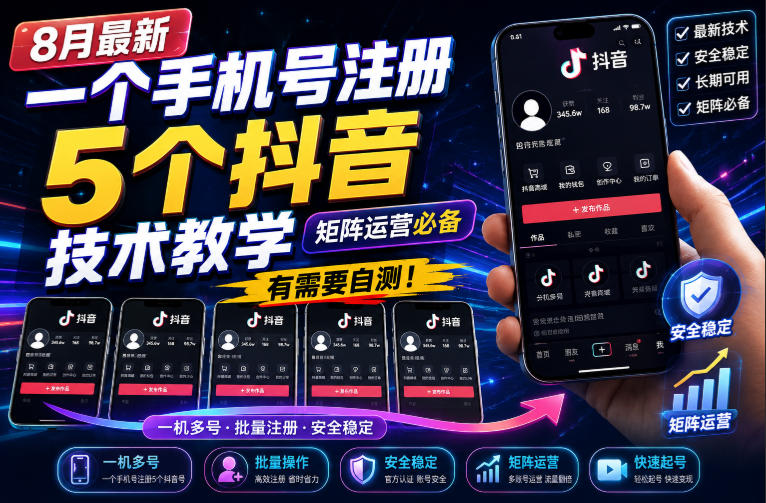
Latest August technique: register 5 Douyin accounts with one phone number - a must for matrix operation, test it if you need it