-
Solo Business Courses
-
 Others
-
Overseas Tutorials
-
Photography & Editing
-
Community & Private Domain
-
Self-Media Writing & Copywriting
-
Side Income Projects
-
E-commerce
-
Short Video & Live Streaming
-
Artificial Intelligence (AI)
-
Software & Tools
-
Operating Systems
-
Plugins & Scripts
-
MacOS Software
-
Android Software
-
Windows Software
AI image creation from zero: 21 days of hands-on practice covering social media images, posters, IP characters, infographics and UI landing pages
-
Game Gold-Farming Money-Making Plan: Earn 1k+ Daily, a Stable 3-Year Project Anyone Can Do in Spare Time [Revealed]
Study material — included with membership Get Membership -
Hot-game fully-automated earning: 500+ a day, no experience, simple operation - the steadiest long-term game-earning side hustle (revealed)
Study material — included with membership Get Membership -
FlyingMouse earns merit this time! Don't panic at Windows format problems — the open-source FlyingMouse format conversion tool helps, a popular GitHub gem
Study material — included with membership Get Membership -
Douyin Product-Selling Coaching Bootcamp: No On-Camera Appearance Needed, Newbies Can Produce Selling Short Videos by Following the Steps
Study material — included with membership Get Membership -
First-release game gold-farming money plan: 1K+ a day, ordinary people in spare time
Study material — included with membership Get Membership






-
FlyingMouse earns merit this time! Don't panic at Windows format problems — the open-source FlyingMouse format conversion tool helps, a popular GitHub gem
Study material — included with membership Get Membership -
LuDaShi v6.1024.4105.1121 Slim Single File
Study material — included with membership Get Membership -
2D Cartoon Animation Software Moho Pro v14.3
Study material — included with membership Get Membership -
Video Editor Aiseesoft Filmai v1.0.18
Study material — included with membership Get Membership -
To-Do Microsoft To Do v2.147 Free
Study material — included with membership Get Membership -
PR/AE/DaVinci/FCPX video Plugin Nobe OmniScope Win1.11.15 / Mac1.10.138
Study material — included with membership Get Membership





No art background, you want to start making AI images quickly, but you can never write a good prompt and the output keeps falling apart, and your idea never turns into the picture you imagined? This 21-day hands-on AI image generation course builds your AI visual creation ability from absolute zero, is not limited to any single drawing software, and the thinking you learn transfers to any AI image platform.
A 21-day practical AI image generation project for learners with no prior knowledge. The course does not just teach how to use GPT-Image2, it also systematically trains the universal skills of AI imaging: requirement breakdown, visual composition, prompt writing, image diagnosis and iterative optimisation. Learners master a method that works across different AI drawing tools and end up able to produce commercial posters, social media imagery, IP characters and knowledge diagrams on their own.
✅Beginner friendly, no drawing skills needed, 21 days of systematic hands-on training
✅The methodology is highly portable, what you learn adapts to many AI drawing tools
✅Ships with multiple ready-to-copy prompt templates you can use immediately
✅Complete closed-loop teaching: break down the requirement → generate the image → diagnose the problem → optimise iteratively
✅Covers many commercial scenarios: posters, IP characters, social media images, infographics, landing pages
Complete beginners with no background who want to learn AI image creation
Content creators who need to produce supporting images and cover assets in bulk
Entrepreneurs who want to quickly produce an IP brand image, posters and event materials
Operations and marketing staff without design support who make their own visual assets
AI enthusiasts who want to learn prompts systematically and stop getting unstable results from every image
✅Complete account configuration confidently, understand the differences between leading AI drawing platforms at home and abroad, and pick the right tool
✅Master the full workflow: requirement breakdown, image analysis, prompt writing, image diagnosis and iteration
✅Master image-to-image and reference image reproduction techniques, and learn to avoid the usual AI generation pitfalls
✅Learn prompt frameworks for many commercial scenarios and independently produce posters, IP, UI and infographics
✅Master batch material generation techniques and improve the efficiency of visual content production
Chapter 1: How to register a ChatGPT account
1.1 Preparation before registering
1.2 Registration steps (explained with images)
1.3 Getting to know GPT-Image 2.0
1.3.1 GPT-Image 2.0 at a glance
1.3.2 Current limitations
1.3.5 Who it suits
1.3.6 Where you can use it
1.3.7 About the GPT-Image2 usage quota
1.4 ChatGPT membership subscription (official price list / how to subscribe)
1.5 Verifying that GPT-Image2 is available
Chapter 2: Introduction to third-party model websites
2.1 Comparison of mainstream third-party platforms
2.2 Recommended path for beginners
2.2.1 Local alternative sites
Chapter 3: The underlying logic of AI image generation, from idea to finished picture
3.1 Set the standard first: what makes an image usable? (understand the 5 core standards)
3.2 Step 1: State the requirement clearly (template / examples)
3.3 Step 2: Break the picture down properly
3.4 Step 3: Write it as a prompt (universal text-to-image template)
3.5 Step 4: Generate the first version of the image
3.6 Step 5: Check the image against the 5 standards
3.7 Step 6: Three rounds of edits until it is usable
3.8 Complete example: from a vague requirement to an executable prompt
3.9 Extra: how to write image-to-image prompts (template and examples)
3.10 Extra: how to write reference image reproduction prompts (reference analysis template)
3.11 Case showcase
3.12 Summary of this section
Bonus lesson: pitfalls in practice, how do you fix misspellings, and how do you steal trending prompts?
Chapter 4: Practice, UI interfaces and social media simulation
4.1 Core prompt framework
4.2 Practical cases and prompts
4.3 Advanced technique: generating marketing assets in batches
Chapter 5: Practice, poster design and commercial visuals
5.1 Prompt framework for poster design
5.2 Practical cases and prompts
5.3 Most common style keywords for commercial images
Chapter 6: Practice, character, IP and scene design
6.1 Prompt framework for character design
6.2 Practical cases and prompts
6.3 Scene design case, a street in a future city
Chapter 7: Practice, knowledge visualisation and infographics
7.1 Infographic types and suitable use cases
7.2 Practical cases and prompts
Chapter 8: Practice, web page summaries and knowledge maps
8.1 Prompt framework for visualising a web page summary
8.2 Practical cases and prompts
Chapter 9: Practice, event landing page design
9.1 Prompt framework for landing page design
9.2 Practical cases and prompts
Supporting Study Materials
This course comes with a materials pack. Members receive the access link by email after requesting the course.
Related Courses
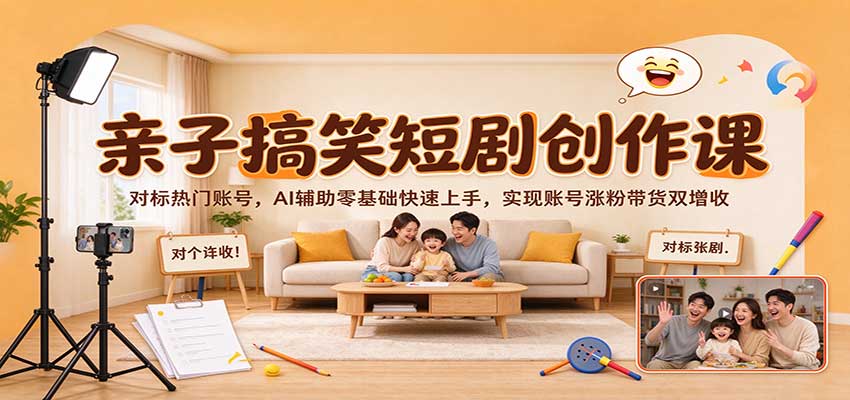
Family Comedy Short-Drama Creation Course: Benchmark Hot Accounts, AI-Assisted, Fast Start for Total Beginners, Grow Followers and Drive Product Sales
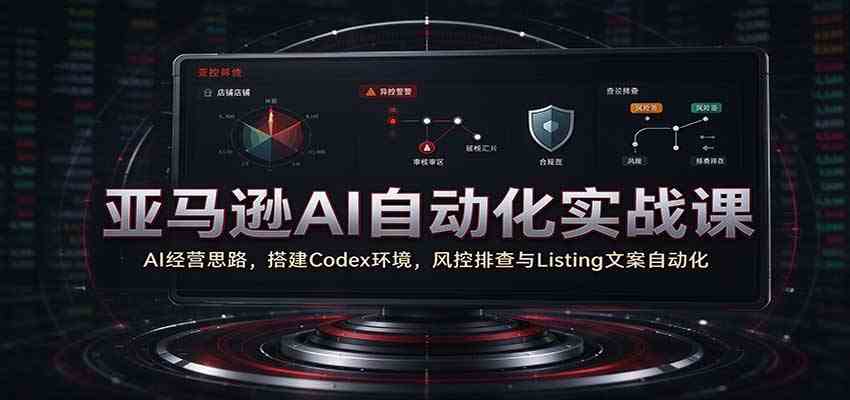
Amazon AI Automation Practical Course: AI Operating Mindset, Setting Up the Codex Environment, Risk-Control Checks and Automated Listing Copy

AI E-Commerce Data Tool Development Course: Learn Codex+BI From Zero, Build a Multi-Store Integrated Visualization Dashboard
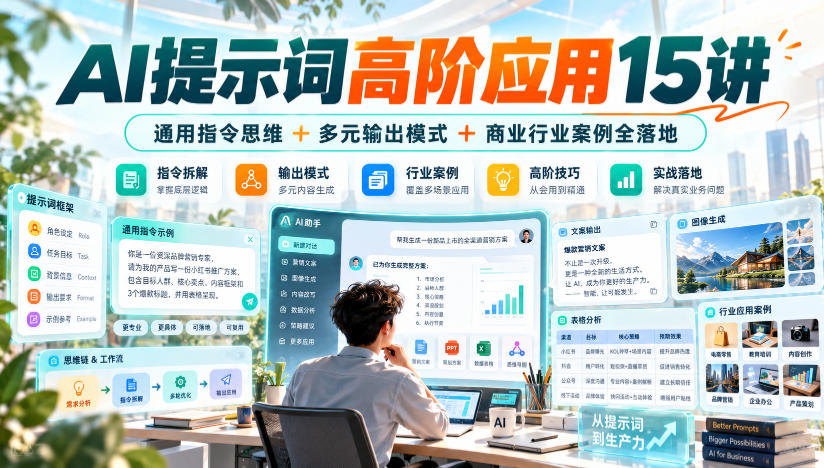
Advanced AI Prompt Application: 15 Lessons | Universal Instruction Thinking + Multiple Output Modes + Full Industry Commercial Cases
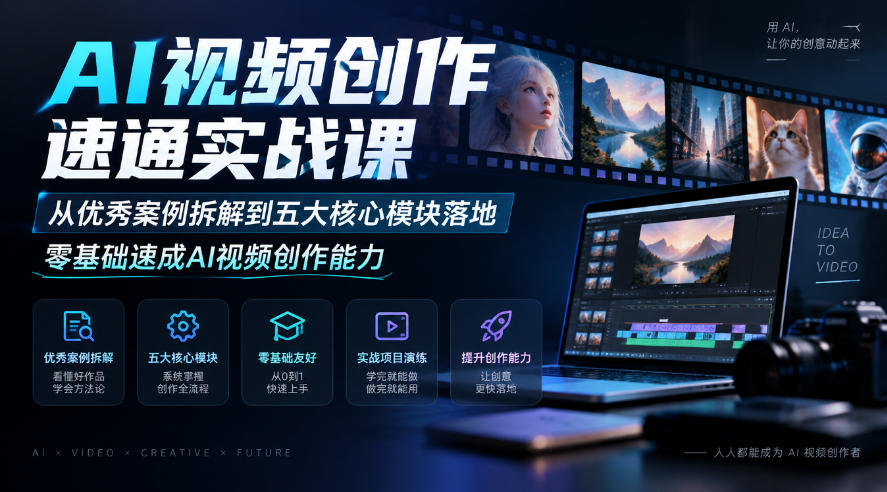
AI Video Creation Crash Course: From Great-Case Breakdown to Five Core Modules, Fast-Track AI Video Skills for Total Beginners
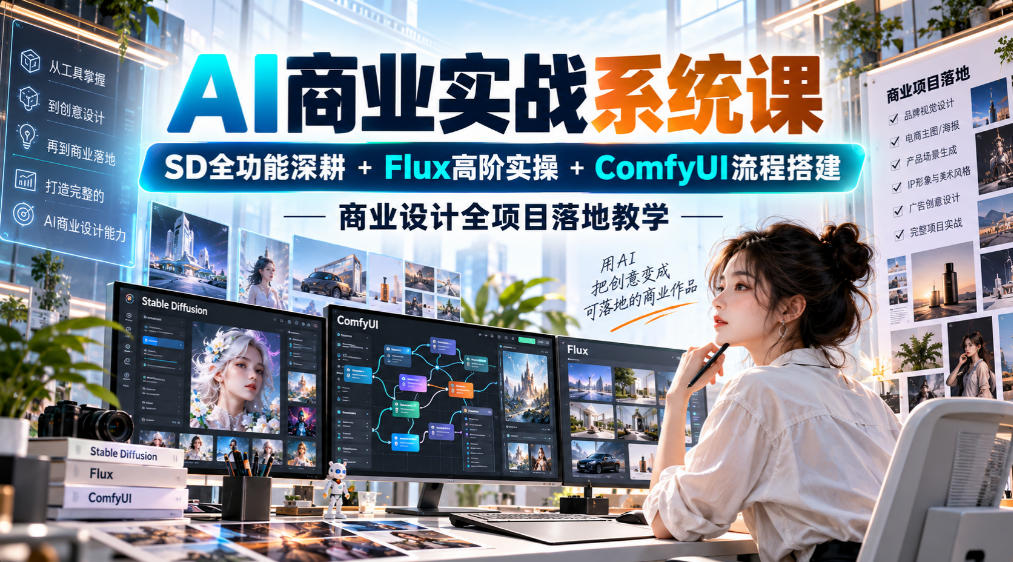
AI Commercial Practice System Course: In-Depth SD Mastery + Advanced Flux Hands-On + Comfyui Workflow Building, Full Commercial Design Project Training

[National-Day Pick] AI Automation Game, 1k+ RMB a Day, Simple to Operate, Stable for Three Years! [Revealed]