-
Solo Business Courses
-
 Others
-
Overseas Tutorials
-
Photography & Editing
-
Community & Private Domain
-
Self-Media Writing & Copywriting
-
Side Income Projects
-
E-commerce
-
Short Video & Live Streaming
-
Artificial Intelligence (AI)
-
Software & Tools
-
Operating Systems
-
Plugins & Scripts
-
MacOS Software
-
Android Software
-
Windows Software
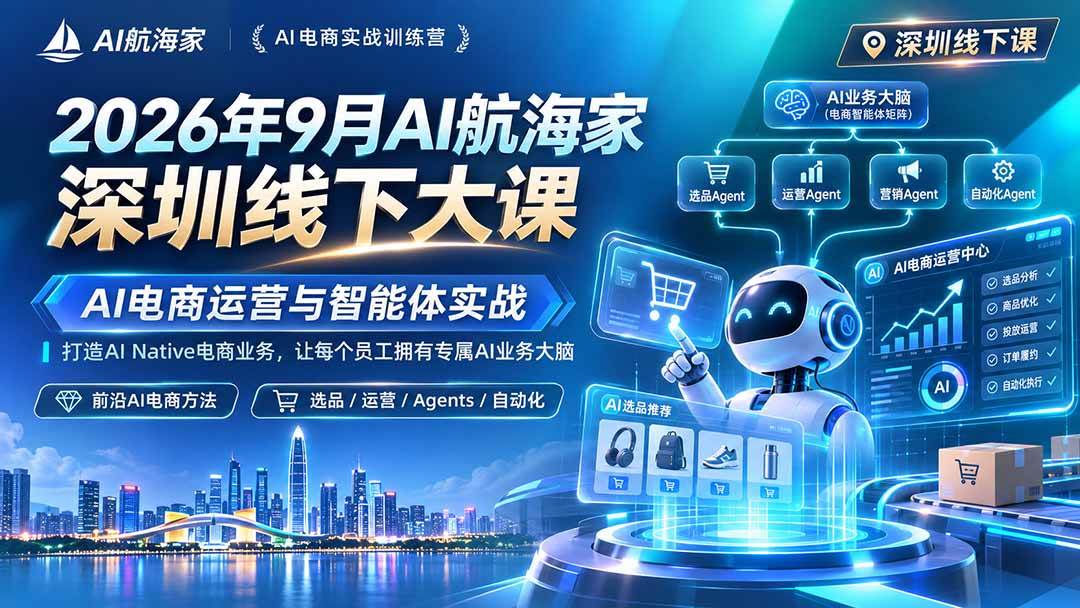
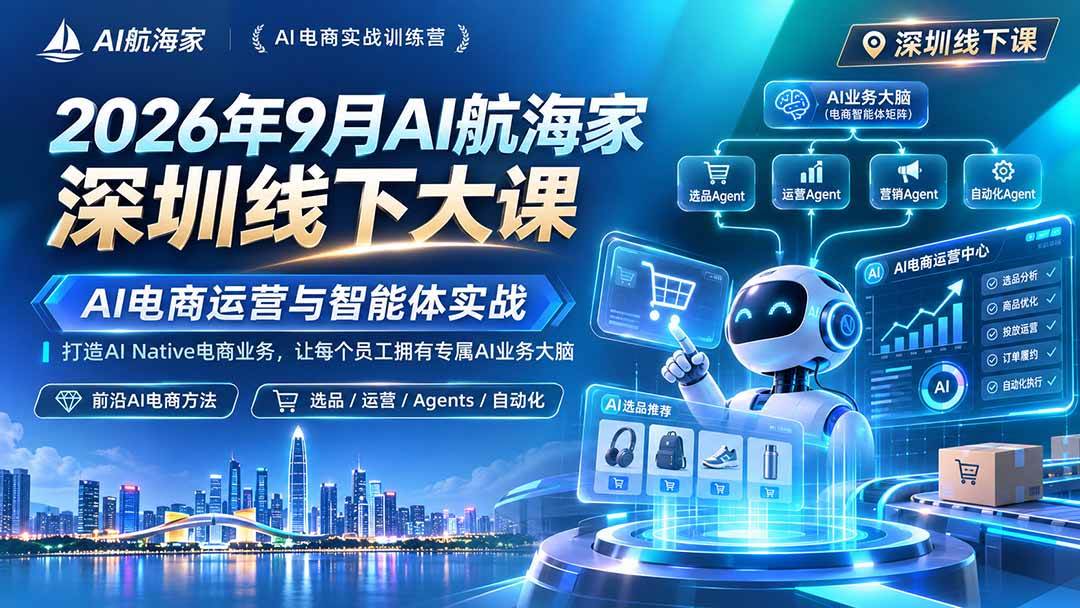
September 2026 AI Navigator Shenzhen offline masterclass: AI e-commerce operations and agent, building AI Native e-commerce business, enabling every employee to have a AI business brain
-
Game Gold-Farming Money-Making Plan: Earn 1k+ Daily, a Stable 3-Year Project Anyone Can Do in Spare Time [Revealed]
Study material — included with membership Get Membership -
Hot-game fully-automated earning: 500+ a day, no experience, simple operation - the steadiest long-term game-earning side hustle (revealed)
Study material — included with membership Get Membership -
FlyingMouse earns merit this time! Don't panic at Windows format problems — the open-source FlyingMouse format conversion tool helps, a popular GitHub gem
Study material — included with membership Get Membership -
Douyin Product-Selling Coaching Bootcamp: No On-Camera Appearance Needed, Newbies Can Produce Selling Short Videos by Following the Steps
Study material — included with membership Get Membership -
First-release game gold-farming money plan: 1K+ a day, ordinary people in spare time
Study material — included with membership Get Membership





-
FlyingMouse earns merit this time! Don't panic at Windows format problems — the open-source FlyingMouse format conversion tool helps, a popular GitHub gem
Study material — included with membership Get Membership -
LuDaShi v6.1024.4105.1121 Slim Single File
Study material — included with membership Get Membership -
2D Cartoon Animation Software Moho Pro v14.3
Study material — included with membership Get Membership -
Video Editor Aiseesoft Filmai v1.0.18
Study material — included with membership Get Membership -
To-Do Microsoft To Do v2.147 Free
Study material — included with membership Get Membership -
PR/AE/DaVinci/FCPX video Plugin Nobe OmniScope Win1.11.15 / Mac1.10.138
Study material — included with membership Get Membership




**Course Name:** AI Navigator Masterclass
**Course Theme:** Building AI Native e-commerce business
**Course Dates:** September 12–13, 2026
**Course Location:** Shenzhen
**Course Format:** 2-day offline course
**Core Course Directions:** AI e-commerce operations, business model analysis, Amazon AI product selection, user demand analysis, AI Agents business workbench, AI Native business restructuring.
—
I. Core Course Introduction
The AI Navigator Masterclass is a set focusing onAI Native e-commerce business and AI agent applicationoffline training course, designed to help e-commerce entrepreneurs, business owners, and operations teams master new e-commerce management methods in the AI era.
The course revolves aroundbusiness model analysis, AI precise product selection, real user demand mining, AI Agents agent building, enterprise business automationand other core content.
By analyzing key business factors such as products, supply chain, traffic, capital, and team, it helps students assess their competitive advantages and find an e-commerce management model suitable for their own resources.
At the same time, the course combines3 million real Amazon search terms, user reviews, competitor data, and market demandConduct hands-on product selection practice and learn to use AI to analyze users' real purchasing intent and filter products with market opportunities.
On this basis, further buildAI Agents business workbench, and explore the practical application of AI in product selection, product development, Listing optimization, ad placement, customer service reviews, and business review.
Throughtwo days of hands-on training across four major modules, help trainees upgrade from traditional e-commerce thinking to the AI Native operating model, and make AI a business analysis assistant and operational decision-making tool for the company.
—
II. What can you gain from two days of learning?
1. Identify the e-commerce profit model that suits you
Look at products, supply chain, traffic, capital, and team, clarify what this business relies on to make money, and which advantage AI should prioritize amplifying.
2. Establish a method from user demand to product selection judgment
Use data such as Amazon search terms, reviews, competitors, prices, and sales to judge which demands are worth continuing to develop into products.
3. Build the company's Agents business workbench
Organize products, users, data, and the boss's operating rules, build Agents, and verify this method on site.
—
III. Complete course schedule: two days, four major hands-on modules
Module 1: In the AI era, infinitely amplify your advantages
**Course theme:** Don't rush to find products; first figure out which business you should do.
Specific teaching content:
1. Complete before classpersonality x resources x strengths assessment, so AI can first understand your real situation.
2. Compare e-commerce operating models such as general listing, boutique products, POD, supply chain, brand, and accessories, analyze what each relies on to make money, and assess inventory pressure and operating risks.
3. Comprehensively reviewproducts, supply chain, traffic, capital, experience, and team, and clarify your own operating advantages.
4. Use AI to assist in analyzing personal resources and market opportunities, and determine the e-commerce development direction that suits you.
5. Clearly see which hot products suit you and which trends you no longer need to blindly chase.
Stage outcome:
Identify the e-commerce approach and operating model that suit you.
Module 2: Hands-on AI product selection - screen out your opportunities from 3 million real demands
**Course theme:** Only after the model is set can AI know which part of the data to read for you.
Specific teaching content:
1. In class, call3 million real Amazon search terms, and initially screen product directions related to your own e-commerce business.
2. Learn to avoidAI hallucinations, supplement category, price, sales, competitor, and review data, and verify whether there is real purchasing demand behind the search.
3. Masterthe Socratic questioning method, and through continuous in-depth questioning, trace from category opportunities to specific audiences, usage scenarios, and product demands.
4. Combine real product cases to review the process from discovering market leads to product development and shipping to FBA.
5. Learn how to use AI to discover market gaps, analyze user pain points, and screen potential product opportunities.
Case content:
The course presents real product development reviews, includinga product development success rate of over 90% in two years, and cases such as shipping to FBA in only 4 days from discovering a lead.
Note: The above data are course case introductions and do not represent general business results.
Stage outcome:
Screen out 3 product opportunities that match your own resources, and complete one deep-dive opportunity card.
Module 3: Agents hands-on - build your AI business workbench
**Course theme:** After finding an opportunity, use the opportunity card to reconstruct the business model with an AI Native approach.
Specific teaching content:
1. Understand the five levels of AI in e-commerce business:
- AI as a tool
- AI reconstructs business
- AI drives business
- Organization self-evolution
- Organization second brain
2. Break down the practical case of Guomin gradually developing from the first **Agent that "listens to users' voices"** to more than 170 Agents.
3. Do not stop at writing prompts; practice creating your ownfirst Agent, and write a job description.
4. Analyze the AI agent needs of different e-commerce roles, covering:
– AI product selection Agent
– Product development Agent
– Image production Agent
– Listing optimization Agent
– Advertising Agent
– Customer service management Agent
– Business review Agent
5. Based on the market opportunities selected earlier, determine the responsibilities, workflows, and business goals of key Agents.
6. Learn to build agents using product data, user information, and business rules, so that AI participates in actual company operations.
Stage outcome:
Build the first version of an AI Agents workbench based on your own business model and products.
Module 4: Team hackathon practice - use works to solve real problems
**Course theme:** Choose a real e-commerce problem and truly apply the methods learned earlier.
Specific teaching content:
1. Teams focus on onespecific user, one real need, one e-commerce problem, and determine the Agent design direction.
2. Integrate the business models, market data, opportunity judgment, and Agent methods learned earlier to complete an actual work.
3. Through team collaboration, solve specific problems in product selection, operations, business analysis, or process optimization.
4. Guomin Sam will comment on site, the audience will vote, and excellent works will be selected.
5. Present excellent Agent solutions and learn the business design approaches of different teams.
Stage outcome:
Each group completes an Agent hackathon project, and outstanding projects advance to the on-site roadshow.
—
IV. Nine Major Differences Between AI Native E-commerce and Traditional E-commerce
1. Demand Research
AI Native E-commerce: Analyzes data 24 hours a day, identifying demand changes, user purchase intent, and market supply gaps from a large number of real Amazon search terms.
Traditional E-commerce: Mainly relies on rankings and peer experience, analyzing around similar keywords.
2. Product Selection Judgments
AI Native E-commerce: Understands its own business information and filters product opportunities that better suit itself from real demand.
Traditional E-commerce: Looks at sales rankings, competitors, and copycat situations, referencing products that peers are making money from.
3. Product Launch Speed
AI Native E-commerce: Uses AI to improve product analysis, development, and decision-making efficiency, shortening the cycle of a new product from discovery to launch.
Traditional E-commerce: New product development relatively relies on manual experience, and the development cycle is longer.
4. Sampling and Supply Chain
AI Native E-commerce: Analyzes competitors' negative reviews before sampling, so the first version of the sample references user opinions in advance.
Traditional E-commerce: Judges problems only after receiving samples, relying on factory experience and personal intuition.
5. Listings and Images
AI Native E-commerce: Mines selling points directly from user feedback and uses AI to assist in generating copy and image plans.
Traditional E-commerce: Relies on operators or personal experience to find and describe product selling points.
6. Advertising
AI Native E-commerce: AI employees automatically monitor campaigns, assist in analyzing advertising data, and optimize advertising strategies.
Traditional E-commerce: Manually adjusts prices, checks reports, and adjusts advertising budgets based on experience.
7. Customer Service and Reviews
AI Native E-commerce: Uses AI to analyze a large number of customer reviews one by one, summarize user needs, and propose improvement plans.
Traditional E-commerce: Relies on manual spot checks of reviews and judges problems based on partial feedback.
8. New Business Initiation
AI Native E-commerce: Analyzes product and brand directions on a weekly basis and uses AI to assist in formulating business plans.
Traditional E-commerce: Advances new products and brand operations on a monthly basis, mainly relying on manual gradual expansion.
9. Experience Accumulation
AI Native E-commerce: Converts business experience into knowledge and rules that AI can call upon, assisting employees in completing business work.
Traditional E-commerce: Experience is mostly kept in the minds of the boss or individual employees, and personnel changes may affect business continuity.
Core Concept:
Let AI understand your business and users, let AI participate in product selection, operations, analysis, and decision-making, and drive the automation of e-commerce business processes and the upgrading of organizational efficiency.
—
V. Main Problems the Course Solves
1. **Not knowing which e-commerce model to pursue:** Find a business direction that suits you through resource and advantage assessments.
2. **Product selection relying on feelings and trends:** Use real search terms and market data to assist product decisions.
3. **Unable to judge users' real needs:** Identify market opportunities by combining keywords, competitors, reviews, and sales.
4. **Many AI tools but no idea how to implement them:** Build specific business workflows through Agents.
5. **E-commerce operations relying too heavily on manual work:** Explore the application of AI in product selection, listings, advertising, customer service, and reviews.
6. **Business experience being difficult to accumulate:** Gradually build reusable business capabilities through AI knowledge and business rule development.
—
VI. Suitable Audience
1. E-commerce owners who want to use AI to improve efficiency.
2. E-commerce operations personnel engaged in Amazon and cross-border e-commerce.
3. E-commerce entrepreneurs who want to learn AI product selection.
4. Enterprise teams preparing to build AI agents.
5. Operators who want to transition to AI Native e-commerce.
VII. What You Will Gain
1. Master an e-commerce business model that suits you.
2. Learn to use AI to analyze user needs and select products.
3. Master the method for building AI Agents.
4. Understand the complete process of AI-driven e-commerce operations.
5. Build a preliminary AI e-commerce business workbench.
—
Course core summary:
The AI Navigator master course uses four major modules - business model analysis, product selection from 3 million real Amazon search terms, Agents building, and group hackathon practice - to help students master the core operating methods of AI Native e-commerce, moving from traditional manual operations to AI-assisted analysis, automated execution, and intelligent business decisions.
Supporting Study Materials
This course comes with a materials pack. Members receive the access link by email after requesting the course.
Related Courses

Family Comedy Short-Drama Creation Course: Benchmark Hot Accounts, AI-Assisted, Fast Start for Total Beginners, Grow Followers and Drive Product Sales

Amazon AI Automation Practical Course: AI Operating Mindset, Setting Up the Codex Environment, Risk-Control Checks and Automated Listing Copy
AI E-Commerce Data Tool Development Course: Learn Codex+BI From Zero, Build a Multi-Store Integrated Visualization Dashboard
Advanced AI Prompt Application: 15 Lessons | Universal Instruction Thinking + Multiple Output Modes + Full Industry Commercial Cases
AI Video Creation Crash Course: From Great-Case Breakdown to Five Core Modules, Fast-Track AI Video Skills for Total Beginners

AI Commercial Practice System Course: In-Depth SD Mastery + Advanced Flux Hands-On + Comfyui Workflow Building, Full Commercial Design Project Training

[National-Day Pick] AI Automation Game, 1k+ RMB a Day, Simple to Operate, Stable for Three Years! [Revealed]