-
Solo Business Courses
-
 Others
-
Overseas Tutorials
-
Photography & Editing
-
Community & Private Domain
-
Self-Media Writing & Copywriting
-
Side Income Projects
-
E-commerce
-
Short Video & Live Streaming
-
Artificial Intelligence (AI)
-
Software & Tools
-
Operating Systems
-
Plugins & Scripts
-
MacOS Software
-
Android Software
-
Windows Software
EXEDll Packer Detection & Decompilation Tool Exeinfo PE v0.0.9.5 Chinese-localized
-
Game Gold-Farming Money-Making Plan: Earn 1k+ Daily, a Stable 3-Year Project Anyone Can Do in Spare Time [Revealed]
Study material — included with membership Get Membership -
Hot-game fully-automated earning: 500+ a day, no experience, simple operation - the steadiest long-term game-earning side hustle (revealed)
Study material — included with membership Get Membership -
FlyingMouse earns merit this time! Don't panic at Windows format problems — the open-source FlyingMouse format conversion tool helps, a popular GitHub gem
Study material — included with membership Get Membership -
Douyin Product-Selling Coaching Bootcamp: No On-Camera Appearance Needed, Newbies Can Produce Selling Short Videos by Following the Steps
Study material — included with membership Get Membership -
First-release game gold-farming money plan: 1K+ a day, ordinary people in spare time
Study material — included with membership Get Membership






-
FlyingMouse earns merit this time! Don't panic at Windows format problems — the open-source FlyingMouse format conversion tool helps, a popular GitHub gem
Study material — included with membership Get Membership -
LuDaShi v6.1024.4105.1121 Slim Single File
Study material — included with membership Get Membership -
2D Cartoon Animation Software Moho Pro v14.3
Study material — included with membership Get Membership -
Video Editor Aiseesoft Filmai v1.0.18
Study material — included with membership Get Membership -
To-Do Microsoft To Do v2.147 Free
Study material — included with membership Get Membership -
PR/AE/DaVinci/FCPX video Plugin Nobe OmniScope Win1.11.15 / Mac1.10.138
Study material — included with membership Get Membership



In the field of computer software, EXE and DLL files are often wrapped in various "packers"; these packers may be added by developers to protect intellectual property and prevent code from being decompiled, but they may also be used by malware authors to conceal their true intent and behavior. As a professional packer-detection tool, Exeinfo PE plays a key role in analyzing and identifying the packers and related attributes of these files.
\
Simple and easy-to-use interface
\Exeinfo PE has an intuitive user interface; even novice users can quickly get started. The main window layout is clear, and each functional area is obvious at a glance. When users drag a target EXE or DLL file onto the software interface, it immediately begins analysis and displays detailed information.
\Core packer-detection features
\One of the tool's core features is accurately identifying the type of packer applied to a file. Whether it is a common compression packer such as UPX, ASPack, or PECompact, or various encryption packers and virtual-machine protection packers, Exeinfo PE can make precise judgments with its powerful signature library. This is crucial for security researchers, because only after determining the packer type can they take corresponding unpacking or further analysis steps. For example, after detecting a UPX packer, experts can use a dedicated unpacking tool to restore the original file for in-depth code review and vulnerability discovery.
\File property information display
\In addition to packer detection, Exeinfo PE also provides rich file property data. It can display key content such as the file's entry point address, file offsets, and section information. These data help users deeply understand the file's structure and operating mechanism. For example, by analyzing section information, researchers can understand the permission settings, sizes, and in-memory layout of each part of the file, thereby determining whether there are abnormal sections or hidden code segments, which is critical for discovering the hidden behavior of malware.
\File format parsing capability
\This tool also has powerful file format parsing capabilities, and can check whether a file's PE header is valid and whether there are signs of tampering or corruption. This is of great significance for ensuring the integrity and security of analyzed files. When faced with files that have been maliciously modified, Exeinfo PE can quickly identify anomalies and remind users to pay attention to potential risks.
\Language file analysis support
\In addition, Exeinfo PE supports analysis of files written in multiple programming languages. Whether they are EXE and DLL files generated by C, C++, Delphi, or other mainstream languages, it can provide accurate information.
\Tool usage & summary
\In today's complex software landscape, malware keeps emerging and protection techniques diversify. With its strong packer-detection and file-analysis features, Exeinfo PE gives security practitioners, developers, and enthusiasts an effective tool to understand and handle EXE and DLL files. Whether in reverse engineering, security detection, or intellectual property protection, it plays an irreplaceable role and is worth learning in depth.
\https://github.com/ExeinfoASL/Exeinfo and http://www.exeinfo.xn.pl/
\ \Related Courses
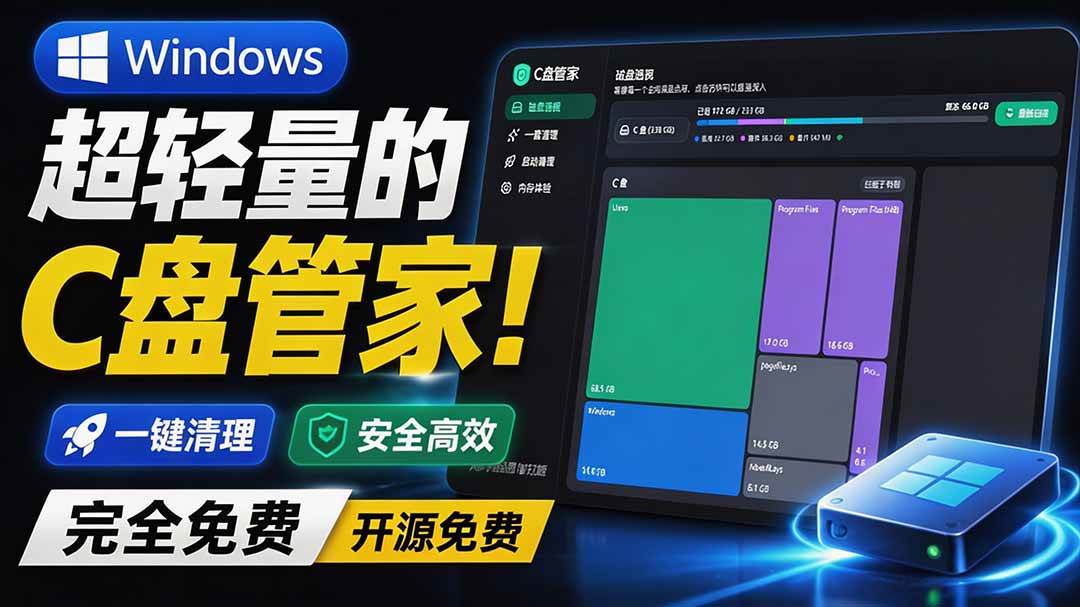
Super-lightweight C-Drive Manager for Windows! Very distinctive: disk analysis and cleanup reminders, 2MB size, completely free

Reinstall Without a USB Drive! This Tool Lets Newbies Quickly Reinstall Windows, Supports Unattended Setup, Data-Safe—CmzPrep_Rev2

A GitHub speed-up tool! Open GitHub faster, auto-responding to the fastest node - a lightweight open-source tool: Ghips

EasyRC: one-click Windows reinstall without USB, backup and restore included

Permanently Block Windows 10/11 Updates: Huawei Tool, Avoid Frequent Win Update Problems
Windows 7/10/11 System Update Blocker Is Here! Only 400KB, One-Click Disable System Updates and Restore Updates, Compact and Easy to Use

Stop Deleting Files Randomly! C Drive Red Alert Savior: Deep Cleanup + System Optimization, Works on Windows/macOS!

Office Fully-Automatic One-Click Deployment Installer, up to 2024, Customizable Components, Built-in Activation, All Free - Mocreak

Windows System Reinstall Tool, Supports Local Image File Install and Backup, Simple to Use, Safe and Stable, Supports All Scenarios

PC Acting Up? Newbie-Essential Driver Repair Tool—One-Click Update & Fix Driver Issues, It’s That Simple