-
Solo Business Courses
-
 Others
-
Overseas Tutorials
-
Photography & Editing
-
Community & Private Domain
-
Self-Media Writing & Copywriting
-
Side Income Projects
-
E-commerce
-
Short Video & Live Streaming
-
Artificial Intelligence (AI)
-
Software & Tools
-
Operating Systems
-
Plugins & Scripts
-
MacOS Software
-
Android Software
-
Windows Software

USB Boot Creator v2.0.1.9 (Lossless Install Mode)
-
Game Gold-Farming Money-Making Plan: Earn 1k+ Daily, a Stable 3-Year Project Anyone Can Do in Spare Time [Revealed]
Study material — included with membership Get Membership -
Hot-game fully-automated earning: 500+ a day, no experience, simple operation - the steadiest long-term game-earning side hustle (revealed)
Study material — included with membership Get Membership -
FlyingMouse earns merit this time! Don't panic at Windows format problems — the open-source FlyingMouse format conversion tool helps, a popular GitHub gem
Study material — included with membership Get Membership -
Douyin Product-Selling Coaching Bootcamp: No On-Camera Appearance Needed, Newbies Can Produce Selling Short Videos by Following the Steps
Study material — included with membership Get Membership -
First-release game gold-farming money plan: 1K+ a day, ordinary people in spare time
Study material — included with membership Get Membership






-
FlyingMouse earns merit this time! Don't panic at Windows format problems — the open-source FlyingMouse format conversion tool helps, a popular GitHub gem
Study material — included with membership Get Membership -
LuDaShi v6.1024.4105.1121 Slim Single File
Study material — included with membership Get Membership -
2D Cartoon Animation Software Moho Pro v14.3
Study material — included with membership Get Membership -
Video Editor Aiseesoft Filmai v1.0.18
Study material — included with membership Get Membership -
To-Do Microsoft To Do v2.147 Free
Study material — included with membership Get Membership -
PR/AE/DaVinci/FCPX video Plugin Nobe OmniScope Win1.11.15 / Mac1.10.138
Study material — included with membership Get Membership

USB Boot Creator is a practical tool for OS setup and system maintenance. It supports dual-partition builds and a lossless install mode, turning an ordinary USB drive into a boot disk compatible with both BIOS and UEFI in one tap. It supports UD-HDD, FAT32 and other boot formats, and includes a built-in virtual test so you can verify the boot disk before relying on it — a big boost to setup success.
\
Core features
\1. Multiple partitions & boot modes
\It builds ISO and FBA boot disks with dual partitions.
\It also builds triple-partition disks that work with legacy BIOS and new UEFI.
\2. Virtual test
\Two virtual test modes let you simulate and verify the boot disk inside the app — no reboot, no second machine.
\3. Custom boot menu
\Personalize the boot disk’s menu to create your own boot interface.
\4. Convenient file management
\Drop the OS images and other files you need into the program folder — the tool picks them up automatically.
\It also supports drag-and-drop to add install files — very handy. (Note: drag-and-drop doesn’t work on Win8 / 8.1 / 10.)
\About the “custom menu” feature
\This feature extracts the “message” menu file from the UD hidden partition or the EFI hidden partition of a boot disk you’ve already made.
\How it works: first it searches the USB’s UD partition; if it can’t find the “message” menu there, it tells you “menu not found”; then it searches the EFI partition for the menu — and if that’s missing too, it says so and boots with the default menu.
\Important: when you import a modified menu back, it goes only into the original UD or EFI partition and overwrites the existing menu file directly — it does not export a copy to your computer.
\If you need to export the menu file for editing or backup, use the dedicated message customization tool.
\Finally: given the complexity of PC hardware and software, no tool can be 100% compatible with every machine; occasional incompatibilities are normal.
\Bottom line
\USB Boot Creator is a sharp tool for setup enthusiasts, IT technicians and everyday users installing or repairing systems. When your system crashes, you’re setting up a new PC, or you need a PE environment for repairs, a reliable, compatible boot USB matters. Its core value is compatibility and ease of use: dual- and triple-partition modes bridge legacy BIOS and UEFI, so the boot disk starts on most old and new machines. The “lossless install” mode avoids formatting-related data loss, and the virtual test is a safe sandbox — verify the disk before relying on it, cutting the frustration of repeated failed builds. While advanced features like menu customization have some limits and compatibility notes, they don’t change its role as an efficient, one-stop boot-disk solution. For anyone who installs OSes, partitions disks, recovers data or repairs systems themselves, keeping this tool — and a boot USB ready — is an important layer of insurance for your data and workflow.
Related Courses
Super local toolbox! Built-in screen recording, audio/video cutting & merging, video compression & extraction, forever free - Kedou Video Converter
100% perfect free tool! One-stop multi-function PDF software: PDF convert, compress, edit etc., minimal, no ads, so nice - JOPDF
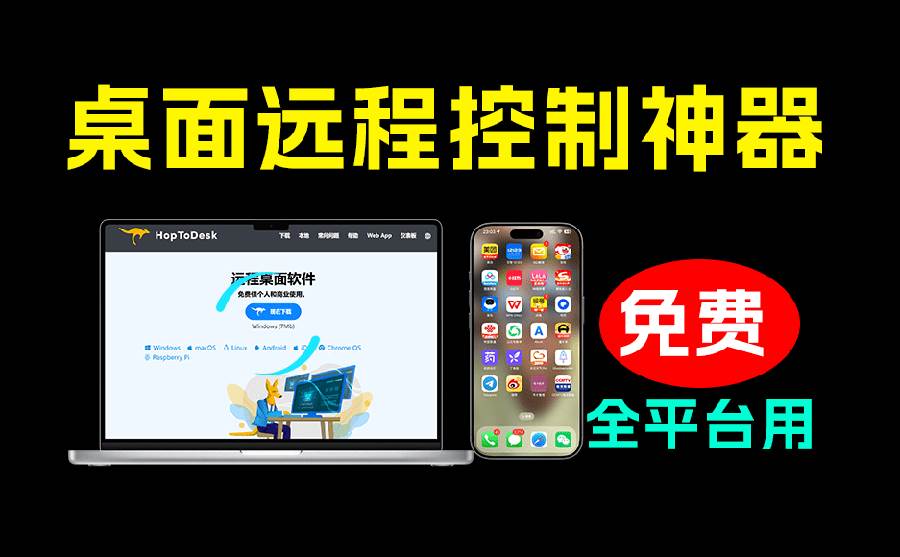
Open-Source Desktop Remote Tool, Beats Paid Versions! Free for Personal and Commercial Use Unlimited, Cross-Platform, HopToDesk Remote Control

Latest K-12 Textbook Downloader: Whole-Grade Resource Download, Courseware, Video, Audio in One Click

HuyanBao: free blue-light eye-care app with pet break reminders
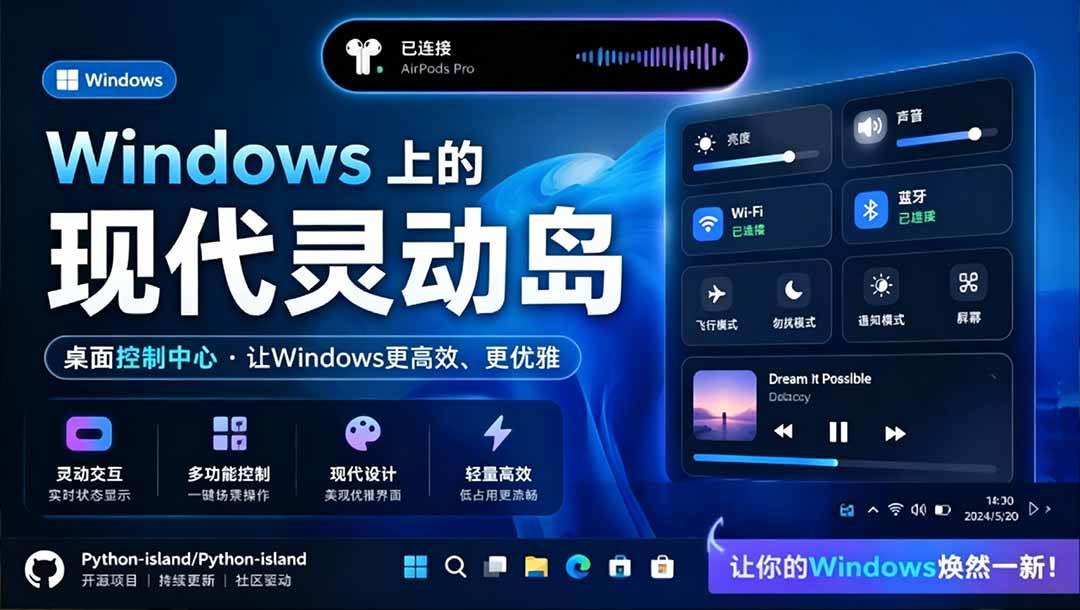
Windows Can Have a Desktop Dynamic Island Too! A Modern System Control Center — Give Your PC a Black Notch, PyIsland

3D Simulated Comic Drama Production: Seedance2.0 Full-Process Practical Course - From Zero to One High-Quality Comic Drama Creation

Win/Mac Dual Support! Latest Permanent Lifetime Version, Supports Old Photo Restoration, Image Sharpening and Lossless Upscaling Tool, Aiarty Image Enhancer
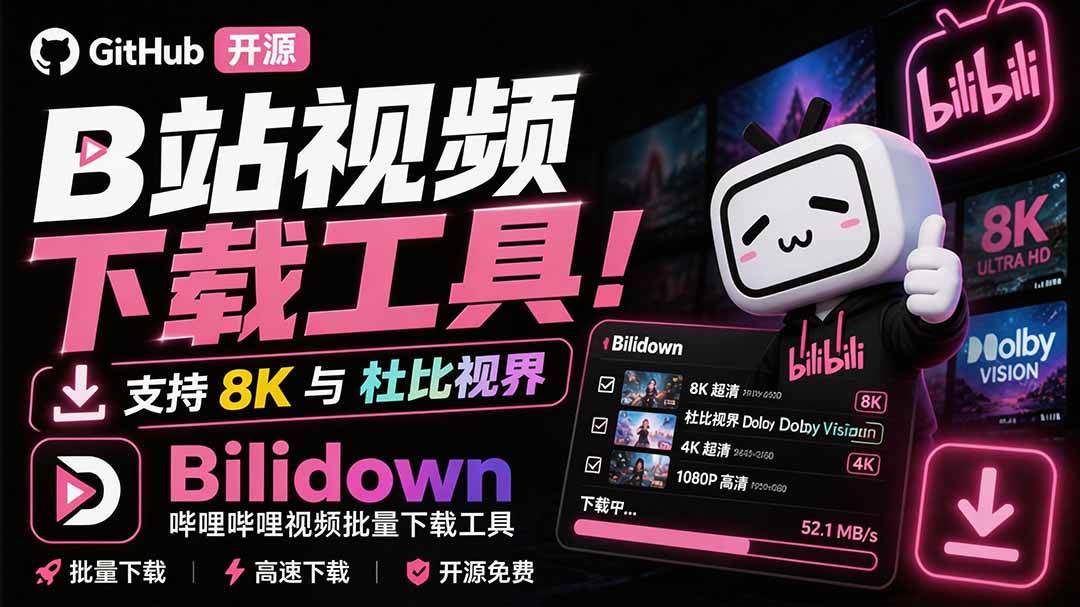
Online Video Course: Github Open-Source Bilibili Video Download Tool! Supports 8K and Dolby Vision Bilibili Video Batch Download Tool, Easy to Use Bilidown