-
Solo Business Courses
-
 Others
-
Overseas Tutorials
-
Photography & Editing
-
Community & Private Domain
-
Self-Media Writing & Copywriting
-
Side Income Projects
-
E-commerce
-
Short Video & Live Streaming
-
Artificial Intelligence (AI)
-
Software & Tools
-
Operating Systems
-
Plugins & Scripts
-
MacOS Software
-
Android Software
-
Windows Software

Desktop Hardware Monitor v10.2026.1.1802
-
Game Gold-Farming Money-Making Plan: Earn 1k+ Daily, a Stable 3-Year Project Anyone Can Do in Spare Time [Revealed]
Study material — included with membership Get Membership -
Hot-game fully-automated earning: 500+ a day, no experience, simple operation - the steadiest long-term game-earning side hustle (revealed)
Study material — included with membership Get Membership -
FlyingMouse earns merit this time! Don't panic at Windows format problems — the open-source FlyingMouse format conversion tool helps, a popular GitHub gem
Study material — included with membership Get Membership -
Douyin Product-Selling Coaching Bootcamp: No On-Camera Appearance Needed, Newbies Can Produce Selling Short Videos by Following the Steps
Study material — included with membership Get Membership -
First-release game gold-farming money plan: 1K+ a day, ordinary people in spare time
Study material — included with membership Get Membership






-
FlyingMouse earns merit this time! Don't panic at Windows format problems — the open-source FlyingMouse format conversion tool helps, a popular GitHub gem
Study material — included with membership Get Membership -
LuDaShi v6.1024.4105.1121 Slim Single File
Study material — included with membership Get Membership -
2D Cartoon Animation Software Moho Pro v14.3
Study material — included with membership Get Membership -
Video Editor Aiseesoft Filmai v1.0.18
Study material — included with membership Get Membership -
To-Do Microsoft To Do v2.147 Free
Study material — included with membership Get Membership -
PR/AE/DaVinci/FCPX video Plugin Nobe OmniScope Win1.11.15 / Mac1.10.138
Study material — included with membership Get Membership



This is a hardware-info display tool made by expert Lightning from Wuyou Forum. After running, it shows real-time hardware info on the right side of your desktop — CPU usage, memory, temperature and more. Practical, it's often integrated by experts into maintenance systems like Windows PE.
\ \
What makes it stand out?
\ \This tool is small but thoughtfully designed, with several standout features:
\ \- \
\
- Broad compatibility: It works on normal Windows 7 through 11 desktops and also runs perfectly in a slim Windows PE preinstall environment — very adaptable. \ \
- Pure native development: It relies on no third-party tools or libraries, implementing as much hardware detection and display itself — very pure. \ \
- Lightweight and fast: It launches fast, uses almost no resources while running, is barely noticeable, and won't slow your PC. \ \
- Smart screen adaptation: It auto-detects your screen's DPI scaling and dynamically repositions info boxes by that DPI, displaying correctly at various resolutions. \ \
- Highly customizable: Right-click the tray icon to create a config file. Use it to control font size, show/hide info, adjust offset and colors — high flexibility. \ \
What information does it mainly display?
\ \Generally speaking, such tools collect and display as much of your computer's hardware status as possible, which may include but is not limited to:
\ \- \
\
- Processor information: CPU model, current usage, frequency and temperature of each core. \ \
- Memory information: Used memory, available memory, total memory size, and usage percentage. \ \
- Graphics card information: GPU model, usage, temperature, and VRAM usage. \ \
- Storage information: Read/write speeds, used space, temperature, etc. of hard drives or SSDs. \ \
- Network information: Current network upload and download speeds. \ \
- System information: Operating system version, uptime, etc. \ \
(Note: The specific items displayed may vary slightly depending on the version and hardware support.)
\ \Who is it best for?
\ \The following types of users may enjoy this small tool:
\ \- \
\
- Computer enthusiasts and DIY players: Those who like to keep real-time control over their computer's hardware status, monitoring temperature, voltage, and more at any time. \ \
- System maintenance personnel and technicians: Those who quickly judge the hardware configuration and fault points of client machines in PE environments, making it a valuable addition to their maintenance toolkit. \ \
- Users pursuing efficiency: Those who don't want to install bulky monitoring software and need a simple, always-on-desktop information panel. \ \
- Gaming enthusiasts: Those who can quickly glance at the edge of the desktop while gaming to see whether hardware load and temperature are normal. \ \
- People who need lightweight hardware monitoring tools for tasks. \ \
Summary of its advantages
\ \Simply put, Lightning hardware-info tool is a 'small but beautiful' model. Free and lightweight, it provides core real-time desktop monitoring, and gives users room to customize via config files. Whether for daily use or a pro toolbox, it's a reliable, practical choice.
\ \ \ \Related Courses
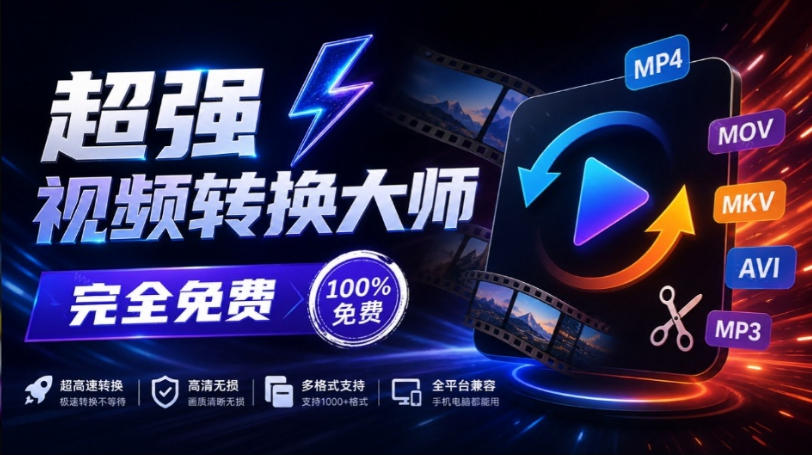
Super local toolbox! Built-in screen recording, audio/video cutting & merging, video compression & extraction, forever free - Kedou Video Converter
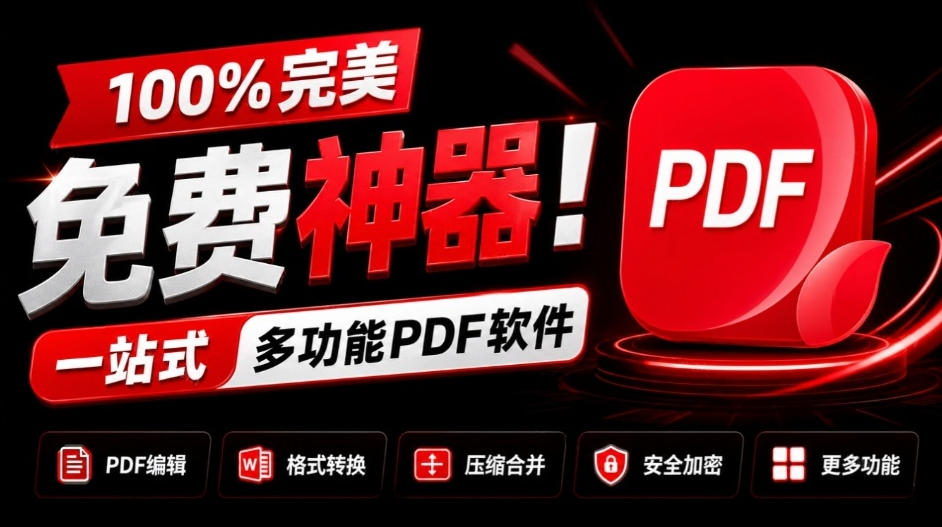
100% perfect free tool! One-stop multi-function PDF software: PDF convert, compress, edit etc., minimal, no ads, so nice - JOPDF

Open-Source Desktop Remote Tool, Beats Paid Versions! Free for Personal and Commercial Use Unlimited, Cross-Platform, HopToDesk Remote Control

Latest K-12 Textbook Downloader: Whole-Grade Resource Download, Courseware, Video, Audio in One Click

HuyanBao: free blue-light eye-care app with pet break reminders
Windows Can Have a Desktop Dynamic Island Too! A Modern System Control Center — Give Your PC a Black Notch, PyIsland

3D Simulated Comic Drama Production: Seedance2.0 Full-Process Practical Course - From Zero to One High-Quality Comic Drama Creation

Win/Mac Dual Support! Latest Permanent Lifetime Version, Supports Old Photo Restoration, Image Sharpening and Lossless Upscaling Tool, Aiarty Image Enhancer

Online Video Course: Github Open-Source Bilibili Video Download Tool! Supports 8K and Dolby Vision Bilibili Video Batch Download Tool, Easy to Use Bilidown