-
Solo Business Courses
-
 Others
-
Overseas Tutorials
-
Photography & Editing
-
Community & Private Domain
-
Self-Media Writing & Copywriting
-
Side Income Projects
-
E-commerce
-
Short Video & Live Streaming
-
Artificial Intelligence (AI)
-
Software & Tools
-
Operating Systems
-
Plugins & Scripts
-
MacOS Software
-
Android Software
-
Windows Software
Java Runtime Environment (JRE) 8 Update 481
-
Game Gold-Farming Money-Making Plan: Earn 1k+ Daily, a Stable 3-Year Project Anyone Can Do in Spare Time [Revealed]
Study material — included with membership Get Membership -
Hot-game fully-automated earning: 500+ a day, no experience, simple operation - the steadiest long-term game-earning side hustle (revealed)
Study material — included with membership Get Membership -
FlyingMouse earns merit this time! Don't panic at Windows format problems — the open-source FlyingMouse format conversion tool helps, a popular GitHub gem
Study material — included with membership Get Membership -
Douyin Product-Selling Coaching Bootcamp: No On-Camera Appearance Needed, Newbies Can Produce Selling Short Videos by Following the Steps
Study material — included with membership Get Membership -
First-release game gold-farming money plan: 1K+ a day, ordinary people in spare time
Study material — included with membership Get Membership






-
FlyingMouse earns merit this time! Don't panic at Windows format problems — the open-source FlyingMouse format conversion tool helps, a popular GitHub gem
Study material — included with membership Get Membership -
LuDaShi v6.1024.4105.1121 Slim Single File
Study material — included with membership Get Membership -
2D Cartoon Animation Software Moho Pro v14.3
Study material — included with membership Get Membership -
Video Editor Aiseesoft Filmai v1.0.18
Study material — included with membership Get Membership -
To-Do Microsoft To Do v2.147 Free
Study material — included with membership Get Membership -
PR/AE/DaVinci/FCPX video Plugin Nobe OmniScope Win1.11.15 / Mac1.10.138
Study material — included with membership Get Membership


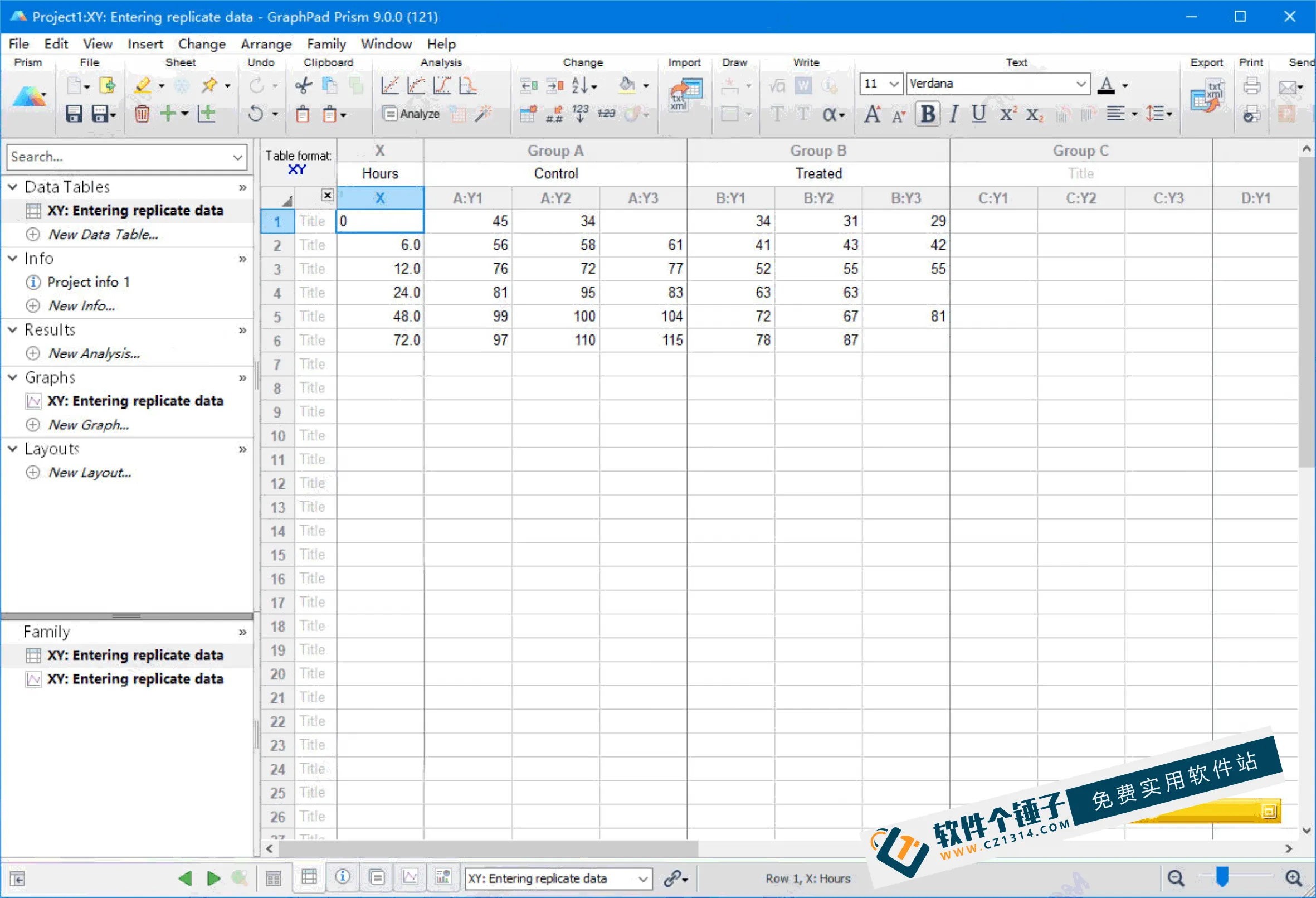
The Java Runtime Environment, usually shortened to JRE, is the living environment Java programs need to 'come alive'. It's not a single tool but a collection of necessary components that support Java program execution. It packages all core class libraries and key resources Java programs depend on at runtime; without it, no Java software can start or run on your PC.
\ \
JRE's core features: what does it actually do?
\ \The JRE silently handles a series of complex tasks in the background, keeping your Java programs running smoothly and safely:
\ \1. Smart class loading
\ \Inside the JRE is a smart component called the ClassLoader. It works efficiently — it doesn't load the whole program at once, but uses 'on-demand loading'. Only when the program actually needs a class (e.g. calling a new feature) does the ClassLoader dynamically load that class file from disk into memory. This is fully automatic and transparent to both programmers and users.
\ \2. Strict bytecode verification
\ \Security is the JRE's top priority. Before loaded class files (actually bytecode) reach the interpreter, they must pass a strict 'security guard' — the bytecode verifier. It carefully checks code format and logic, ensuring the code won't do anything harmful, like trying to access memory it has no permission to. It's like adding a solid firewall before the program runs.
\ \3. Efficient program execution
\ \Once bytecode passes verification, the JRE's Java interpreter starts. It creates a Java Virtual Machine (JVM) instance. This JVM is like a universal translator, converting platform-independent Java bytecode in real time into native machine instructions your CPU can directly recognize and execute. Through this 'translate-execute' process, Java programs run on all kinds of hardware.
\ \4. Graphics/GUI support
\ \If your Java programs have nice windows, buttons or animations, thank the JRE. It bundles powerful graphics toolkits like Java 2D, AWT (Abstract Window Toolkit) and Swing. These give developers the ability to build 2D graphics and create all kinds of GUI components. Many rich interfaces, effects, even Java games and animations we see rely on these graphics libraries the JRE provides.
\ \5. Logging
\ \The JRE also plays 'recorder'. It has logging that generates detailed reports while the program runs. These logs may record security-auth failures, config errors and performance bottlenecks. When something goes wrong, developers read the logs like a detective analyzing clues, quickly locating and troubleshooting the root cause.
\ \JRE's highlights: what makes it so important?
\ \1. Strong cross-platform capability
\ \This is Java/JRE's proudest trait and the cornerstone of its success — the Java Virtual Machine (JVM). The JRE ships matching JVMs for Windows, Linux, macOS and more. Java programs compile to standard bytecode, and any system with the matching JRE runs them via its local JVM. This realizes 'write once, run anywhere', greatly simplifying multi-platform deployment.
\ \2. Ongoing performance optimization
\ \The JRE doesn't just interpret; it embeds many tricks to boost speed. The most famous is the JIT compiler, which monitors the program and compiles repeatedly-run hot bytecode into native machine code, so the next run skips interpretation for a huge speed leap. Meanwhile, the garbage collector manages memory automatically, silently reclaiming space of objects no longer used, preventing leaks and freeing developers from tedious memory management.
\ \3. Built-in security and reliability guarantees
\ \The JRE puts security at its core. It uses a sandbox mechanism, by default confining Java programs (especially applets from the web) to a controlled environment, blocking access to the local filesystem, network or sensitive resources. The Security Manager adds finer-grained permission control. Through these layers, the JRE protects users' systems from malicious or poorly written Java programs.
\ \Key comparison: JRE vs JDK, which should I choose?
\ \This is the most common confusion for beginners. The choice depends entirely on your own needs and goals:
\ \- \
\
- Your target audience is “creators” (open-source contributors): If you're learning Java or your job is writing, compiling and debugging Java source, you must install Java Development Kit (JDK)The JDK is a 'superset of the JRE' or the 'development edition'; besides the full JRE it adds a compiler (javac), debugger and doc generator. \ \
- Your target audience is “users” (end users): If your PC only needs to run prebuilt Java apps (like Minecraft, Eclipse IDE, or enterprise Java clients), then you only need to install Java Runtime Environment (JRE) It's lightweight enough and is responsible for the “runtime” part. \ \
1. Summary
\ \JDK = JRE + development tools. Developers use the JDK to build the 'car' (Java program), while users just need the JRE 'driving environment' to run it.
\ \Summary: You may not be missing the Java basics
\ \In short, the Java Runtime Environment (JRE) is the end-user cornerstone of the Java ecosystem. Through core functions like class loading, bytecode verification and interpretation, plus cross-platform, high-performance, secure traits, it gives millions of Java apps a stable, reliable runtime. Understanding the JRE and its division of labor with the JDK is the first step for every Java learner, user and developer.
\ \ \ \Related Courses
Super local toolbox! Built-in screen recording, audio/video cutting & merging, video compression & extraction, forever free - Kedou Video Converter

100% perfect free tool! One-stop multi-function PDF software: PDF convert, compress, edit etc., minimal, no ads, so nice - JOPDF

Open-Source Desktop Remote Tool, Beats Paid Versions! Free for Personal and Commercial Use Unlimited, Cross-Platform, HopToDesk Remote Control

Latest K-12 Textbook Downloader: Whole-Grade Resource Download, Courseware, Video, Audio in One Click

HuyanBao: free blue-light eye-care app with pet break reminders
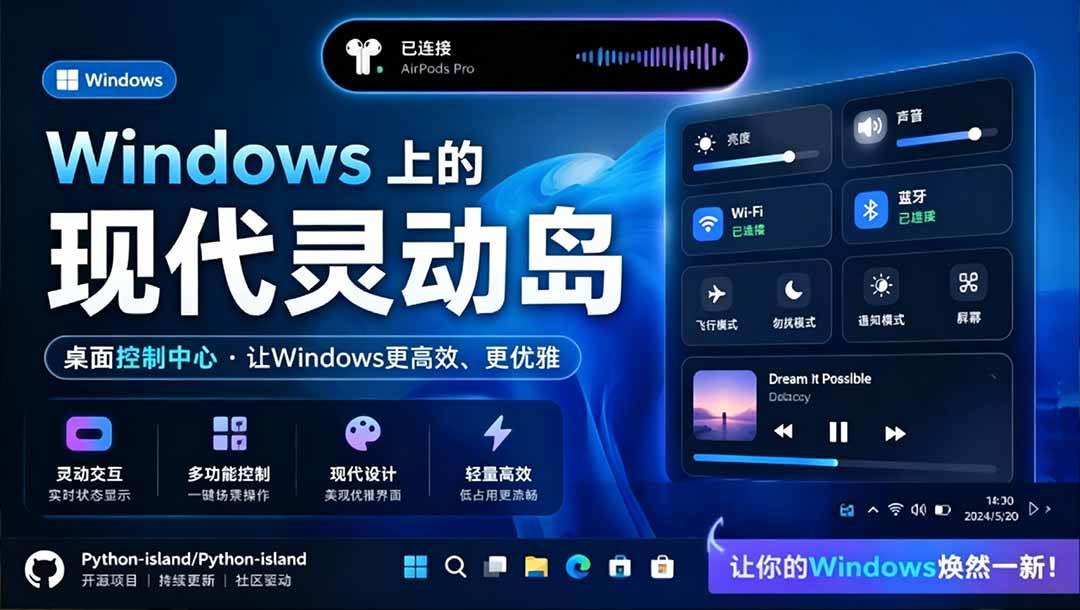
Windows Can Have a Desktop Dynamic Island Too! A Modern System Control Center — Give Your PC a Black Notch, PyIsland

3D Simulated Comic Drama Production: Seedance2.0 Full-Process Practical Course - From Zero to One High-Quality Comic Drama Creation

Win/Mac Dual Support! Latest Permanent Lifetime Version, Supports Old Photo Restoration, Image Sharpening and Lossless Upscaling Tool, Aiarty Image Enhancer

Online Video Course: Github Open-Source Bilibili Video Download Tool! Supports 8K and Dolby Vision Bilibili Video Batch Download Tool, Easy to Use Bilidown