-
Solo Business Courses
-
 Others
-
Overseas Tutorials
-
Photography & Editing
-
Community & Private Domain
-
Self-Media Writing & Copywriting
-
Side Income Projects
-
E-commerce
-
Short Video & Live Streaming
-
Artificial Intelligence (AI)
-
Software & Tools
-
Operating Systems
-
Plugins & Scripts
-
MacOS Software
-
Android Software
-
Windows Software
Auto Video Translation/Dubbing/Subtitle Burner — pyVideoTrans v3.96
-
Game Gold-Farming Money-Making Plan: Earn 1k+ Daily, a Stable 3-Year Project Anyone Can Do in Spare Time [Revealed]
Study material — included with membership Get Membership -
Hot-game fully-automated earning: 500+ a day, no experience, simple operation - the steadiest long-term game-earning side hustle (revealed)
Study material — included with membership Get Membership -
FlyingMouse earns merit this time! Don't panic at Windows format problems — the open-source FlyingMouse format conversion tool helps, a popular GitHub gem
Study material — included with membership Get Membership -
Douyin Product-Selling Coaching Bootcamp: No On-Camera Appearance Needed, Newbies Can Produce Selling Short Videos by Following the Steps
Study material — included with membership Get Membership -
First-release game gold-farming money plan: 1K+ a day, ordinary people in spare time
Study material — included with membership Get Membership





-
FlyingMouse earns merit this time! Don't panic at Windows format problems — the open-source FlyingMouse format conversion tool helps, a popular GitHub gem
Study material — included with membership Get Membership -
LuDaShi v6.1024.4105.1121 Slim Single File
Study material — included with membership Get Membership -
2D Cartoon Animation Software Moho Pro v14.3
Study material — included with membership Get Membership -
Video Editor Aiseesoft Filmai v1.0.18
Study material — included with membership Get Membership -
To-Do Microsoft To Do v2.147 Free
Study material — included with membership Get Membership -
PR/AE/DaVinci/FCPX video Plugin Nobe OmniScope Win1.11.15 / Mac1.10.138
Study material — included with membership Get Membership
pyVideoTrans is an open-source video translation tool. It can help you generate video subtitles with one click, and it can also translate these subtitles, and even use AI to synthesize dubbing in the corresponding language. Its workflow is fully automated: first convert the speech in the video into subtitles in the original language, then translate the subtitles into any target language you want, then generate speech dubbing based on the translated subtitles, and finally put the new dubbing and subtitles into the video, directly outputting a complete video with new subtitles and new dubbing.
\ \
Besides core translation, what other powerful features does it have?
\ \pyVideoTrans is not just for translating videos — it has several practical built-in modules:
\ \- \
\
- Speech recognition (to subtitles): converts speech in videos or audio into text subtitles. \ \
- Text-to-speech (dubbing): converts text (such as translated subtitles) into speech. \ \
- Subtitle translation: specifically translates subtitle files. \ \
Best of all, these features offer two options: local offline models (work offline), or third-party online APIs like ChatGPT. The tool itself is free to download and use; if you use a third-party API, you only pay the API provider — nothing extra for this app.
\ \What technical highlights does it have?
\ \This tool uses some impressive technologies behind the scenes:
\ \- \
\
- Offline speech recognitionIt integrates OpenAI's offline Whisper model for speech recognition — so even offline, you can still generate subtitles. \ \
- Rich translation interfacesBuilt-in translation engines include Google, Baidu and ChatGPT — pick whichever to translate subtitles. \ \
- High-quality speech synthesisIt uses tech like Microsoft Edge TTS to synthesize speech, making AI voiceovers sound more natural and higher quality. \ \
- ffmpeg wrapperIt wraps the powerful ffmpeg in a Python library — write a little Python to easily handle video/audio merging and splitting. \ \
How do you use it? Is it complicated?
\ \It's actually quite straightforward to use:
\ \- \
\
- Download a packaged build from its site or GitHub, or get the source to self-deploy. \ \
- After install, you mainly use the command line. Enter required info — where the source video is, where to output the processed video, target language, etc. \ \
- Enter the info, start it, and let it run automatically. Just wait — highly automated. \ \
What are its main use cases?
\ \pyVideoTrans's application scenarios are very broad:
\ \- \
\
- Film and video: create dubbed and subtitled versions of movies and TV shows in different languages. \ \
- Education: translate and dub teaching videos so learners of more languages can understand the course. \ \
- Corporate promotion: create multilingual versions of corporate promotional videos to help brands reach international markets. \ \
- Self-media production: help video bloggers quickly produce content in other languages, making it easy to localize content globally. \ \
Detailed feature overview
\ \In short, its main features include:
\ \- \
\
- Video translation and dubbing: translate original video audio into dubbing in another language, and embed subtitles in the target language. \ \
- Audio/video to subtitles: recognize speech in audio or video and output it as an SRT subtitle file. \ \
- Batch subtitle dubbingIt can batch-generate target-language speech dubbing for multiple SRT subtitle files. \ \
- Batch subtitle translationIt can translate multiple SRT subtitle files into target-language subtitle files at once. \ \
- Video subtitle muxing andIt can mux audio files, video files and subtitle files into a complete target video file. \ \
- Extract audio from videoIt can split a video file into a separate target audio file and a silent target video file. \ \
Summary
\ \In short, pyVideoTrans is a powerful, fully open-source and free video automation tool. It integrates speech recognition, subtitle translation, AI dubbing and video muxing, greatly lowering the barrier to multilingual video. Whether individuals or pro teams with multilingual video needs — especially valuing offline use and free/open-source — pyVideoTrans is well worth exploring.
\ \ \ \Related Courses
Super local toolbox! Built-in screen recording, audio/video cutting & merging, video compression & extraction, forever free - Kedou Video Converter
100% perfect free tool! One-stop multi-function PDF software: PDF convert, compress, edit etc., minimal, no ads, so nice - JOPDF
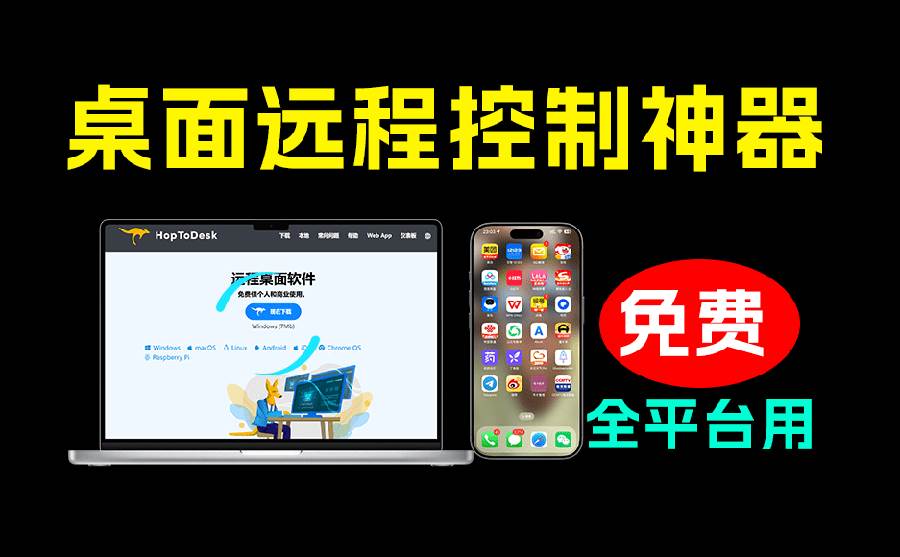
Open-Source Desktop Remote Tool, Beats Paid Versions! Free for Personal and Commercial Use Unlimited, Cross-Platform, HopToDesk Remote Control
Latest K-12 Textbook Downloader: Whole-Grade Resource Download, Courseware, Video, Audio in One Click
HuyanBao: free blue-light eye-care app with pet break reminders
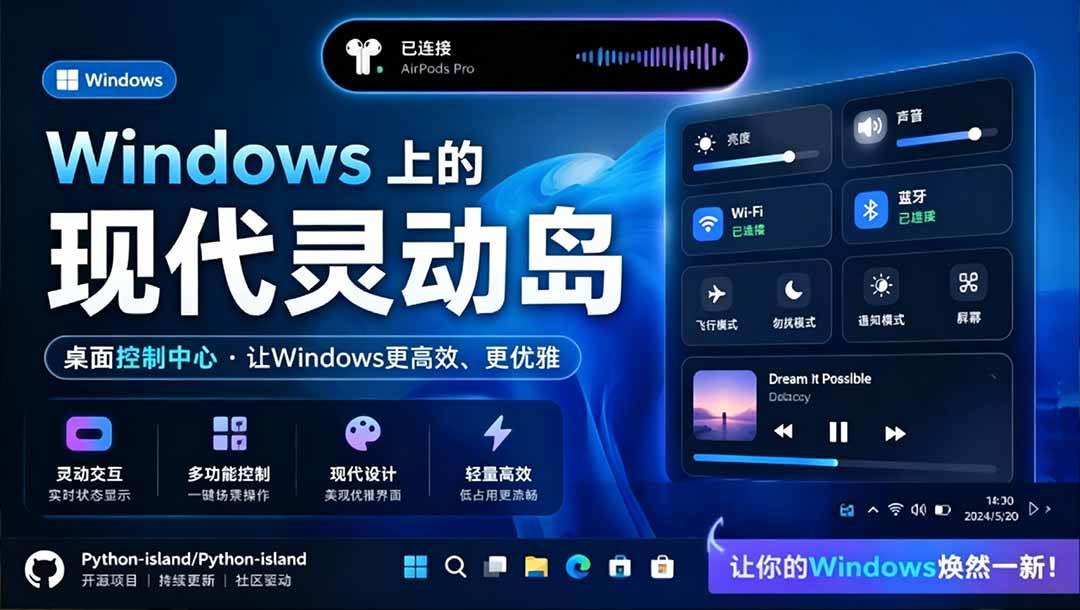
Windows Can Have a Desktop Dynamic Island Too! A Modern System Control Center — Give Your PC a Black Notch, PyIsland
3D Simulated Comic Drama Production: Seedance2.0 Full-Process Practical Course - From Zero to One High-Quality Comic Drama Creation

Win/Mac Dual Support! Latest Permanent Lifetime Version, Supports Old Photo Restoration, Image Sharpening and Lossless Upscaling Tool, Aiarty Image Enhancer
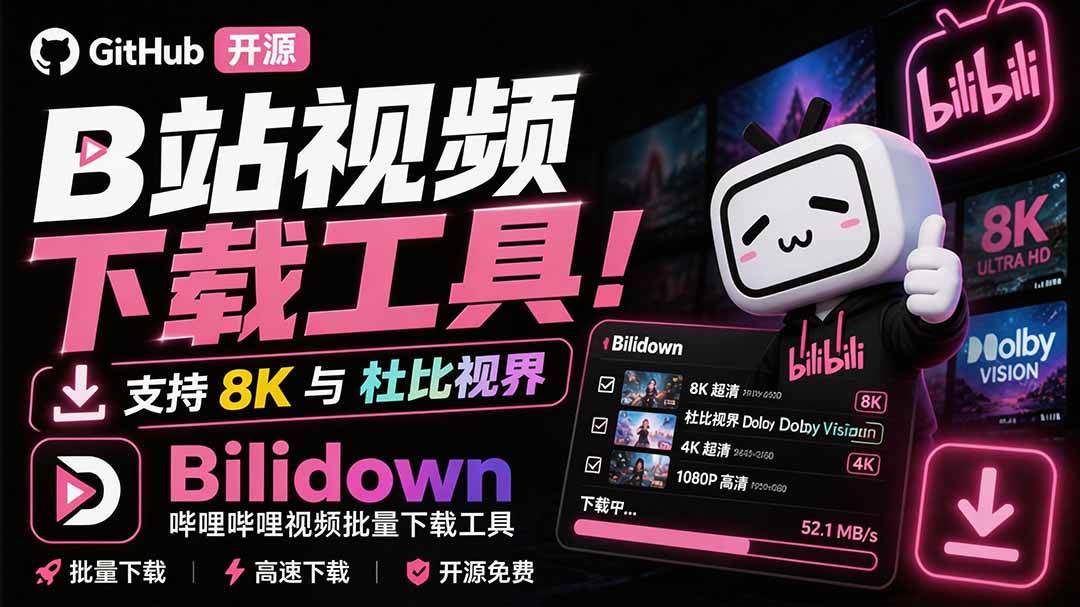
Online Video Course: Github Open-Source Bilibili Video Download Tool! Supports 8K and Dolby Vision Bilibili Video Batch Download Tool, Easy to Use Bilidown