-
Solo Business Courses
-
 Others
-
Overseas Tutorials
-
Photography & Editing
-
Community & Private Domain
-
Self-Media Writing & Copywriting
-
Side Income Projects
-
E-commerce
-
Short Video & Live Streaming
-
Artificial Intelligence (AI)
-
Software & Tools
-
Operating Systems
-
Plugins & Scripts
-
MacOS Software
-
Android Software
-
Windows Software
The Web's Most Complete AI Musician Tutorial; Easily Join Platforms, Earning 60 Yuan a Day Is No Problem!
-
Game Gold-Farming Money-Making Plan: Earn 1k+ Daily, a Stable 3-Year Project Anyone Can Do in Spare Time [Revealed]
Study material — included with membership Get Membership -
Hot-game fully-automated earning: 500+ a day, no experience, simple operation - the steadiest long-term game-earning side hustle (revealed)
Study material — included with membership Get Membership -
FlyingMouse earns merit this time! Don't panic at Windows format problems — the open-source FlyingMouse format conversion tool helps, a popular GitHub gem
Study material — included with membership Get Membership -
Douyin Product-Selling Coaching Bootcamp: No On-Camera Appearance Needed, Newbies Can Produce Selling Short Videos by Following the Steps
Study material — included with membership Get Membership -
First-release game gold-farming money plan: 1K+ a day, ordinary people in spare time
Study material — included with membership Get Membership






-
FlyingMouse earns merit this time! Don't panic at Windows format problems — the open-source FlyingMouse format conversion tool helps, a popular GitHub gem
Study material — included with membership Get Membership -
LuDaShi v6.1024.4105.1121 Slim Single File
Study material — included with membership Get Membership -
2D Cartoon Animation Software Moho Pro v14.3
Study material — included with membership Get Membership -
Video Editor Aiseesoft Filmai v1.0.18
Study material — included with membership Get Membership -
To-Do Microsoft To Do v2.147 Free
Study material — included with membership Get Membership -
PR/AE/DaVinci/FCPX video Plugin Nobe OmniScope Win1.11.15 / Mac1.10.138
Study material — included with membership Get Membership


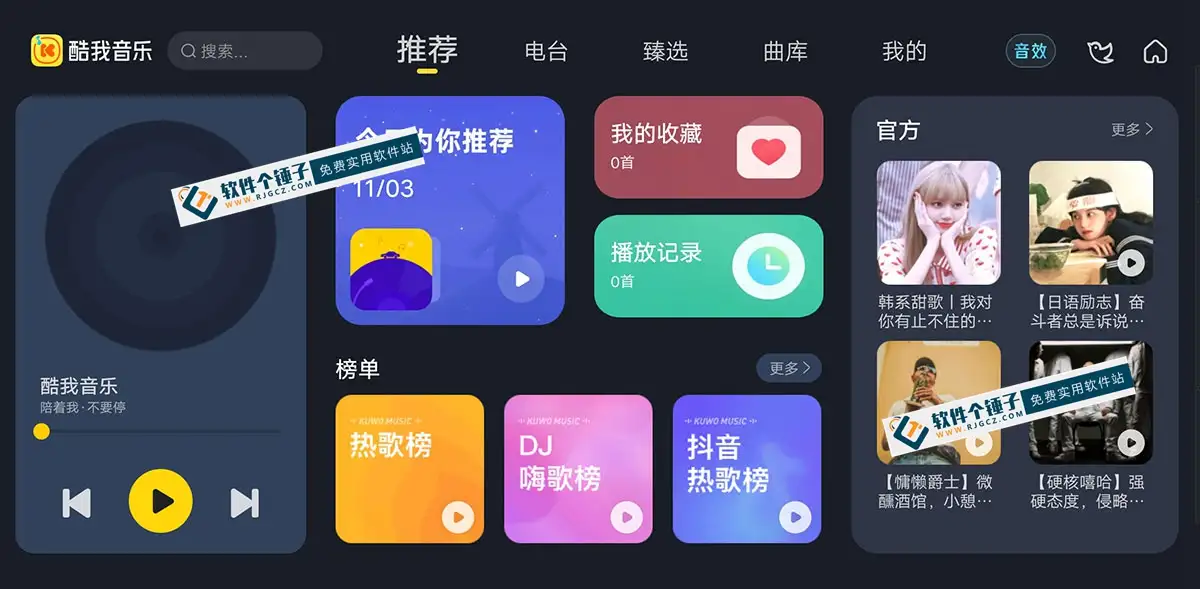
AI music's rise began around April-May; at that time platform restrictions weren't yet strict, and AI-generated music could be directly uploaded as original works—totally no problem. Then, many creators flooded in, and the platform was full of AI music.
\Platform "Restrictions" and AI Music's Impact
\By July, with the surge in AI-song volume, platforms began feeling a certain impact, and some platforms started introducing restriction measures. Though AI-song upload was affected, through format conversion and stem-split production, AI songs could still be uploaded smoothly. In this period, AI music's value was still steadily growing.
\Big Platforms' Reaction: Gradually Tightening Restrictions
\By August-September, Tencent, Douyin Music, NetEase, and other big platforms all started taking action. Tencent first introduced a policy—any song detected as AI-generated can't be signed; it can only pass review, and unsigned works can't receive copyright royalties. Then Douyin Music also explicitly announced it doesn't accept AI-song uploads, with detection standards even reaching a harsh level. NetEase also began tightening review—uploaded songs may be secondarily detected, and low-quality songs may even be quickly taken down.
\AI Music's Price Changes and Platform Future Trend
\Despite this, platforms are still open to high-quality AI music. In this environment, AI songs' market price also fluctuated greatly. The previous price of 2–3 yuan per song has now risen to 20+ yuan; though price has pulled back somewhat, it's still far above early levels.
\Summary
\Though low-quality AI music is being eliminated by platforms, high-quality AI music still passes through smoothly. As platforms further optimize AI-music review mechanisms, only quality AI music can be uploaded—which also provides more opportunity for creative, skilled music creators. If you also want to occupy a place in this constantly developing field, then understanding these platforms' policy changes and tricks is especially important.
\Related Courses

A New Ad-Watching Platform: 1.4 Yuan Per Ad, Bonus on Withdrawal, Easily 20+ RMB a Day Per Phone—Great for the Long Term [Revealed]

Precise Customer-Acquisition Master Course: Super-Individual Case Breakdown, Low-Cost Mining of High-Quality Clients

Mini-game AFK Bot Project: Operate With Just One Phone — No Luck, Only Solid Execution, Easily Earn 500+ A Day! [Revealed]

Soda Music + Tencent Musician AFK Play: A Lazy-Person Project, Batchable, No Manual Monitoring Needed, Beginners Can Easily Start [Revealed]

Stop Blindly Grinding Projects! The Real Logic of Making Money Online: Be a Shovel-Seller, Refuse to Be a Chive, Turn the Tide and Earn 50-80K+ A Month

The ceiling of 2026 internet projects: how ordinary people can earn 100K a month through paid knowledge products and leap a tier

Zero-cost film-and-TV reselling project: ordinary people can do it in spare time and easily earn 10K a month (revealed)


Xunlei Cloud Drive Promotion Monetization Camp: Analyze Conversion Cases, Double Your Earnings, Master Group Promotion and Traffic-Driving Re-posting

Monetize Virtual Resources with a Web-Entrepreneurship Mini-Program: Hit a Million a Year, One Phone Is All You Need, Zero-Cost Side Hustle