-
Solo Business Courses
-
 Others
-
Overseas Tutorials
-
Photography & Editing
-
Community & Private Domain
-
Self-Media Writing & Copywriting
-
Side Income Projects
-
E-commerce
-
Short Video & Live Streaming
-
Artificial Intelligence (AI)
-
Software & Tools
-
Operating Systems
-
Plugins & Scripts
-
MacOS Software
-
Android Software
-
Windows Software
AI Agent Programming & Development Course — 2026 Latest Guide
-
Game Gold-Farming Money-Making Plan: Earn 1k+ Daily, a Stable 3-Year Project Anyone Can Do in Spare Time [Revealed]
Study material — included with membership Get Membership -
Hot-game fully-automated earning: 500+ a day, no experience, simple operation - the steadiest long-term game-earning side hustle (revealed)
Study material — included with membership Get Membership -
FlyingMouse earns merit this time! Don't panic at Windows format problems — the open-source FlyingMouse format conversion tool helps, a popular GitHub gem
Study material — included with membership Get Membership -
Douyin Product-Selling Coaching Bootcamp: No On-Camera Appearance Needed, Newbies Can Produce Selling Short Videos by Following the Steps
Study material — included with membership Get Membership -
First-release game gold-farming money plan: 1K+ a day, ordinary people in spare time
Study material — included with membership Get Membership






-
FlyingMouse earns merit this time! Don't panic at Windows format problems — the open-source FlyingMouse format conversion tool helps, a popular GitHub gem
Study material — included with membership Get Membership -
LuDaShi v6.1024.4105.1121 Slim Single File
Study material — included with membership Get Membership -
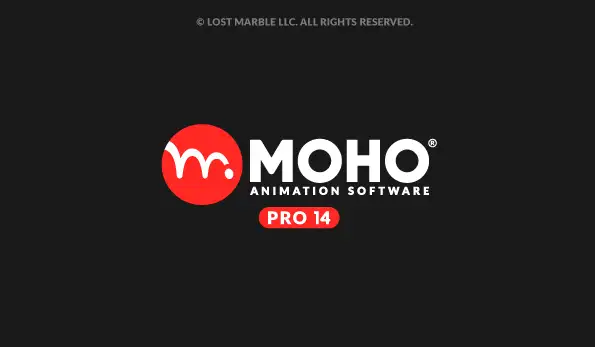
2D Cartoon Animation Software Moho Pro v14.3
Study material — included with membership Get Membership -
Video Editor Aiseesoft Filmai v1.0.18
Study material — included with membership Get Membership -
To-Do Microsoft To Do v2.147 Free
Study material — included with membership Get Membership -
PR/AE/DaVinci/FCPX video Plugin Nobe OmniScope Win1.11.15 / Mac1.10.138
Study material — included with membership Get Membership
AI Agent Programming Agent Development Course – 2026 Latest Guide
\\ March 8, 2026
\ AI Agent Development Practice
\ AI developers, full-stack engineers, tech entrepreneurs, AI product managers
This course takes you step by step to develop an AI programming agent. Content coversMCP Service Setup、Hands-On Practice with LangChain Core Components、Multi-Agent Architecture Design and private tool integration (e.g., browser control, terminal automation, document-writing tools), and incorporates practical applications of AI programming tools like Cursor and Tongyi Lingma—helping you build your own AI programming agent, gain stronger core competitiveness in AI Agent development, and seize the technical high ground of AI automation development ahead of others.
\This course deeply focuses onthe full process of commercial-grade AI Agent development , not only teaching theoretical knowledge but emphasizing practical implementation. You'll learn how to use LangGraph to build a multi-level agent collaborative architecture, achieving full-process automation of task planning, product design, development, and launch. The course especially emphasizesprivate tool development capability , achieving localized deployment of 20+ core tools such as browser control, terminal operation, and knowledge base query through the MCP protocol, ensuring your agent has true commercial application value.
\The course adoptsProject-driven teaching , through the complete front-end and back-end project practice of "XiaoMu Bookstore," letting you master the full set of skills from requirements analysis to automatic coding, and from tool invocation to containerized deployment. You'll learn to use Lima+Docker to build a secure Agent sandbox environment, achieving rapid release and preview of front-end and back-end applications, and solving the core pain points of AI programming. After completing this course, you'll have the ability to independently develop complex programming agents, building a technical barrier in the field of AI automation development.
\- \
- 1.Course Introduction and Learning Guide \
- 2.AI Agent Basic Concepts and Technical Architecture \
- 3.AI Agent Development—Large Model Invocation \
- \
- 4.LangChain Large-Model Tool Development \
- 5.Built-In Tool Invocation and Return Body Control Capability \
- 6.Deep Dive Into the MCP Protocol and External Tool Capabilities \
- 7.Cursor and MCP Integration With Intelligent Tools \
- \
- 8.Project Planning and Multi-Turn Dialogue Capability Implementation \
- 9.AI Programming-Agent Memory Ability Implementation \
- 10.Terminal-Control Tool Development \
- 11.Knowledge-Base Development and Learning Ability \
- 12.RAG Self-Learning Mechanism Implementation \
- \
- 13.Browser-Control Development Ability \
- 14.Implementing Agent-Runtime Sandbox Environment \
- 15.Database Tool Development and Control Ability \
- 16.LangGraph Multi-Agent Architecture Design \
- \
- 17.Code-Assist Development Ability Implementation \
- 18.XiaoMu Bookstore Frontend-Page Automated Development Practice \
- 19.XiaoMu Bookstore Backend-API and Database Automated Development Practice \
- 20.Course Source Code and Documentation Summary \
💡 Learning Tips:The content of the tutorial is based on industry practice at the time of release, and it is recommended to combine the latest rules of the current platform when
\Related Courses

Family Comedy Short-Drama Creation Course: Benchmark Hot Accounts, AI-Assisted, Fast Start for Total Beginners, Grow Followers and Drive Product Sales

Amazon AI Automation Practical Course: AI Operating Mindset, Setting Up the Codex Environment, Risk-Control Checks and Automated Listing Copy

AI E-Commerce Data Tool Development Course: Learn Codex+BI From Zero, Build a Multi-Store Integrated Visualization Dashboard

Advanced AI Prompt Application: 15 Lessons | Universal Instruction Thinking + Multiple Output Modes + Full Industry Commercial Cases

AI Video Creation Crash Course: From Great-Case Breakdown to Five Core Modules, Fast-Track AI Video Skills for Total Beginners
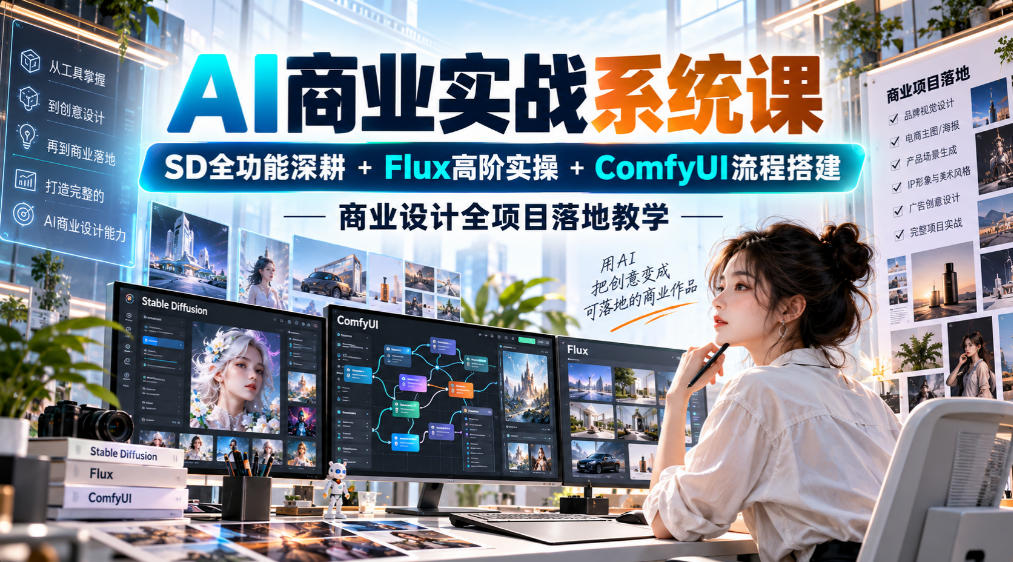
AI Commercial Practice System Course: In-Depth SD Mastery + Advanced Flux Hands-On + Comfyui Workflow Building, Full Commercial Design Project Training

[National-Day Pick] AI Automation Game, 1k+ RMB a Day, Simple to Operate, Stable for Three Years! [Revealed]