-
Solo Business Courses
-
 Others
-
Overseas Tutorials
-
Photography & Editing
-
Community & Private Domain
-
Self-Media Writing & Copywriting
-
Side Income Projects
-
E-commerce
-
Short Video & Live Streaming
-
Artificial Intelligence (AI)
-
Software & Tools
-
Operating Systems
-
Plugins & Scripts
-
MacOS Software
-
Android Software
-
Windows Software

(Updated) Cross-Platform AI Product Sales Practicum
-
Game Gold-Farming Money-Making Plan: Earn 1k+ Daily, a Stable 3-Year Project Anyone Can Do in Spare Time [Revealed]
Study material — included with membership Get Membership -
Hot-game fully-automated earning: 500+ a day, no experience, simple operation - the steadiest long-term game-earning side hustle (revealed)
Study material — included with membership Get Membership -
FlyingMouse earns merit this time! Don't panic at Windows format problems — the open-source FlyingMouse format conversion tool helps, a popular GitHub gem
Study material — included with membership Get Membership -
Douyin Product-Selling Coaching Bootcamp: No On-Camera Appearance Needed, Newbies Can Produce Selling Short Videos by Following the Steps
Study material — included with membership Get Membership -
First-release game gold-farming money plan: 1K+ a day, ordinary people in spare time
Study material — included with membership Get Membership





-
FlyingMouse earns merit this time! Don't panic at Windows format problems — the open-source FlyingMouse format conversion tool helps, a popular GitHub gem
Study material — included with membership Get Membership -
LuDaShi v6.1024.4105.1121 Slim Single File
Study material — included with membership Get Membership -
2D Cartoon Animation Software Moho Pro v14.3
Study material — included with membership Get Membership -
Video Editor Aiseesoft Filmai v1.0.18
Study material — included with membership Get Membership -
To-Do Microsoft To Do v2.147 Free
Study material — included with membership Get Membership -
PR/AE/DaVinci/FCPX video Plugin Nobe OmniScope Win1.11.15 / Mac1.10.138
Study material — included with membership Get Membership


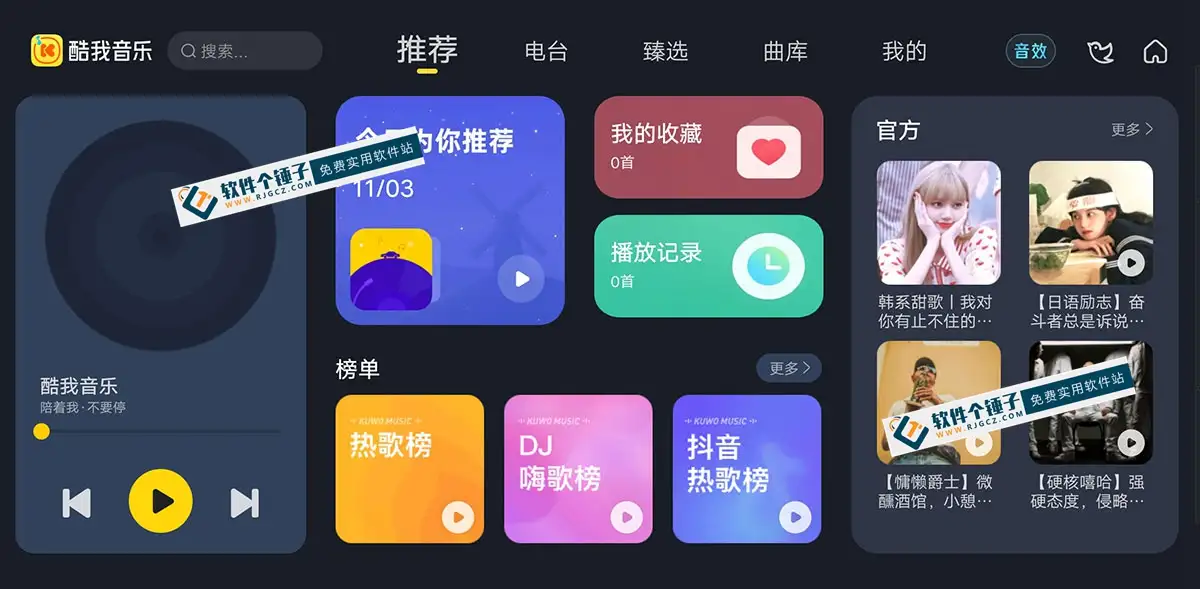
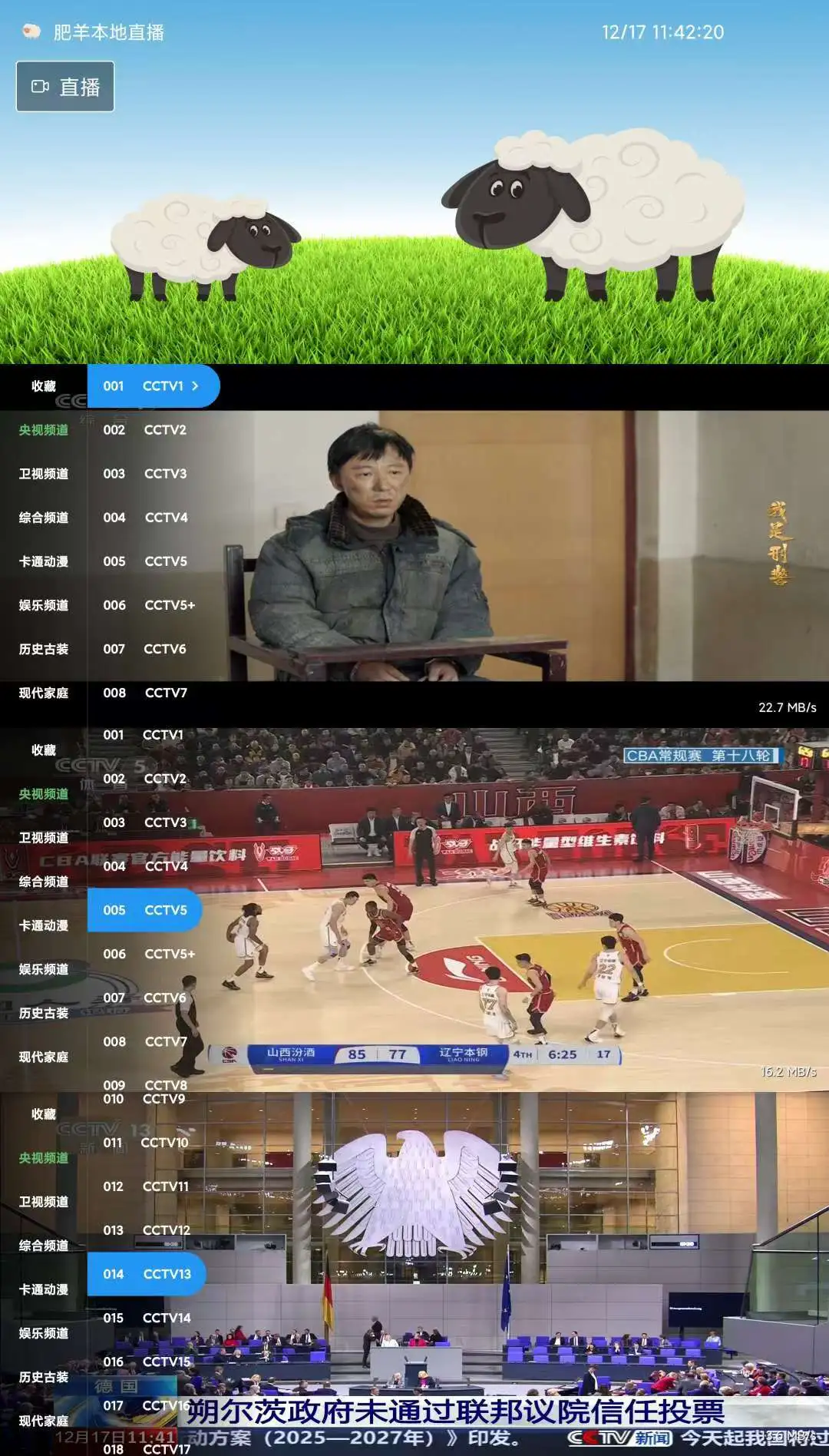
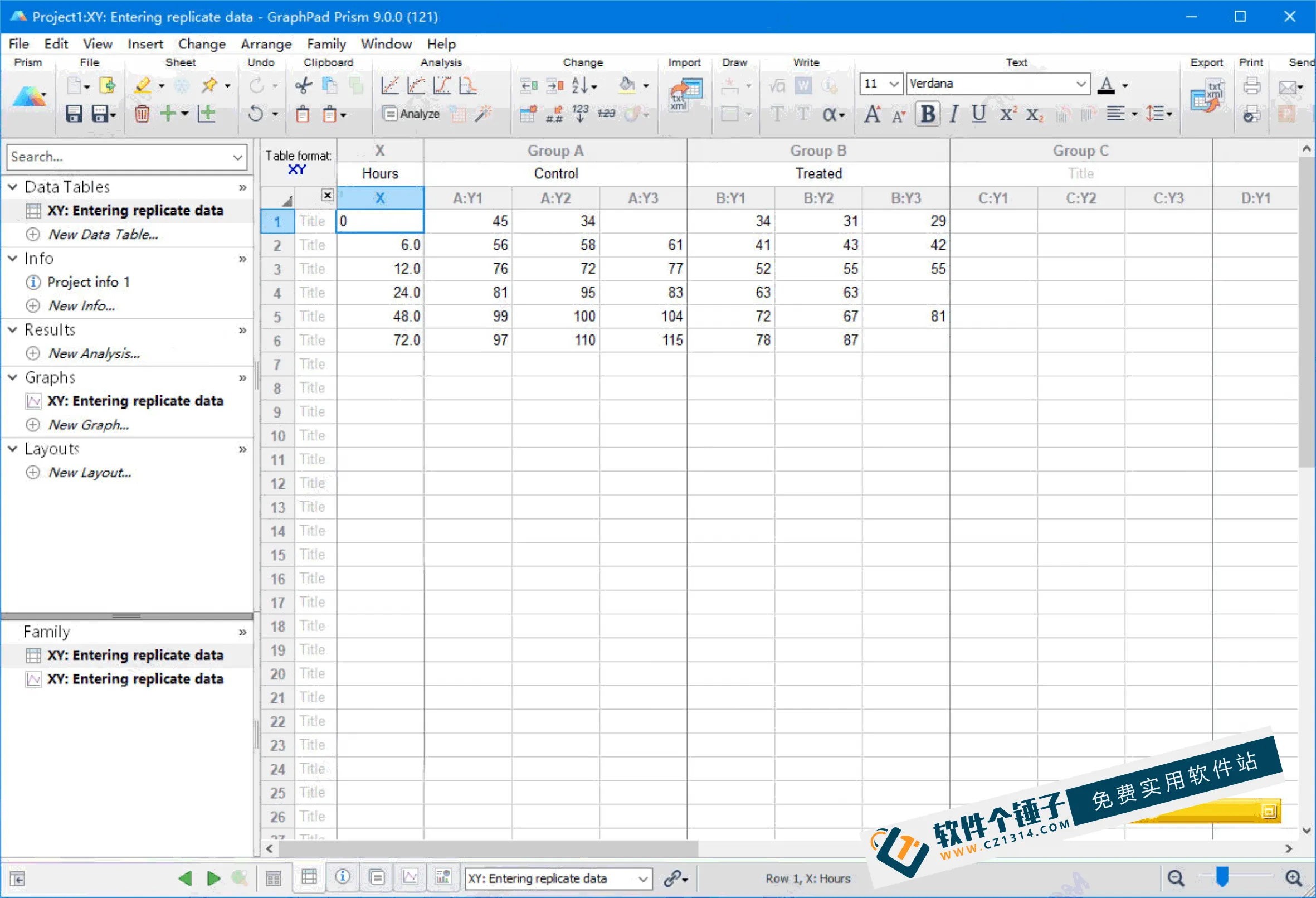

Cross-Platform AI Product Sales Practicum: From Short Videos to Livestreaming, Building a Practical Sales Matrix for Ordinary People
\ \\ 2026-05-24
\ AI Product Sales and Cross-Platform Matrix Operations Practicum
\ Beginners looking to enter AI product sales, short video creators, individual entrepreneurs hoping to improve sales efficiency, and small team operators
The core philosophy of this course is very clear: everything is practice-oriented, and if you don't generate orders, you haven't learned it. It doesn't just teach you how to operate AI tools; it builds a complete full-chain sales system from selection, copywriting, and digital human production to matrix operations and livestreaming, covering the journey from 0 to 1, from 1 to 10, and from 10 to 100. All course content comes from projects that have already been proven successful, so you don't need to make mistakes yourself—just directly replicate the verified solutions.
\The course includes six core modules, covering product selection strategies, viral copywriting, intermediate and advanced AI digital human technology, matrix operations, and full-process livestreaming training. In addition, it exclusively includes an AI prompt engineering library worth thousands of yuan, containing prompt templates for AI text generation, image generation, and video generation, as well as an AI product sales agent navigation system to help you achieve automatic copywriting generation, video production, and data analysis. Throughout the year, there are also more than 10 flash practical activities, with coaches leading product testing and evaluation, allowing you to improve quickly through hands-on practice.
\The biggest highlight of the course lies in its systematic and practical nature. It does not pursue getting rich overnight, but instead helps you make a little progress every day on the right path, ultimately becoming a super individual in product sales who can survive cycles. From WeChat Channels and Douyin to Xiaohongshu, from short videos to livestreaming, from working alone to a studio model, this course provides clear and executable paths.
\📚 Course Outline (36 items in total)
\- \
- 1.AI Product Sales Navigation Introductory Course \
- 2.The Evolution of Short Video Product Sales Workflows \
- \
- 3.Session 1 Navigation - The Underlying Logic and Monetization Path of Short Video Copywriting \
- 4.Lesson 4 Copywriting Analysis \
- 5.Product Selection and Viral Copywriting Methods & Strategies (Modules 1 & 2) \
- \
- 6.SOP Tutorial for AI Digital Human Public Model Creation \
- 7.Advanced Viral Private Model Customization Technology for AI Digital Humans \
- 8.Advanced AI Image and Text Customization Technology \
- 9.Mid-to-Advanced AI Sales Techniques (Module 3 Collection) \
- \
- 10.Efficient Matrix Operations Techniques (Module 4) \
- 11.Crayfish + AI Sales: 30-Account Matrix Blitz \
- 12.Woody's 370K GMV Sharing \
- 13.AI Sales SOP Practical Manual \
- \
- 14.Full Livestreaming Process Training (Module 6) \
- 15.Analysis and Avoidance of Recent Showcase Ban Cases \
- 16.Navigation Q&A Special Session \
- \
- 17.Module 1: Product Selection + Product Selection Methods and Strategies \
- 18.Module 2: Copywriting + Viral Product Copywriting Production Methods and Strategies \
- 19.Module 3: Mid-to-Advanced AI Sales Techniques \
- 20.Module 4: Efficient Matrix Operations Techniques \
- 21.Module 5: 6-Month Hands-On Coaching + 6-Month Consultation Q&A \
- 22.Module 6: Full Livestreaming Process Training \
- 23.AI Sales Prompt Engineering (Complete Set for Text/Image/Video Generation) \
- \
- 24.Phase 1: Account Launch and Monetization (Cognition, Materials, Editing, Operations, Livestreaming) \
- 25.Phase 2: Matrix Amplification (Product Selection/Copywriting, Mid-to-Advanced AI, Matrix Amplification) \
- 26.Phase 3: Long-Term Operations (Vertical IP Building, Efficiency Tools/Automation Systems) \
- \
- 27.Product Testing Pioneer Team (Monthly Product Testing) \
- 28.Livestreaming Pioneer Team (Livestream Room Setup and Scripts) \
- 29.Short Video Sales Advertising Practical Camp (Paid Promotion and ROI Optimization) \
- 30.Flash Practical Week (Once a Month, 7 Days of Intensive Operations) \
- 31.AI Sales Agent Navigation System (Copywriting/Video/Data Monitoring) \
- \
- 32.Podcast Feishu Document Video \
- 33.Current Sales Status and Case Analysis on Various Platforms (WeChat Channels/Douyin/Xiaohongshu) \
【June 11, 2026】Update Content
\🕒 Update Time: June 11, 2026
\New chapters as follows:
\- \
- The Underlying Logic and Monetization of Short Video Copywriting (Part 2) \
- Chengxin 600K GMV Sharing \
📋 Update Highlights:
\- \
- Lesson 1: The Underlying Logic of Short Video Copywriting (Part 2)—— A systematic explanation of the content production system: from single-point positioning, hook design, processing framework, and scenario restoration to the five-step optimization and polishing method. Emphasizes building the system first and then using AI as a tool, improving conversion through techniques such as counterintuitive hooks, story frameworks, and emotional anchors, and demonstrates how to build a personal workflow with AI tools such as Codex. \
- Lesson 2: Chengxin 600K GMV Practical Sharing—— Core strategy "slow is fast": in the early stage, only create content without guiding orders, build account weight so the system identifies it as a content account; insist on first-release topics (ones others have not done), change books but not accounts to avoid homogenization; copywriting focuses on the first three-second hook, rhythm embedded in the middle, and integrating soul-character stories; after attaching the shopping cart, still maintain content quality, achieving a stable daily average of 3000+ GMV without traffic decline. \
- About account operations: a sign of high weight is that every video gets recommended (even with only 1000 views); if views are below 200 for four or five consecutive days, it is recommended to give up and switch accounts; the cart-attaching rhythm needs to be dynamically adjusted based on your own account data. \
[June 17, 2026] Update Content
\🕒 Update Time: June 17, 2026
\New chapters as follows:
\- \
- The essence of advertising placement: amplifier and stabilizer, from relying on luck to controllable orders \
- What kind of cart-attached videos are worth promoting? Three core judgment checkpoints \
- The core difference between WeChat Channels advertising and Douyin: hard ads are prohibited \
- The relationship between organic traffic and advertising placement: keep organic traffic share no lower than 20% \
- \
- Full process of heating platform practical operation: create orders, select targets and short videos \
- The selection logic and applicable scenarios of product transactions vs. product net transactions \
- Interpretation of the relationship between system bidding, bid budget, and order budget \
- The correct stages for using cost-controlled heating vs. volume-expansion heating \
- \
- Core monitoring metric: product click-through rate as the first searchlight for stop-loss \
- Empty account control: stop-loss strategies for zero-order plans and empty accounts after orders have been placed \
- Golden advertising time periods and material aging judgment \
- How to use the sales assistant and data compass to find precise benchmark accounts \
📋 Update Highlights:
\- \
- Establish the correct understanding of WeChat Channels advertising placement, understand that ROI is an "amplifier" rather than a "savior," and focus on explaining the differentiated rules between WeChat Channels and Douyin. \
- Walk you through the complete practical process of the heating platform, and explain in detail the selection logic between product transactions and product net transactions, and between cost-controlled and volume-expansion heating. \
- Learn the core monitoring metric (product click-through rate), master stop-loss and empty account control strategies, and avoid ineffective spending. \
- Share golden advertising time periods and material aging judgment methods, and explain how to find precise benchmark accounts through the sales assistant data compass. \
- Emphasize that advertising placement should focus on LTV (customer lifetime value), and improve the long-term output of each unit of traffic through strategies such as short video appointment booking. \
[July 18, 2026] Update Content
\🕒 Update Time: July 18, 2026
\New chapters as follows:
\[Product Selection and Track]
\- \
- Coach Weila's product selection logic \
- Track section detailed explanation: how to choose high-potential tracks \
[Viral Content and Structure]
\- \
- Qiao Zuoxin expert sharing: interpretation of the viral short video pyramid model \
- 11 viral copywriting structure formulas used by short video teams \
📋 Update Highlights:
\- \
- Master the product selection mindset and practical methods of the WeiLa coach system to precisely identify potential hit products \
- Learn track selection strategies explained from dimensions such as industry trends, user needs, and competitive landscape \
- Deeply break down Qiao Zuoxin's hit short video pyramid model to understand traffic and conversion logic \
- Get 11 proven hit copywriting structure formulas validated by top teams, directly apply them to improve content production efficiency \
💡 Learning Tip: Tutorial content is based on industry practices at time of publication; please verify against current platform rules when learning.
\Related Courses

Xiaohongshu IP Gold-Mining Bootcamp: Master Topic Selection, Copywriting, Shooting & Editing, and Viral Operations with Private-Domain Monetization



Douyin Emotional-Card GIF Practical Course: Phone Production + Livestream Tactics, Unlock GIF Traffic Monetization

Kuaishou Good-Stuff Practical Course: Product Selection & Operations + Site-Wide Promotion + Re-Creation Editing for Affiliate Sales



Bilibili short-video product-promo dividend: free teaching plus managed operation, two playbooks, single-account seven-day income 1200-3600

Xiaohongshu electronic-resource category opening tutorial: targeted-access rules, qualification materials and the self-recommendation submission flow

Game Gold-Farming Money-Making Plan: Earn 1k+ Daily, a Stable 3-Year Project Anyone Can Do in Spare Time [Revealed]