-
Solo Business Courses
-
 Others
-
Overseas Tutorials
-
Photography & Editing
-
Community & Private Domain
-
Self-Media Writing & Copywriting
-
Side Income Projects
-
E-commerce
-
Short Video & Live Streaming
-
Artificial Intelligence (AI)
-
Software & Tools
-
Operating Systems
-
Plugins & Scripts
-
MacOS Software
-
Android Software
-
Windows Software

AI Video Creation and Post-Production Hands-On Tutorial
-
Game Gold-Farming Money-Making Plan: Earn 1k+ Daily, a Stable 3-Year Project Anyone Can Do in Spare Time [Revealed]
Study material — included with membership Get Membership -
Hot-game fully-automated earning: 500+ a day, no experience, simple operation - the steadiest long-term game-earning side hustle (revealed)
Study material — included with membership Get Membership -
FlyingMouse earns merit this time! Don't panic at Windows format problems — the open-source FlyingMouse format conversion tool helps, a popular GitHub gem
Study material — included with membership Get Membership -
Douyin Product-Selling Coaching Bootcamp: No On-Camera Appearance Needed, Newbies Can Produce Selling Short Videos by Following the Steps
Study material — included with membership Get Membership -
First-release game gold-farming money plan: 1K+ a day, ordinary people in spare time
Study material — included with membership Get Membership






-
FlyingMouse earns merit this time! Don't panic at Windows format problems — the open-source FlyingMouse format conversion tool helps, a popular GitHub gem
Study material — included with membership Get Membership -
LuDaShi v6.1024.4105.1121 Slim Single File
Study material — included with membership Get Membership -
2D Cartoon Animation Software Moho Pro v14.3
Study material — included with membership Get Membership -
Video Editor Aiseesoft Filmai v1.0.18
Study material — included with membership Get Membership -
To-Do Microsoft To Do v2.147 Free
Study material — included with membership Get Membership -
PR/AE/DaVinci/FCPX video Plugin Nobe OmniScope Win1.11.15 / Mac1.10.138
Study material — included with membership Get Membership





The AI Video Creation Masterclass is a full-process AI video system course covering everything from zero-base introduction to advanced film and television production, balancing tool practice with upgrades in creative thinking. The course starts with mainstream AI tools such as TensAI, Stable Diffusion, and Runway, and progressively covers AI image creation, the underlying logic of prompts, image-to-text, image-to-image, character consistency, ControlNet composition control, and LoRA style customization; it gives detailed instruction on dynamic video techniques such as Runway text-to-video, image-to-video, camera movement, and lip sync, and updates in sync with cutting-edge AI applications such as Jimeng 4.0 and Openclaw.
The post-production section provides complete instruction in PR editing and AE special effects compositing: PR keyframes, color grading, masks, keying, and time remapping; AE layer blending, track mattes, camera tracking, Trapcode particle effects, green screen compositing, and other commonly used commercial effects. It is paired with AI music creation instruction for independently generating songs, customizing lyrics, and unifying vocal timbre. The course is not only about tool operation; it focuses on instilling professional film and television directing thinking: shot sizes, camera movement logic, storyboard script writing, film rhythm control, advanced color grading, and transition design; it is paired with a large number of livestream practical cases such as advertising promos, trailers, and virtual digital characters, along with a full set of models, plugins, project assets, and an advanced prompt lexicon.
The learning path of this course advances layer by layer from image to finished film. First, it solves whether a single image can be stable and controllable, such as character consistency, style consistency, and composition constraints; then it solves whether the image can move and whether the movement matches the director's intent; finally, PR and AE are used to complete the finishing of rhythm, color grading, subtitles, and special effects packaging. Many AI video creators get stuck in the middle stage: generated assets are scattered, styles are fragmented, and when pieced together they look like a pile of materials. Through storyboard scripts, shot sizes, camera movement combinations, and shot-by-shot analysis training, the course helps students generate each piece of material with the finished film as the goal, rather than producing clips first and then figuring out how to patch them together.
The live practice section breaks down commercial projects such as advertising promos, film and TV trailers, and virtual digital characters into complete workflow demonstrations, advancing step by step from storyboarding and dynamic shots to music and compositing, and extends to client acquisition channels, pricing logic, and the impact of AI on the post-production industry. After completing the course, students can independently produce a complete finished video from concept, storyboard, AI image generation, video compositing to VFX packaging, and can also apply this workflow to mass-producing content for personal accounts, delivering commercial advertising videos, and long-term client work. For students with zero foundation, it is recommended to proceed in the order of tool introduction, image creation, video generation, editing and post-production, and directorial thinking, first running through each stage once, then returning to do fine-tuning and stylization.
Suitable for: short video creators and self-media bloggers who want to use AI to improve video production efficiency; post-production editors who want to enter AI film and TV and expand their client work; AI art enthusiasts who want to advance to dynamic AI videos and animated short films; entrepreneurs who want to learn the full workflow of producing promos and commercial advertising videos; zero-foundation beginners who want to systematically learn the full set of skills in AI generation plus professional post-production.
Learning outcomes: proficiently master multiple mainstream AI visual tools such as TensAI, SD, Runway, and Jimeng 4.0; master the prompt system, ControlNet, and LoRA to stably control characters, composition, and consistent art style; master Runway dynamic video, camera movement, and lip sync to controllably generate AI dynamic assets; skillfully use PR to complete editing, color grading, subtitles, and final output; learn AE masks, tracking, particle effects, and green screen compositing to achieve cinematic packaging effects; master directorial shot analysis, storyboard design, and camera language, with the ability to independently plan commercial promos; have a full set of assets, plugins, and advanced prompt libraries to support client work and long-term creation.
- 1.Opening class: AI Video Masterclass orientation
- 2.TensAI User Guide: Basic operations
- 3.TensAI User Guide: AI chat
- 4.TensAI User Guide: AI painting
- 5.AI video teaser
- 6.Create your first creative storyboard image
- 7.Design starts with model selection
- 8.Underlying logic of Prompt
- 9.Describe image-to-text feature and Prompt reverse engineering
- 10.Mastering the AI reference image feature: image-to-image
- 11.Model settings and customization
- 12.Storyboard image upscaling and sentence structure of prompts
- 13.Character consistency control
- 14.Generate multiple images with consistent style
- 15.Runway registration and basic interface
- 16.Dynamic shots start with the model
- 17.Text-to-video: quickly create your first AI video
- 18.Image-to-video: more controllable, more accurate, more practical
- 19.Latest Gen4 model updates
- 20.Camera simulation of director shooting
- 21.Act-one: a new method for character performance
- 22.Runway text-to-speech
- 23.Lip sync LipSync
- 24.Understanding the PR interface and basic operations
- 25.Mastering the logic of using keyframes
- 26.Applying built-in video effects
- 27.Timeline and Source Monitor panel
- 28.Common tools in the toolbar
- 29.Time remapping
- 30.Effect controls and alpha channels
- 31.CapCut smart subtitles
- 32.Talking-head digital human
- 33.Common video effects (Part 1)
- 34.Common Video Effects (Part 2)
- 35.Common Editing Techniques: Transitions
- 36.Packaging Projects and Video Export
- 37.Adjustment Layers and Color Mattes
- 38.Video Color Adjustment
- 39.Mask Principles and Applications
- 40.PR Keying in Practice
- 41.SD Configuration Guide
- 42.SD Local Deployment and Installation Notes
- 43.Understanding SD Models and Plugins
- 44.SD Interface Introduction and Basic Operations
- 45.SD Text-to-Image: Prompts, Parameter Settings, and Weights
- 46.ControlNet Line Art Composition Control
- 47.ControlNet Depth-Constrained Composition
- 48.Image Pose Control Composition: Openpose
- 49.Image-to-Image Interface Parameters and Basic Usage
- 50.Targeted Editing: Inpainting in Practice
- 51.Basic Usage of LoRA Models and Troubleshooting
- 52.Using LoRA Models to Change Visual Style
- 53.Image-to-Image + LoRA Models to Generate Specified Character Images
- 54.First Experience with AE Visual Effects Compositing
- 55.How to Type Elegantly in Videos
- 56.Processing AI-Generated Green Screen Assets
- 57.Case Detail Supplements
- 58.Bezier Curves Make Videos Smoother
- 59.The Charm of Blending Modes
- 60.Making Effects Follow the Footage
- 61.Understanding 3D Scene Tracking Cameras
- 62.The Secret to Turning Images into Blockbusters (Part 1)
- 63.The Secret to Turning Images into Blockbusters (Part 2): Scripts and Expressions
- 64.Particular Particles Basics
- 65.AE Layer Mattes, Common Modes, and Track Mattes
- 66.Automatic Layer Tracking and Text Stroke Animation
- 67.Layer Track Mattes
- 68.Combined Use of Mattes and Track Mattes
- 69.Layer Blending Modes
- 70.Color Grading Workflow and AE Built-in Color Grading Plugins
- 71.Particular Particle Emitter Analysis and Text Scattering Effect
- 72.Particular Particle Analysis and Common Particle Effects Packaging for Promotional Videos
- 73.Interface and Basic Production
- 74.Hands-on AI Song Production
- 75.Quickly Generate Your Own AI Music
- 76.Custom Music Lyrics Creation
- 77.Unify the Lead Vocal of AI Songs
- 78.Local Adjustments of AI Music
- 79.Lighting Keywords
- 80.Character Style Diversity Keywords
- 81.Image Quality Rendering Keywords
- 82.Scene Design Keywords
- 83.Color Tone Keywords
- 84.Perspective Keywords
- 85.Texture Keywords
- 86.The Meaning of Directing: Build Your Director's Mindset
- 87.Concept and Design of Video Themes
- 88.The Three Major Categories of Video Shots
- 89.Types of Shot Framing in Cinematography
- 90.Camera Movement Techniques in Cinematography
- 91.Shot Selection and Combination
- 92.Commonly Used Shot Combination Techniques
- 93.In-Shot Composition Design
- 94.Storyboard Script Writing
- 95.Video Text Title Design
- 96.Heart-Stirring Background Music and Sound Effects
- 97.Grasping the Rhythm of Emotional Changes in Films
- 98.Advanced Film and Television Transition Production
- 99.Application of Film and Television Animation Design
- 100.Advanced Video Style Color Grading
- 101.Jimeng 4.0 Image Generation Model
- 102.Jimeng 4.0 Multi-Character Consistency
- 103.Jimeng 4.0 Character Consistency
- 104.Kling Animation Canvas
- 105.Advertising Promotional Video Practice: Storyboard
- 106.Advertising Promotional Video Practice: Dynamic Shots
- 107.Commercial Promo Video in Practice: Music
- 108.Commercial Promo Video in Practice: Compositing
- 109.Latest Order-Taking Secrets and AI's Impact on Post-Production
- 110.SD Storyboard Creation: Text-to-Image
- 111.SD Storyboard Creation: Image-to-Image
- 112.Starting the AI Video VFX Journey: AE Edition
- 113.AE Motion Tracking + Particle System: Cinematic Shot Compositing in Practice (Part 1)
- 114.AE Motion Tracking + Particle System: Cinematic Shot Compositing in Practice (Part 2)
- 115.Comprehensive Case Editing Full Workflow: PR Edition
- 116.Practice 1: Core Long-Take Techniques and Practical Application
- 117.Practice 2: Full 0-1 Workflow Analysis of a Film Trailer
- 118.Interactive Q&A Session
- 119.Practice 3: Full-Chain Technical Hands-On Creation of Virtual Digital Characters
- 120.Tech Sharing: Exploring the Latest Trending Technologies
- 121.Promo Video Case Direction: Deforum Technical Basics
- 122.Xiaohongshu Viral Post Breakdown
- 123.Viral Short Video Topic Selection
- 124.AI Basics Crash Course
Related Courses

Family Comedy Short-Drama Creation Course: Benchmark Hot Accounts, AI-Assisted, Fast Start for Total Beginners, Grow Followers and Drive Product Sales

Amazon AI Automation Practical Course: AI Operating Mindset, Setting Up the Codex Environment, Risk-Control Checks and Automated Listing Copy

AI E-Commerce Data Tool Development Course: Learn Codex+BI From Zero, Build a Multi-Store Integrated Visualization Dashboard

Advanced AI Prompt Application: 15 Lessons | Universal Instruction Thinking + Multiple Output Modes + Full Industry Commercial Cases
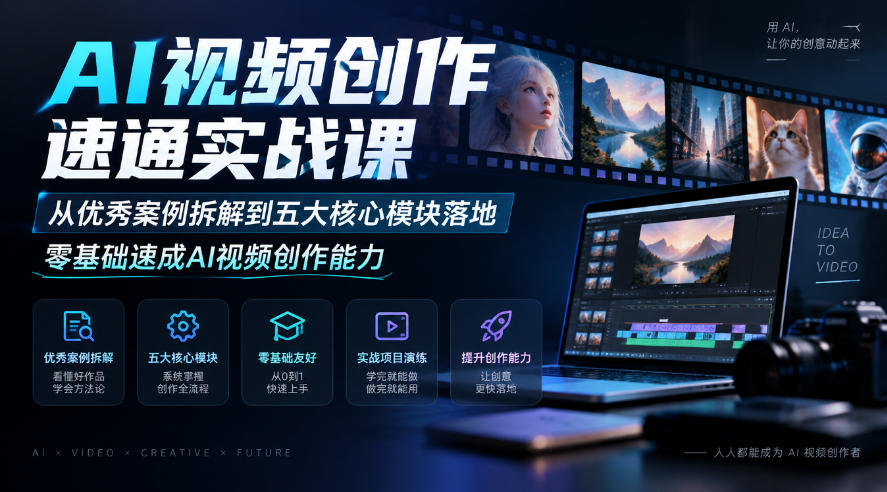
AI Video Creation Crash Course: From Great-Case Breakdown to Five Core Modules, Fast-Track AI Video Skills for Total Beginners
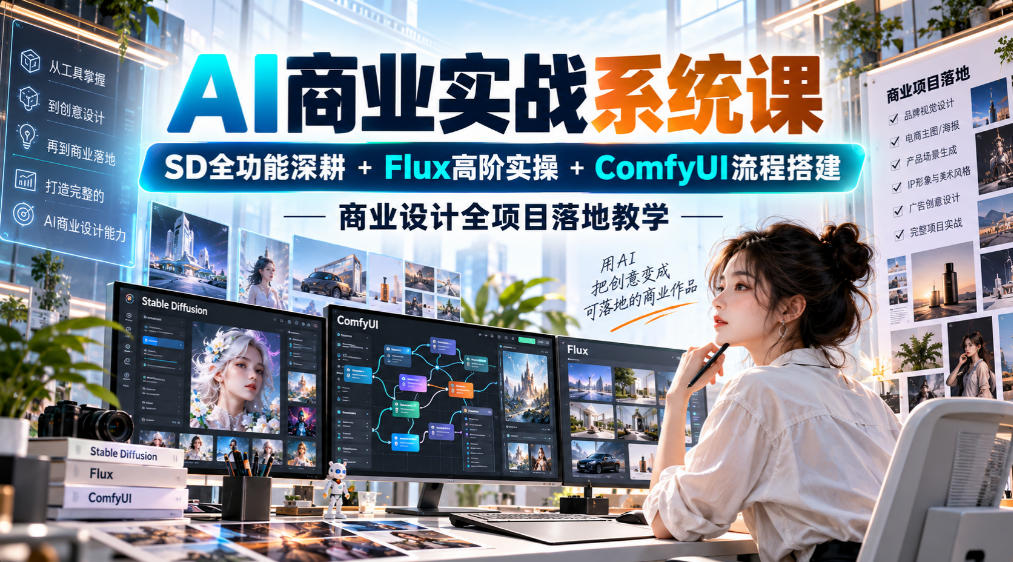
AI Commercial Practice System Course: In-Depth SD Mastery + Advanced Flux Hands-On + Comfyui Workflow Building, Full Commercial Design Project Training

[National-Day Pick] AI Automation Game, 1k+ RMB a Day, Simple to Operate, Stable for Three Years! [Revealed]