-
Solo Business Courses
-
 Others
-
Overseas Tutorials
-
Photography & Editing
-
Community & Private Domain
-
Self-Media Writing & Copywriting
-
Side Income Projects
-
E-commerce
-
Short Video & Live Streaming
-
Artificial Intelligence (AI)
-
Software & Tools
-
Operating Systems
-
Plugins & Scripts
-
MacOS Software
-
Android Software
-
Windows Software

Sports Commentary Video Niche: Feasibility, Risk & Compliance of Pro Commentary
-
Game Gold-Farming Money-Making Plan: Earn 1k+ Daily, a Stable 3-Year Project Anyone Can Do in Spare Time [Revealed]
Study material — included with membership Get Membership -
Hot-game fully-automated earning: 500+ a day, no experience, simple operation - the steadiest long-term game-earning side hustle (revealed)
Study material — included with membership Get Membership -
FlyingMouse earns merit this time! Don't panic at Windows format problems — the open-source FlyingMouse format conversion tool helps, a popular GitHub gem
Study material — included with membership Get Membership -
Douyin Product-Selling Coaching Bootcamp: No On-Camera Appearance Needed, Newbies Can Produce Selling Short Videos by Following the Steps
Study material — included with membership Get Membership -
First-release game gold-farming money plan: 1K+ a day, ordinary people in spare time
Study material — included with membership Get Membership






-
FlyingMouse earns merit this time! Don't panic at Windows format problems — the open-source FlyingMouse format conversion tool helps, a popular GitHub gem
Study material — included with membership Get Membership -
LuDaShi v6.1024.4105.1121 Slim Single File
Study material — included with membership Get Membership -
2D Cartoon Animation Software Moho Pro v14.3
Study material — included with membership Get Membership -
Video Editor Aiseesoft Filmai v1.0.18
Study material — included with membership Get Membership -
To-Do Microsoft To Do v2.147 Free
Study material — included with membership Get Membership -
PR/AE/DaVinci/FCPX video Plugin Nobe OmniScope Win1.11.15 / Mac1.10.138
Study material — included with membership Get Membership

⚠️ Hook Tutorial Warning:This tutorial may contain exaggerated publicity or revenue promises, please note that chat screenshots, revenue screenshots, background data, etc. may be falsified by technical means. Please analyze rationally and make prudent decisions. It is recommended to first understand the real situation of the industry, verify the reliability of the source of information, and then consider whether to invest time or money.
\Part 1: Tutorial Core Content Summary
\• Tutorial Topics:Teaches how to make 'sports-figure commentary/mashup' short videos, empowering content through professional commentary, seizing sports (especially Olympics) traffic dividend, quickly launching accounts and monetizing on Douyin, Xigua Video, etc.
\• Core Approach:
\- \
- Find benchmark:Search sports figures on Douyin (e.g., Liu Xiang, Su Bingtian), find accounts with under 100K followers that recently had hits (3000+ likes) as learning targets. \
- Set topic:Combine hotspots (e.g., Olympics) or choose sports figures with stories and relatively easy-to-find materials (the tutorial uses Xinjiang track-and-field rising star 'Alisher' as example). \
- Write copy:Fuse benchmark accounts' copy, Baidu Baike/news materials, and comment-section top-liked posts, forming the structure of 'eye-catching opening + figure's life (timeline) + achievement intro + summary elevation.' \
- Find materials:Mainly from Douyin, Bilibili, CCTV.com, etc., search for the figure's competition, training, interview, and other landscape video clips, emphasizing the importance of 'material library' accumulation. \
- Editing practice:Using CapCut, demonstrates how to use three-split-screen opening, keyframes, transition effects (diagonal blur), sound effects ('thud'), speed change, filters, and other tricks to synthesize copy, music, and materials into an impactful finished video. \
• Promise effect:The tutorial hints this track can 'quickly launch and monetize,' and leveraging the upcoming Olympics' 'traffic lowland' concept, claims 'as long as it's sports-related, there's a big chance the work goes viral.'
\Require:PC (recommended), CapCut software (membership features better), a lot of time for finding materials and editing, basic understanding of sports, copy-organization and editing skills.
\Key Steps:Find benchmark → set topic → write copy → find materials → voiceover → edit (rough cut + fine cut + effects/sound) → publish.
\Note: The above is only an objective summary of tutorial content, containing no subjective judgment or evaluation. Personal info like lecturers and students involved in the tutorial has been filtered out.
\Part II: Objective Feasibility Analysis
\Objective assessment 📊 based on industry experience:
\• Time invested analysis:Extremely high. A 3–5 minute high-quality sports-mashup video, from finding materials and writing copy to finishing editing, a newbie needs 10–20 hours or even longer. The lecturer in the tutorial also mentions 'I need to spend 15 hours.' This is far from 'fast'; requires extremely strong patience and continuous time investment.
\• Skills Requirements Analysis:Fairly high. Requires: 1) information-integration and copy ability : writing scattered materials into a rhythmic, emotional commentary script. 2) advanced editing ability : not just splicing, needs to master keyframes, masks, audio-visual sync, effect packaging, etc. 3) sports knowledge reserve and internet sense : understand figure stories, event backgrounds, and can grab viewer emotion points.
\• Capital cost analysis:Mainly tools and time cost. CapCut membership (about 20 yuan/month) can lift efficiency, not required. The biggest cost is computer equipment and unquantifiable personal time.
\• Success rate assessment:Low, and follows the '80/20 rule.' The vast majority of imitators will fall into: 1) severe content homogenization, hard to stand out; 2) amateur editing level, poor viewing experience; 3) platform traffic restriction due to copyright or too-high repetition. Those who can truly stably monetize from this are usually the few creators with solid editing skills, unique perspectives, or already accumulated large material libraries.
\Key Risk Indicators
\- \
- Copyright risk (highest risk):Competition footage, interview clips, athlete likenesses used in the tutorial are all copyright-protected. Unauthorized reposting, editing, and using for profitable distribution (e.g., Mid-Video Program) may face video-takedown, account-penalty, and even legal-litigation risk. Large events like the Olympics have especially strict copyright management. \
- Content homogenization and competitive risk:'Sports-figure commentary' is a red-ocean track; a flood of accounts use similar copy (Baidu Baike), similar materials (limited online public videos), leading to severe content homogenization, hard to get platform recommendation and user favor. \
- Platform-review and monetization risk:The Mid-Video Program has high originality requirements; purely reposted-edited 'secondary-creation' content is easily judged as insufficient originality, unable to earn. Purely relying on platform traffic share for monetization has a long cycle and unstable earnings. \
- Timeliness and ROI risk:Sports hotspots are fleeting. Content spending dozens of hours to produce may have miserable traffic once the hotspot passes, with extremely low ROI, easily dampening enthusiasm. \
Note: The above analysis is based on general industry experience and public information, and the actual situation may vary due to personal abilities, market changes and other factors.
\Section 3: Personalized Decision Making Recommendations
\💡 Based on the above analysis, our recommendations are as follows:
\GroupThose who are themselves sports fans, have strong interest and learning passion in video editing, are not in a hurry for short-term monetization, and are willing to invest a lot of early time in accumulating skills and material libraries. Can treat this as a 'practice project' for learning video editing and content creation.
\• Unsuitable for:Newbies expecting fast money, with no editing foundation, indifferent to sports, insufficient patience, unable to accept long-term no positive feedback.
\Proposed action:If you decide to try, please adjust expectations and do: 1) Skills first : systematically learn CapCut tutorials, master core features, then start doing complete projects. 2) Seek authorization or originality : try to contact local sports teams, niche events, or athletes themselves, obtain shooting authorization, make truly first-hand content. 3) Differentiated positioning : shift from 'figure's life' to 'technical analysis,' 'event review,' 'sports trivia,' and other more professionally moated niche directions. 4) Small steps, fast running : first make short videos under 1 minute, validate flow and feedback, then gradually lengthen.
\Risk Control:Clearly tell yourself the first 10 videos may earn nothing. Don't buy any paid service claiming to 'provide copyright-free materials.' Closely follow platform rule changes on secondary-creation copyright.
\Alternatives:Rather than fight in the red ocean, better consider: 1) Local sports content : film local amateur leagues, campus sports stories—low competition, easy to get authorization. 2) Sports paid knowledge : if you have solid sports professional knowledge, making teaching courses (e.g., basketball training, running tricks) is a more sustainable monetization path. 3) Combine your own strengths : if you're a programmer, can do 'data-visualization sports analysis'; if you're a designer, can do 'sports brand-design appreciation.'
\ \🔍 Revenue Authentication Module
\⚠️ Common exaggerated claims about 'sports-track fast monetization':
\- \
- Confusing 'traffic' with 'income':Showing the video's high play count (e.g., million plays), but deliberately hiding or blurring its actual platform earnings (Mid-Video earnings per 10K plays are usually only a few to tens of yuan). \
- Utilizing Survivor Bias:Only showing a tiny number of hit cases and head accounts' income, manufacturing the 'everyone can replicate' illusion, never mentioning the fact that the vast majority of accounts are unknown. \
- Exaggerating 'hotspot dividend':Describing events like the Olympics as 'money-picking' opportunities, ignoring the reality that platform review is stricter, copyright holders enforce rights more actively, and competition is fiercer during that period. \
- Hiding 'time cost':Claiming 'one phone can do it,' but never mentioning the often-dozens-of-hours material-search and editing-polishing time behind a qualified video; hourly wage may be far below minimum wage. \
🔎 Rational-evaluation suggestions:
\- \
- Check platform public data:Go to Xigua Video, Bilibili, etc.'s creator center, check the public 'per-10K-play unit price' range, build a real earnings expectation. \
- Research real creators:In related communities or bloggers' comment sections, privately and politely ask some mid-tier creators about real earnings and time investment, getting frontline info. \
- Calculate your time value:Suppose you earn 1000 yuan/month through this project but invested 100 hours, then hourly wage is only 10 yuan. Ask yourself whether this investment is worth it. \
- Examine long-term value:Ask yourself: doing this project, besides possibly meager cash earnings, can you accumulate transferable skills (like editing, copy), industry cognition, or a personal brand? That is the more important evaluation dimension. \
Section IV: rational reminders and free resources
\Recommended 📚 free learning resources
\If you haveSports content creation, video editing, or self-media opsInterested, it is recommended to learn the free, formal basics first:
\- \
- InsideOne-Person Entrepreneurship NetworkSearch results for "Video-editing onboarding”、“Self-media content creation”、“Copyright-knowledge popularization"for systematic free tutorials and industry analysis. \
- Read very carefully.CapCut, Bilibili-Editor, and other editing software's official tutorials> 5x ULN, ANDDouyin and Xigua Video's creator convention and copyright norms , understand platform-rule bottom lines. \
- FollowGeneral Administration of Sport official site, Xinhua Sports Dept., CCTV Sports and other authoritative sources, to get first-hand sports news and authorized quality materials (some open to reposting). \
- On Bilibili, Zhihu, etc., learnsports-commentary tricks, event-data analysis, sports-documentary narrative techniques , lifting content professionalism and depth, rather than staying at material-reposting. \
Rational reminder:'Hotspot' is an amplifier, not an alchemist. Without solid content-creation ability, unique perspective, and reverence for copyright, chasing any hotspot is hard to last long. The real 'dividend' belongs to those long-termists who can continuously provide value to viewers.
\Related Courses

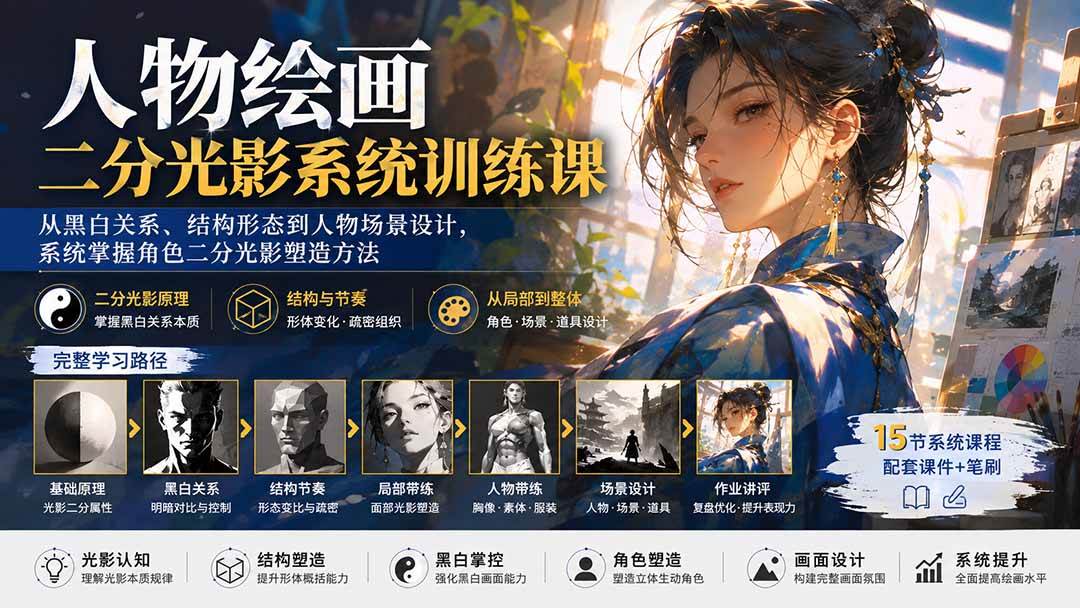
Figure-drawing two-tone light-and-shadow systematic training: from black-white relations and structure to character-scene design
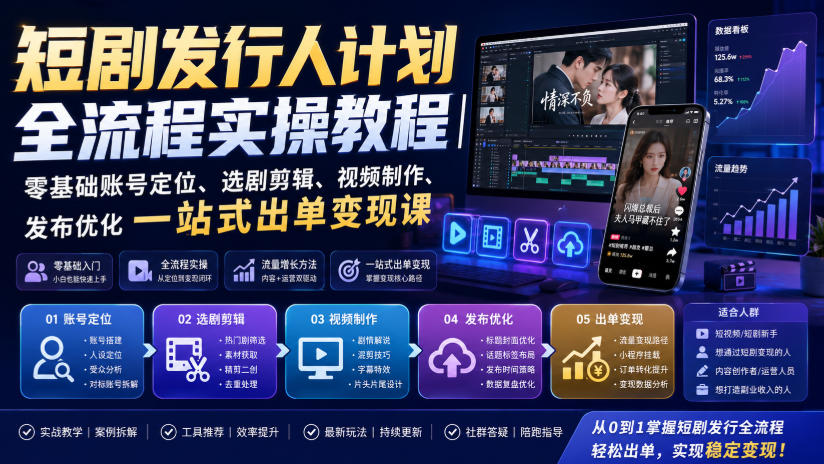



High-value IP full-domain practice course: IP positioning and persona setup, product design, editing and private-domain monetization - a full landing course
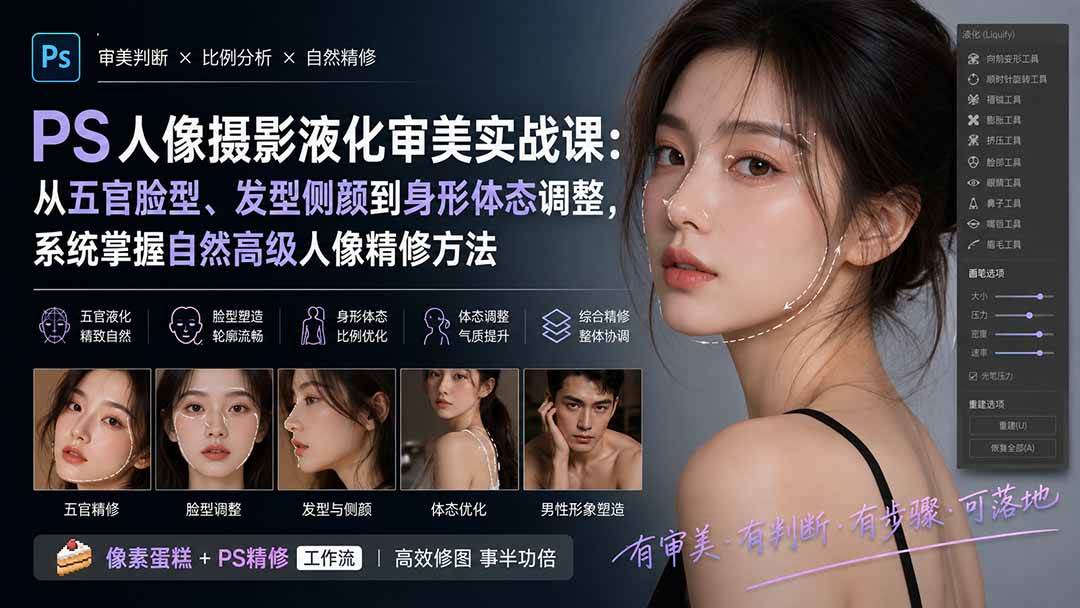

PS portrait retouching and liquify course: reject ineffective retouching, hands-on and easy to understand
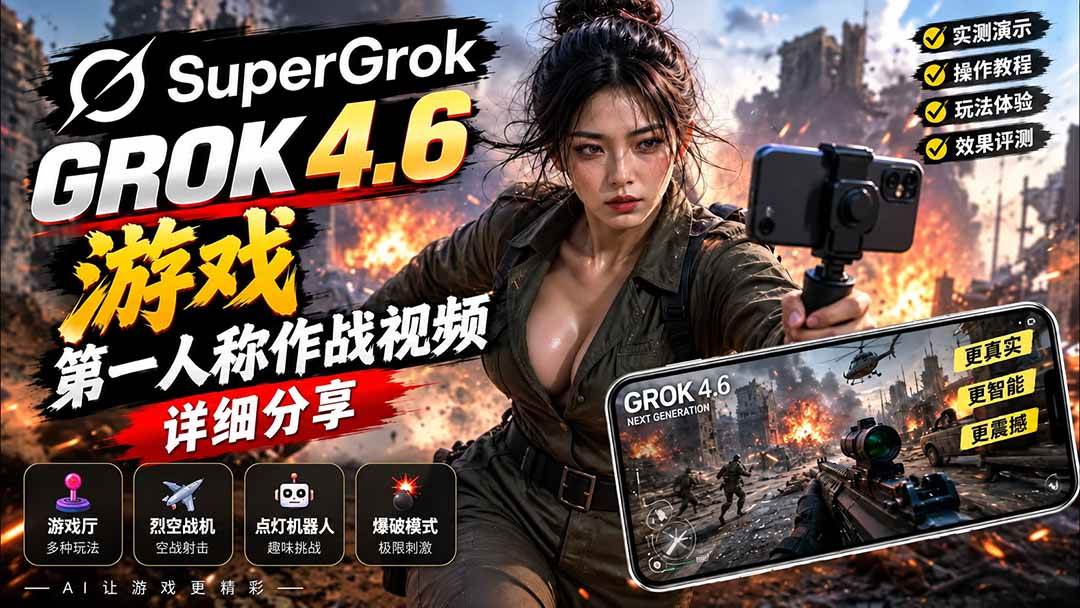
Can Grok 4.6 make games too? First-person combat video hands-on test, detailed gameplay walkthrough

QuAi 14-day Lu Dami online workshop: your personal brand deserves to be loved