


-
Solo Business Courses
-
 Others
-
Overseas Tutorials
-
Photography & Editing
-
Community & Private Domain
-
Self-Media Writing & Copywriting
-
Side Income Projects
-
E-commerce
-
Short Video & Live Streaming
-
Artificial Intelligence (AI)
-
Software & Tools
-
Operating Systems
-
Plugins & Scripts
-
MacOS Software
-
Android Software
-
Windows Software

Easy Automotive Photography All-In-One Course: Most Comprehensive Car Video Filming Tips
-
Game Gold-Farming Money-Making Plan: Earn 1k+ Daily, a Stable 3-Year Project Anyone Can Do in Spare Time [Revealed]
Study material — included with membership Get Membership -
Hot-game fully-automated earning: 500+ a day, no experience, simple operation - the steadiest long-term game-earning side hustle (revealed)
Study material — included with membership Get Membership -
FlyingMouse earns merit this time! Don't panic at Windows format problems — the open-source FlyingMouse format conversion tool helps, a popular GitHub gem
Study material — included with membership Get Membership -
Douyin Product-Selling Coaching Bootcamp: No On-Camera Appearance Needed, Newbies Can Produce Selling Short Videos by Following the Steps
Study material — included with membership Get Membership -
First-release game gold-farming money plan: 1K+ a day, ordinary people in spare time
Study material — included with membership Get Membership






-
FlyingMouse earns merit this time! Don't panic at Windows format problems — the open-source FlyingMouse format conversion tool helps, a popular GitHub gem
Study material — included with membership Get Membership -
LuDaShi v6.1024.4105.1121 Slim Single File
Study material — included with membership Get Membership -
2D Cartoon Animation Software Moho Pro v14.3
Study material — included with membership Get Membership -
Video Editor Aiseesoft Filmai v1.0.18
Study material — included with membership Get Membership -
To-Do Microsoft To Do v2.147 Free
Study material — included with membership Get Membership -
PR/AE/DaVinci/FCPX video Plugin Nobe OmniScope Win1.11.15 / Mac1.10.138
Study material — included with membership Get Membership





Course Content:
\01. Top-Level Design of Shooting Thinking: Explore the core thinking of film and television shooting, starting from the big picture.
\02. [Basics] Approach: Analyze the basic thinking mode of film and television shooting and clarify the shooting direction.
\03. [Basics] Image Quality: Discuss how to improve the quality of video images and make them more appealing.
\04. [Basics] Composition: Reveal composition techniques to make the image more expressive and aesthetically pleasing.
\05. [Basics] Perspective: Explore the charm of shooting from different perspectives to make the image more vivid.
\06. [Basics] Camera Movement: Analyze techniques for using lens movement to add dynamism and depth to the image.
\07. [Basics] Storyboarding: Analyze storyboard design for film and television plots to create visuals with greater audiovisual impact.
\08. [Basics] Car Filming Lesson One: Discuss the importance and influence of the camera on car filming.
\09. [Basics] Car Filming Lesson Two: Explore in depth the shot types and focal length lenses to choose when filming cars.
\10. [Basics] Car Filming Lesson Three: Reveal methods and techniques for achieving stable footage.
\11. [Basics] Car Filming Lesson Four: Analyze the basic theoretical knowledge of car filming to build a solid foundation.
\12. [Basics] Car Filming Lesson Five: Introduce the various equipment and gear needed for car filming.
\13. [Basics] Car Filming Lesson Six: Explain composition techniques and key points when filming static cars.
\14. [Basics] Car Filming Lesson Seven: Reveal camera movement techniques and tips for filming moving cars.
\15. [Practical] Lesson Eight: Learn practical car filming techniques through example cases.
\16. [Practical] Lesson Nine: Improve practical car filming skills through more shooting cases.
\17. [Must-Watch] Quickly Master Rhythm Techniques: Learn how to master rhythm to make videos more engaging.
\18. Editing Software Installation Method: Explain in detail the installation steps and precautions for editing software.
\19. Project Settings and Asset Library: Introduce how to set up a project asset library to improve work efficiency.
\20. Interface Layout Introduction: Explain the editing software interface layout to make operations more effortless.
\21. Hands-On Practice: Learn the practical operation techniques of editing software from scratch.
\22. Approach to Making a Video: Share ideas and techniques for making videos to help improve video quality.
\23. Audio Operation Techniques: Master audio processing techniques to improve the overall viewing experience of videos.
\24. Color Grading Techniques: Explain color grading techniques to make video images more vivid and rich.
\25. Practical Plugins That Double Your Efficiency: Introduce practical plugins to improve editing efficiency and quality.
\26. Correct Export Operations: Share the correct methods for exporting videos to ensure video quality.
\27. Post-Production Project File Management: Teach post-production project file management techniques for easy project tracking and modification.
\28. Core Emotion of Content: Analyze in depth the core emotion of video content to enhance film and television expressiveness.
\29. Rhythm of Music: Discuss how to reasonably use music rhythm to enhance the appeal of videos.
\30. Making Video Editing Silky Smooth: Teach editing techniques to make video transitions more natural.
\31. Rhythm of the Image: Explain how to master the rhythm of the image
\to improve the watchability of videos.
\32. Project Practice (Full Editing Workflow): Demonstrate the full editing workflow through practice to help students master editing skills.
Related Courses


Figure-drawing two-tone light-and-shadow systematic training: from black-white relations and structure to character-scene design
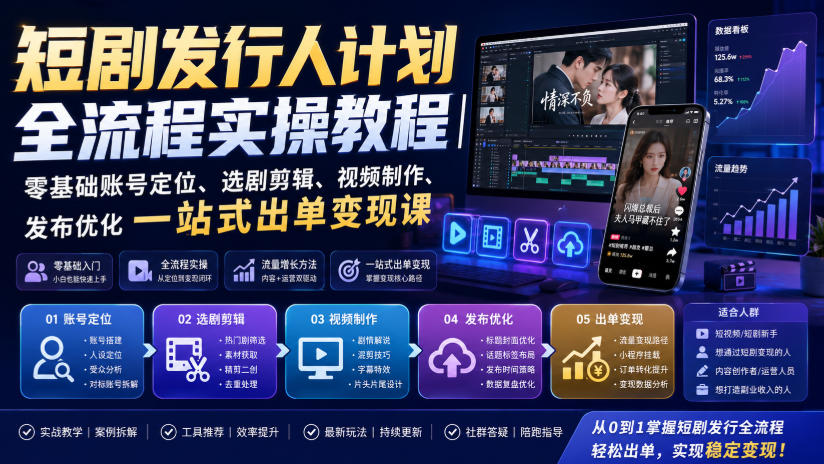



High-value IP full-domain practice course: IP positioning and persona setup, product design, editing and private-domain monetization - a full landing course
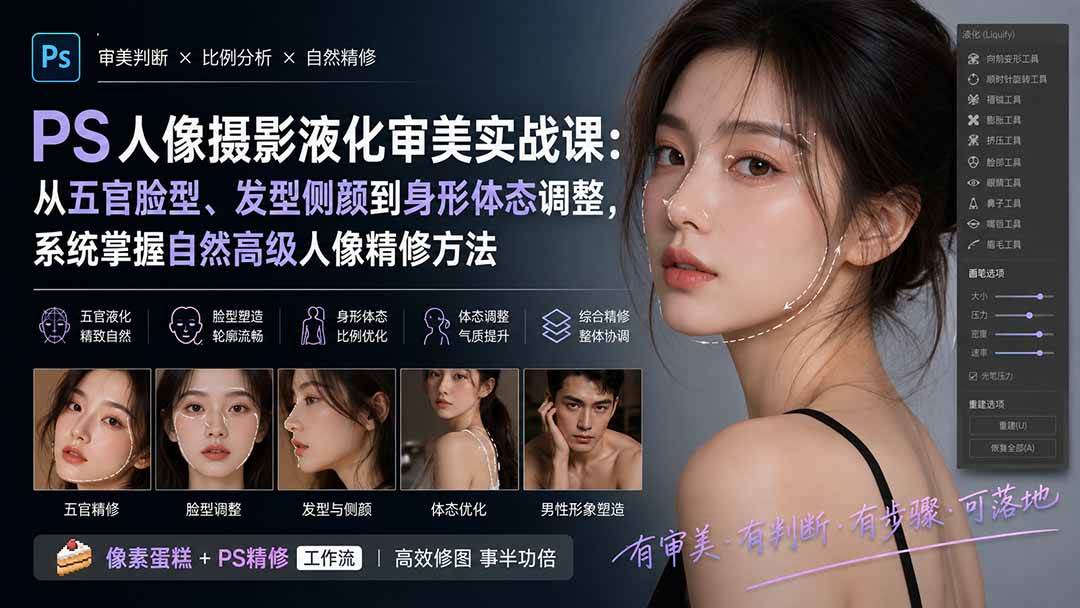

PS portrait retouching and liquify course: reject ineffective retouching, hands-on and easy to understand
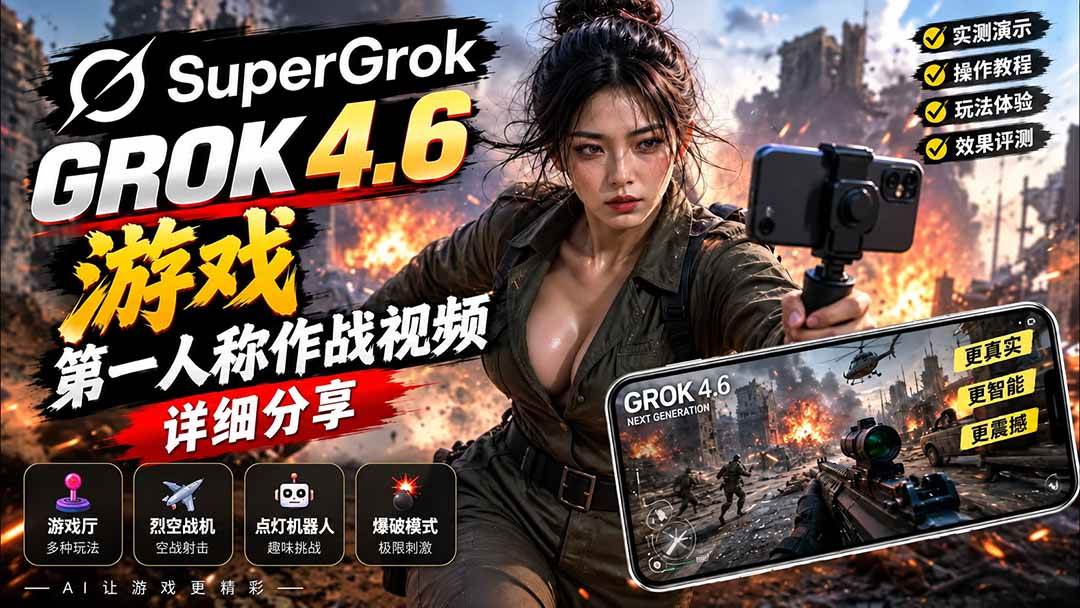
Can Grok 4.6 make games too? First-person combat video hands-on test, detailed gameplay walkthrough

QuAi 14-day Lu Dami online workshop: your personal brand deserves to be loved
