-
Solo Business Courses
-
 Others
-
Overseas Tutorials
-
Photography & Editing
-
Community & Private Domain
-
Self-Media Writing & Copywriting
-
Side Income Projects
-
E-commerce
-
Short Video & Live Streaming
-
Artificial Intelligence (AI)
-
Software & Tools
-
Operating Systems
-
Plugins & Scripts
-
MacOS Software
-
Android Software
-
Windows Software
Finance/Tax Industry Juliang Local-Ad Precision Delivery Tutorial
-
Game Gold-Farming Money-Making Plan: Earn 1k+ Daily, a Stable 3-Year Project Anyone Can Do in Spare Time [Revealed]
Study material — included with membership Get Membership -
Hot-game fully-automated earning: 500+ a day, no experience, simple operation - the steadiest long-term game-earning side hustle (revealed)
Study material — included with membership Get Membership -
FlyingMouse earns merit this time! Don't panic at Windows format problems — the open-source FlyingMouse format conversion tool helps, a popular GitHub gem
Study material — included with membership Get Membership -
Douyin Product-Selling Coaching Bootcamp: No On-Camera Appearance Needed, Newbies Can Produce Selling Short Videos by Following the Steps
Study material — included with membership Get Membership -
First-release game gold-farming money plan: 1K+ a day, ordinary people in spare time
Study material — included with membership Get Membership






-
FlyingMouse earns merit this time! Don't panic at Windows format problems — the open-source FlyingMouse format conversion tool helps, a popular GitHub gem
Study material — included with membership Get Membership -
LuDaShi v6.1024.4105.1121 Slim Single File
Study material — included with membership Get Membership -
2D Cartoon Animation Software Moho Pro v14.3
Study material — included with membership Get Membership -
Video Editor Aiseesoft Filmai v1.0.18
Study material — included with membership Get Membership -
To-Do Microsoft To Do v2.147 Free
Study material — included with membership Get Membership -
PR/AE/DaVinci/FCPX video Plugin Nobe OmniScope Win1.11.15 / Mac1.10.138
Study material — included with membership Get Membership
Finance/Tax Industry Exclusive Juliang Local-Ad Precision Delivery Practical Course – 2026 Latest Guide
\\ August 1, 2026
\ Juliang Local-Ad Precision Delivery
\ Owners of finance/tax bookkeeping agencies, operations ad buyers, local customer acquisition teams
The vast majority of finance/tax bookkeeping, business registration, and tax planning agencies doing Douyin local-ad delivery are mired in all kinds of problems: they can't tell the difference between DOU+, Juliang Ads, and Local-Ad, and blindly spend their budget; they don't understand how to adapt flexible delivery and continuous delivery to different scenarios, and have no method for short video or livestream ad delivery; they don't know how to build ad campaigns or do precise audience targeting, resulting in mostly broad traffic and very few valid business leads; accounts struggle with cold starts and campaigns easily die out, and they don't know how to optimize bids, budgets, or creatives; they don't know how to leverage the search ad group-buy card bonus, and run delivery entirely by feel, with long-term poor ROI.
\This course focuses on delivery logic exclusive to the finance/tax industry, abandoning generic local-life delivery templates and fitting the To B local customer acquisition nature of finance/tax. It fully covers delivery fundamentals, the two delivery modes, full-process hands-on setup, account optimization, cold-start breakthroughs, and delivery pitfalls, with step-by-step desktop demonstrations, so finance/tax practitioners and operations staff with zero foundation can independently run Local-Ad, lower customer acquisition costs, and increase precise business inquiries.
\The course is driven entirely by hands-on practice, with desktop screen recordings for every step so you can practice along. After completing it, you will master a continuously iterable Local-Ad delivery model, knowing not only how to deliver but also why to deliver that way. This method has been validated in the finance/tax industry and can help agencies shift from relying on expensive outsourced ad delivery to running their own delivery, making every ad dollar count.
\Target Audience
\- \
- Owners of bookkeeping companies, finance/tax studios, and business service agencies who want to run their own delivery and break free from expensive outsourced ad delivery \
- Company operations and marketing staff who only know basic clicks in Local-Ad delivery, can't do refined operations, and have low ROI \
- Those whose delivery always fails at cold start, with messy and invalid leads, and who want a standardized delivery system for stable customer acquisition \
- Those who are building Douyin local traffic and want to use search ads and group-buy cards to tap precise passive customers \
What You'll Learn
\- \
- Fully understand the underlying rules of paid traffic in the finance/tax niche, accurately distinguish various delivery tools, and find the right delivery direction \
- Skillfully use the two modes of flexible delivery and continuous delivery for two-way traffic acquisition through short videos and livestreams \
- Independently complete the full set of refined Local-Ad settings from targeting, budget, bidding, and creatives to campaign creation \
- Master account optimization, scaling campaign cultivation, and cold-start solutions to greatly reduce customer acquisition costs \
- Master high-ROI search group-buy card tactics, capture local business owners' active search traffic, and increase the number of valid leads \
- Master common advertising pitfalls, scientifically manage ad budgets, and achieve stable monetization of paid traffic \
- \
- 1.Why advertising is essential \
- 2.Paid traffic allocation mechanism \
- 3.Essential differences between DOU+, Juliang Ads, and Juliang Local Promotion \
- 4.Key actions to take before Local Promotion advertising \
- \
- 5.The underlying logic of Flexible Advertising \
- 6.Flexible Advertising short video customer acquisition techniques \
- 7.Flexible Advertising livestream \
- \
- 8.The algorithm mechanism of Continuous Advertising \
- 9.Steps for building Continuous Advertising campaigns \
- \
- 10.Full process of Flexible Advertising & Continuous Advertising \
- 11.Local Promotion advertising operation process \
- 12.Marketing objectives and scenarios \
- 13.Advertising content and goals \
- 14.Smart targeting and custom audience packages \
- 15.Scheduling and budget \
- 16.Ad creative setup techniques \
- 17.Ad budget and bidding \
- 18.Project and ad naming \
- 19.Automated advertising UBMAX \
- 20.Search ads – group-buy card high-ROI must-run tactics \
- 21.Ad strategy setup tactics \
- \
- 22.How many ad campaigns to build \
- 23.Basic approach to account adjustments \
- 24.Quickly cultivate scaling campaigns \
- 25.One solution: ad cold start problem \
- 26.Pitfall avoidance guide for ad delivery operations \
- \
- 27.Full Local Promotion process on computer \
💡 Learning Tip:Content reflects industry practices at time of publication. Please refer to the latest platform rules when learning.
\Related Courses
Article Style 2: Large Top Image + Small Images
Article Style 3: Large Top Image
Article Style 4: Small Image-Focused Content
Article Style 5: Video List
Article Feature: Hidden Content
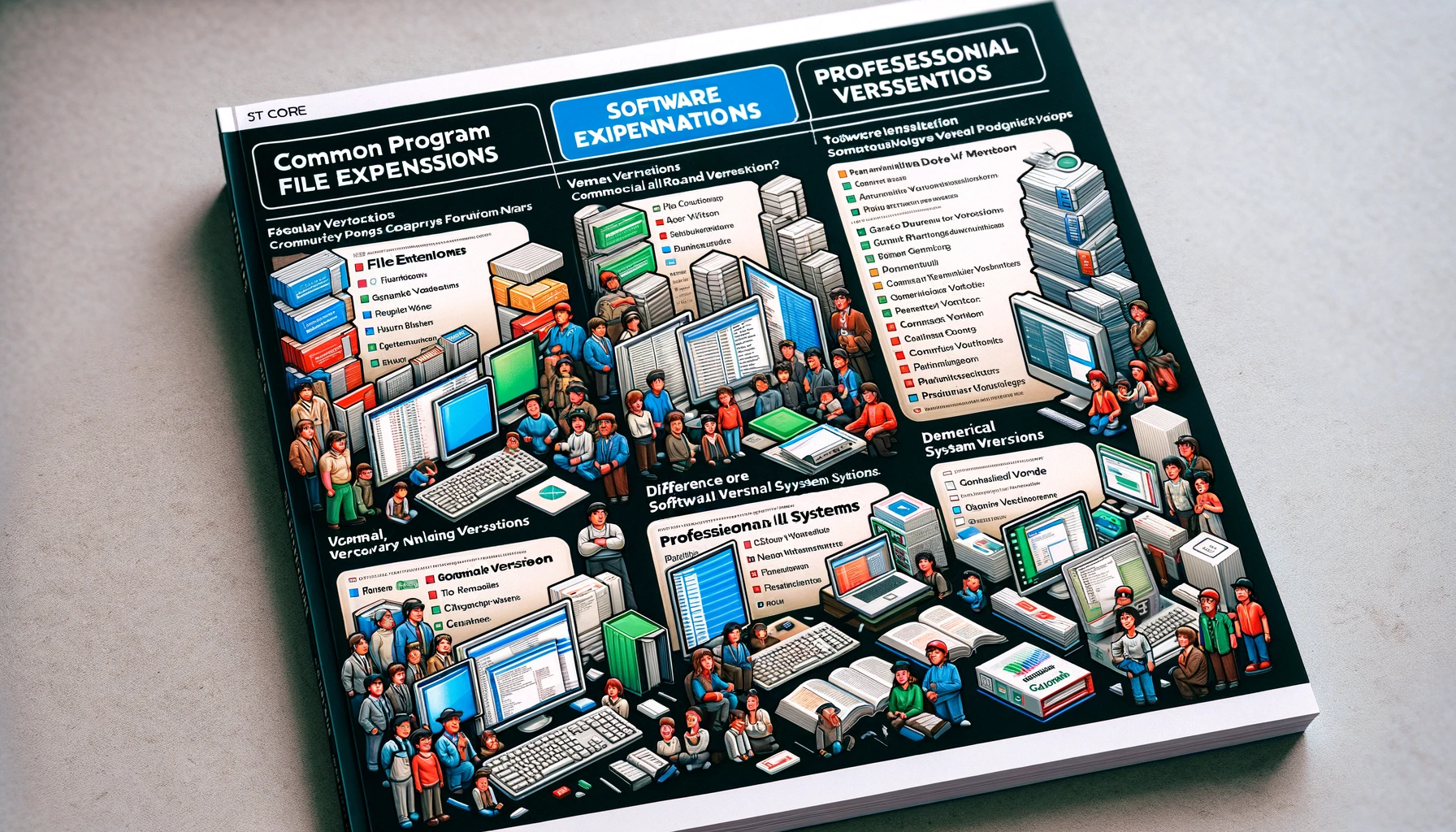
Software Primer: File Extensions, Version Naming and System Editions Explained
Juliang In-Feed Ads Placement Mindset + Practice: Quickly Master Core Skills!
Li's Premium Cold-Dish & Hot-Braised Series Tutorials — For Small-Business Startups and Anyone Learning Cold Dishes
Sept 2024 Upgraded Old-A Marketing Bootcamp: No Empty Talk, Hands-On Practice
Xiaohongshu Matrix Traffic Hands-On: Teach You to Quickly Capture Platform Traffic